Loading...
Done
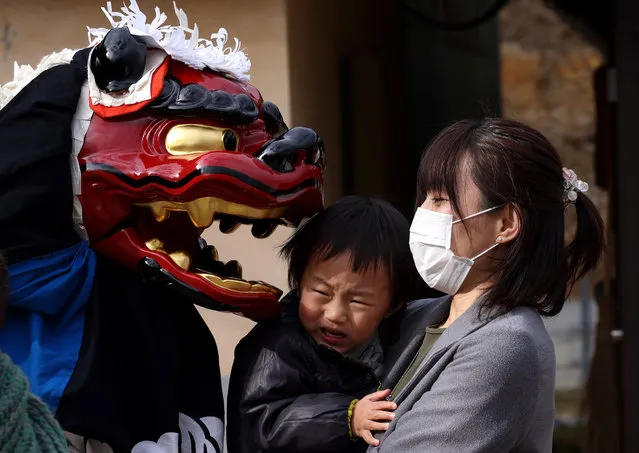
A performer wearing a lion mask performs the Ise Daikagura lion dance at the remote village of Yamanawa on February 08, 2021 in Ryuo, Japan. Ise Daikagura is a group of traditional Lion Dance performers who pray in front of farmers houses and businesses for good grain harvests and disease-free lives. Performers play sacred music using drums and flutes with two lion mask dancers. A lion mask is considered a symbol of God, who enters the house and performs in front of the Shinto God, a statue placed inside the house, mostly in the kitchen. These prayers are called “Kamodo Barai”. After the prayers, they are gifted with money, rice, sake and Japanese sweets from the householders. A group can travel for more than one hundred days to thousands of households and businesses throughout rural-villages in western Japan, and pray to those who are unable to visit the country’s most sacred shrine, the Grand Ise Shrine in Mie Prefecture. The group started its performance in the Edo era between 1603 to 1868 according to Japanese history. The Japanese government designated it as an important folk cultural national property in 1981. (Photo by Buddhika Weerasinghe/Getty Images)

A performer wearing a lion mask performs the Ise Daikagura lion dance at the remote village of Yamanawa on February 08, 2021 in Ryuo, Japan. Ise Daikagura is a group of traditional Lion Dance performers who pray in front of farmers houses and businesses for good grain harvests and disease-free lives. (Photo by Buddhika Weerasinghe/Getty Images)
Details
18 Feb 2021 09:27:00
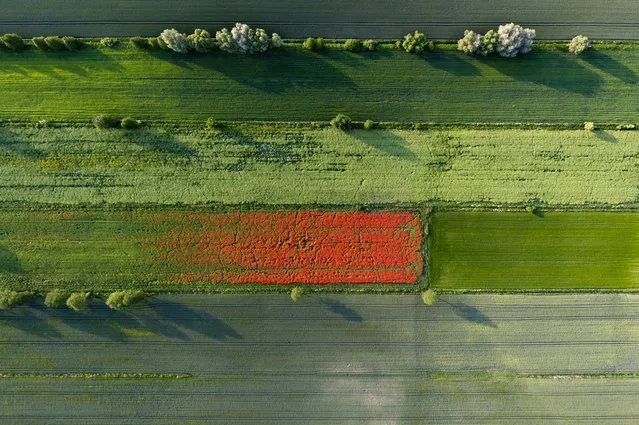
A view over fields of grain in Spring white chamomile, blue cornflower and other weeds growing amongst the grain sprouts. (Photo by Kacper Kowalski/Panos Pictures)

In his book “Side Effects”, aerial photographer Kacper Kowalski took to the skies to paint a portrait of the complex relationship between humans and nature. From the sky, he captured where nature and civilization collide into aesthetic, abstract colors and shapes. Photo: A view over fields of grain in Spring chamomile, cornflower and other weeds growing amongst the grain sprouts. (Photo by Kacper Kowalski/Panos Pictures)
Details
04 Sep 2014 08:19:00
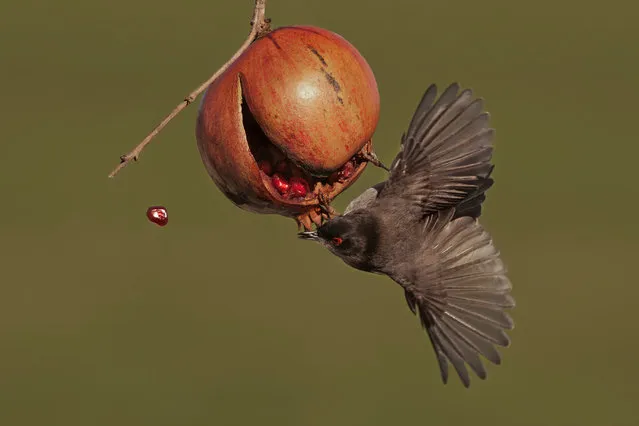
Nature on My Doorstep, finalist. I Want That Pomerade Grain by Biagio Alberto Scalia, taken in national park of Circeo, Latina, Italy. (Photo by Biagio Alberto Scalia/REDISCOVER Nature/EEA)

A praying mantis, a huddle of butterflies, Galician horses and an alpine sunset are the winners of this year’s European Environment Agency’s “Rediscover Nature” photo competition. Here: Nature on My Doorstep, finalist. I Want That Pomerade Grain by Biagio Alberto Scalia, taken in national park of Circeo, Latina, Italy. (Photo by Biagio Alberto Scalia/REDISCOVER Nature/EEA)
Details
20 Nov 2020 00:03:00
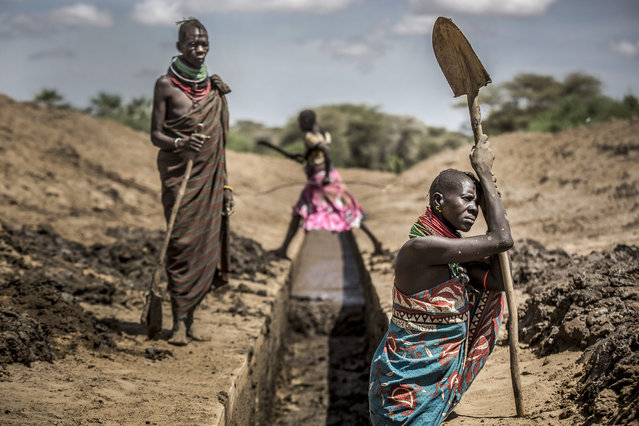
Members of the Turkana community work unblocking an irrigation canal to provide water to their sorghum crops in an arid dry area in Nanyee, near Lodwar, Turkana County, Kenya, on October 1, 2019. Turkana is a vast, dry area in the north-west of Kenya that is on the frontline of climate change. With regular searing temperatures the Turkana people are suffering from recurring and prolonged droughts. (Photo by Luis Tato/AFP Photo)

Members of the Turkana community work unblocking an irrigation canal to provide water to their sorghum crops in an arid dry area in Nanyee, near Lodwar, Turkana County, Kenya, on October 1, 2019. Turkana is a vast, dry area in the north-west of Kenya that is on the frontline of climate change. With regular searing temperatures the Turkana people are suffering from recurring and prolonged droughts. (Photo by Luis Tato/AFP Photo)
Details
28 Oct 2019 00:05:00
In this photo taken Saturday, September 23, 2017, a mouse is cooked on a fire after being caught in a cornfield in Chidza, Masvingo Province, Zimbabwe. Considered a delicacy, the field mice are hunted in cornfields where they have grown plump on the grains, grass and wild fruits. (Photo by Tsvangirayi Mukwazhi/AP Photo)

In this photo taken Saturday, September 23, 2017, a mouse is cooked on a fire after being caught in a cornfield in Chidza, Masvingo Province, Zimbabwe. Considered a delicacy, the field mice are hunted in cornfields where they have grown plump on the grains, grass and wild fruits. (Photo by Tsvangirayi Mukwazhi/AP Photo)
Details
02 Oct 2017 08:20:00
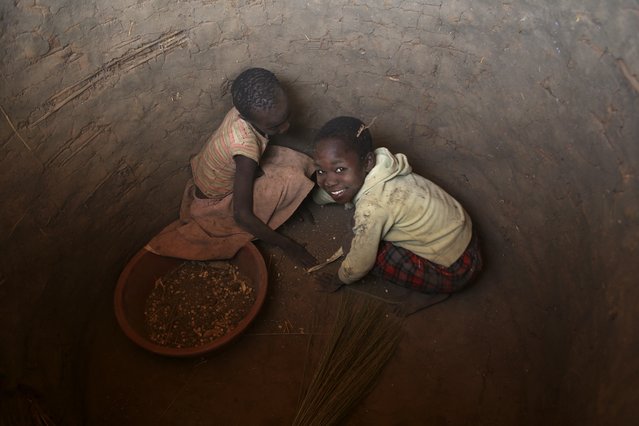
Children clean the interior of a granary in preparation for grain storage in Odek village, north of Uganda capital Kampala February 14, 2015. Odek is the birthplace of Joseph Kony, founder and leader of the rebel group Lord's Resistance Army. (Photo by James Akena/Reuters)

Children clean the interior of a granary in preparation for grain storage in Odek village, north of Uganda capital Kampala February 14, 2015. Odek is the birthplace of Joseph Kony, founder and leader of the rebel group Lord's Resistance Army. The LRA rose up against the government in northern Uganda under the leadership of Kony in the late 1980s and has been accused of abducting children to serve as fighters and s*x slaves. (Photo by James Akena/Reuters)
Details
24 Feb 2015 14:36:00
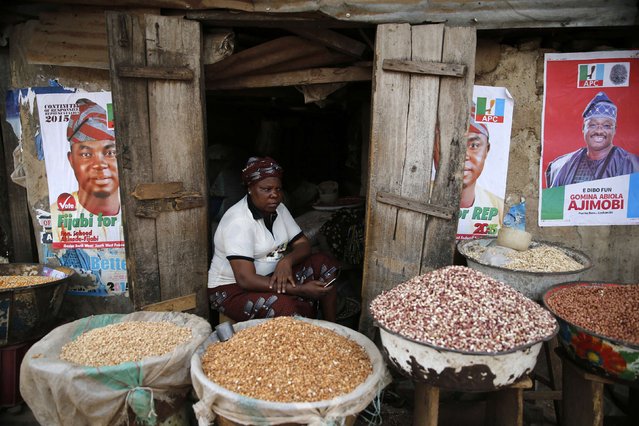
Latefat Alao, 56, a ethnic Yoruba Muslim woman, waits for customers in front of her in Beere market in Ibadan, southwest Nigeria, January 29, 2015. Much of the grain and wheat traders like Alao sell comes from the north and Boko Haram's campaign has negatively affected farmers and food markets. (Photo by Akintunde Akinleye/Reuters)

Latefat Alao, 56, a ethnic Yoruba Muslim woman, waits for customers in front of her in Beere market in Ibadan, southwest Nigeria, January 29, 2015. Much of the grain and wheat traders like Alao sell comes from the north and Boko Haram's campaign has negatively affected farmers and food markets. Reuters photographer Akintunde Akinleye photographed Nigerians and asked them about their views on the elections as well as their hopes and concerns for the country. (Photo by Akintunde Akinleye/Reuters)
Details
12 Feb 2015 12:44:00
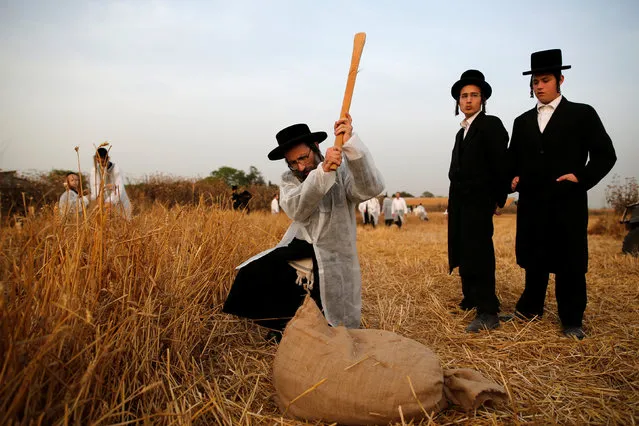
An Ultra-Orthodox Jewish man uses a stick to to separate the wheat grains in the Ultra-orthodox moshav of Komemiyut May 3, 2016. (Photo by Amir Cohen/Reuters)

An Ultra-Orthodox Jewish man uses a stick to to separate the wheat grains in the Ultra-orthodox moshav of Komemiyut May 3, 2016. The harvested wheat will later be used to make the traditional unleavened bread eaten during the Jewish holiday of Passover. (Photo by Amir Cohen/Reuters)
Details
04 May 2016 11:35:00