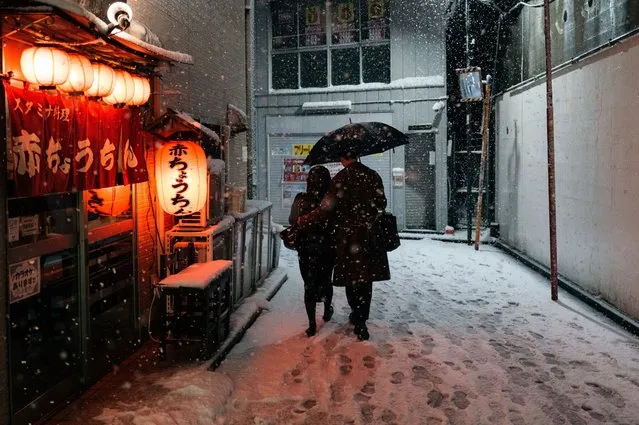
People are walking with umbrellas on a snow-covered street during the first snowfall of the year in Tokyo, Japan, on February 5, 2024. (Photo by Jerome Gilles/NurPhoto/Rex Features/Shutterstock)
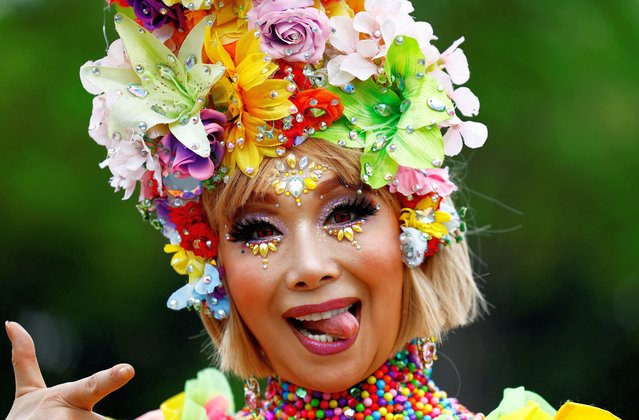
A participant marches during the Tokyo Rainbow Pride parade, celebrating advances in LGBTQ+ rights and calling for marriage equality, in Tokyo, Japan on April 21, 2024. (Photo by Issei Kato/Reuters)
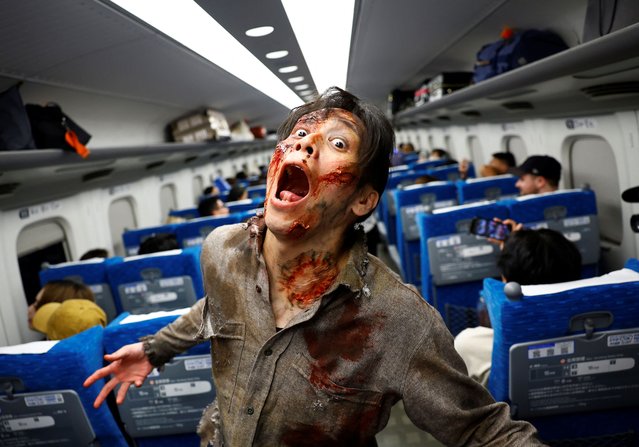
A performer dressed as a zombie performs inside a “Zombie Shinkansen” bullet train bound for Osaka from Tokyo, inspired by the South Korean movie “Train to Busan” ahead of the Halloween season, Japan, on October 19, 2024. (Photo by Kim Kyung-Hoon/Reuters)
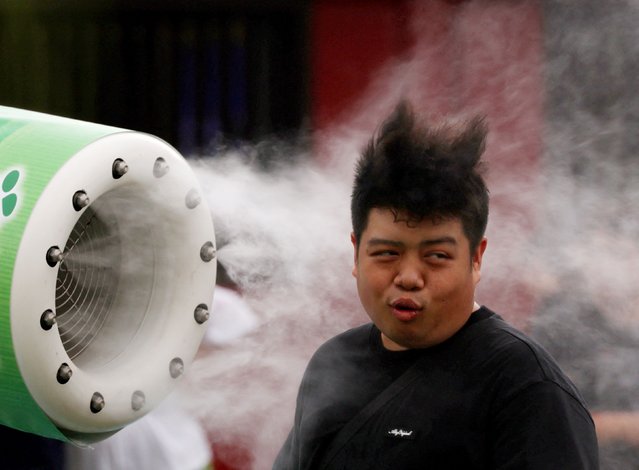
A tourist cools off in front of a misting fan near a venue of the Hozuki-Ichi (Japanese lantern plant fair), at Sensoji temple, in Tokyo, Japan, on July 10, 2025. (Photo by Kim Kyung-Hoon/Reuters)
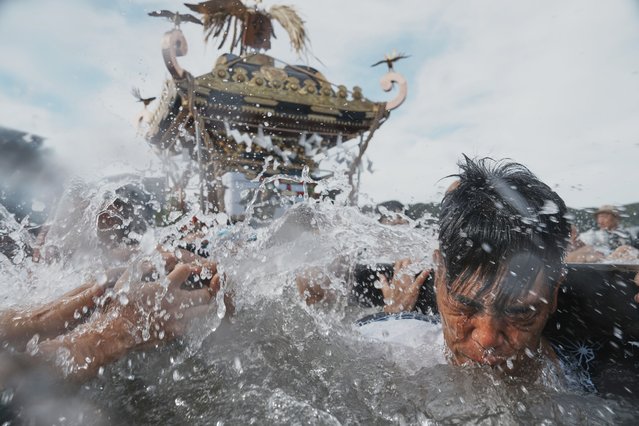
Participants carry a portable shrine, or mikoshi, into the sea during a purification rite at the annual Kurihama Sumiyoshi Shrine Festival at Kurihama, Yokosuka city, south of Tokyo Sunday, July 27, 2025. (Photo by Eugene Hoshiko/AP Photo)
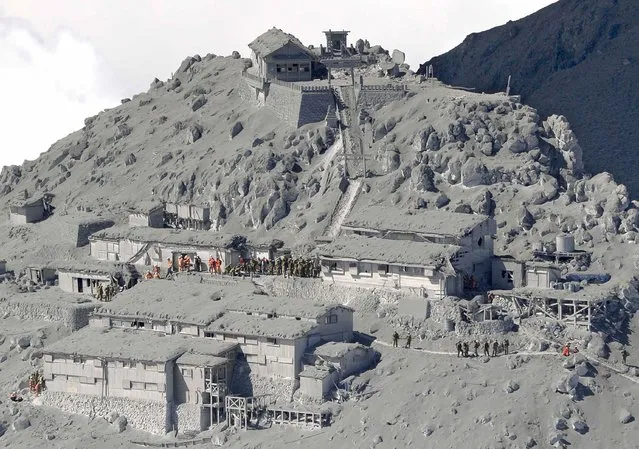
Japan Self-Defense Force (JSDF) soldiers and firefighters make rescue works among mountain lodges, covered with volcanic ash near the peak of Mt. Ontake, which straddles Nagano and Gifu prefectures in this September 28, 2014 photo taken and released by Kyodo. More than 30 people were feared dead on Sunday near the peak of the Japanese volcano that erupted a day earlier, sending a huge cloud of ash and rock tumbling down its slopes, while packed with hikers. (Photo by Reuters/Kyodo News)
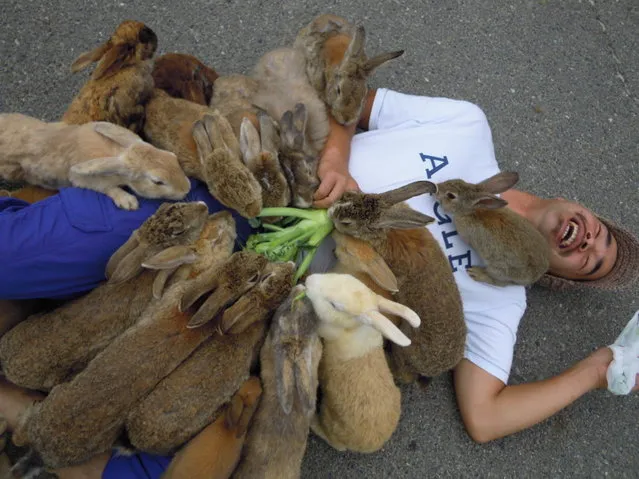
Only after World War II did the secret spill: Ōkunoshima, located in the Inland Sea of Japan between Hiroshima and Shikoku, was the top-secret site for manufacturing chemical warfare. When the factories were closed down, a number of exotic wild rabbits were seen freely roaming the island. They were assumed to have been the test subjects for the chemical weapons, which the military failed to eradicate when the factory was demolished.