Loading...
Done
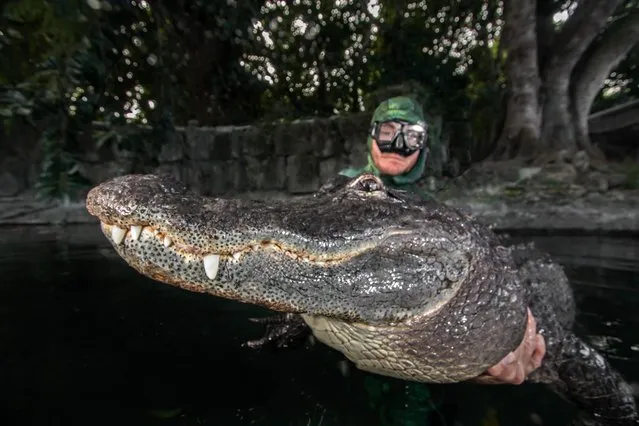
He brings the beast up close and personal to the camera. (Photo by Chris Gillette and Michael Dornellas/Mediadrumworld.com)

The incredible photographs show the three alligators crowding around the man’s head as they look directly at the camera and one even appears to sit on his lap whilst another reptile places a claw on his arm as it swims towards the surface. Photographs taken from above the surface show animal handler, Chris Gillette (29) from Fort Lauderdale, Florida, USA holding an alligator out of the water. The images of Chris were taken by Michael Dornellas at the Everglades Outpost Wildlife Rescue, Florida USA. Here: Mich­ael Dornellas brings the beast up close and personal to the camera. (Photo by Chris Gillette and Michael Dornellas/Mediadrumworld.com)
Details
20 Jan 2017 08:03:00
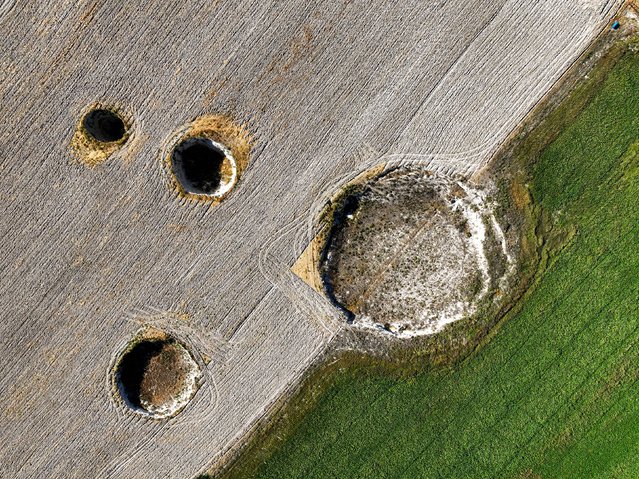
An aerial view of sinkholes (obruk), caused by some form of collapse of the surface layer, in Konya, Turkiye on September 17, 2024. Many sinkholes are observed in the fields of Eseli Plateau located within the borders of Resadiye Neighborhood in the north-west of Karapinar district, where sinkhole formation has increased rapidly in recent years. (Photo by Serhat Cetinkaya/Anadolu via Getty Images)

An aerial view of sinkholes (obruk), caused by some form of collapse of the surface layer, in Konya, Turkiye on September 17, 2024. Many sinkholes are observed in the fields of Eseli Plateau located within the borders of Resadiye Neighborhood in the north-west of Karapinar district, where sinkhole formation has increased rapidly in recent years. (Photo by Serhat Cetinkaya/Anadolu via Getty Images)
Details
09 Oct 2024 04:18:00
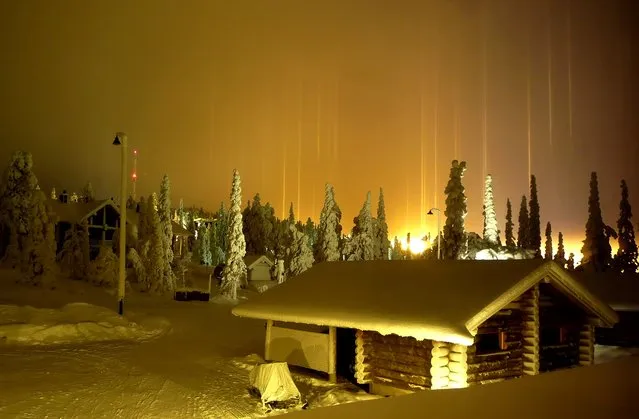
Mysterious Light Pillar

A light pillar is a visual phenomenon created by the reflection of light from ice crystals with near horizontal parallel planar surfaces. The light can come from the Sun (usually at or low to the horizon) in which case the phenomenon is called a sun pillar or solar pillar. It can also come from the Moon or from terrestrial sources such as streetlights.
Details
03 May 2014 15:17:00
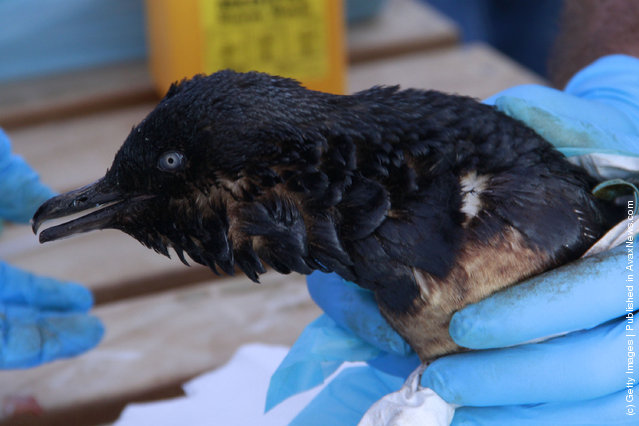
Penguin in oil

A little blue penguin which was found at Papamoa Beach, covered in oil after the Liberian cargo ship, Rena, hit a reef, on October 7, 2011, in Tauranga, New Zealand. Reports of an oil sheen have been spotted on the surface of the water surrounding the ship and two penguins have been found covered in oil. (Photo by SUNLIVE New Zealand/Getty Images)
Details
10 Oct 2011 08:15:00
Egg Sculptures By Franc Grom

Slovenian artist Franc Grom, aged 72, makes unbelievably intricate egg sculptures using just a tiny electric drill and enormous patience. According to National Geographic, when finished, each egg contains approximately 2,500 to 3,500 holes. While Slovene artisans usually paint their eggs using a technique called drsanka by lightly scratching intricate patterns into the surfaces of colored eggs, carving them was solely Grom’s idea.
Details
24 Nov 2016 08:00:00


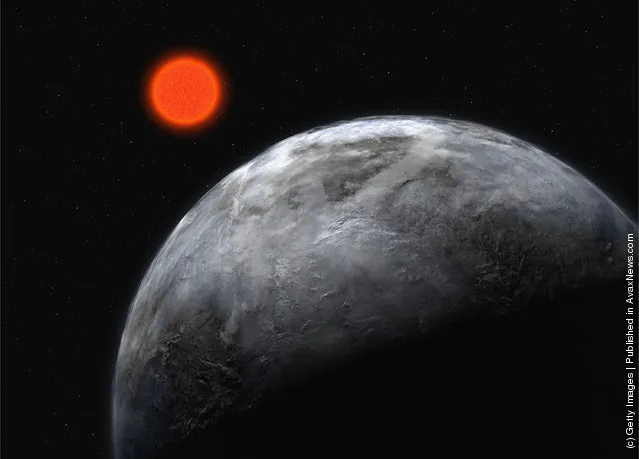
In this artist's impression supplied by the ESO (European Southern Observatory) on April 25, 2007, the planetary system around the red dwarf, Gliese 581, is pictured showing what astronomers believe is the most earth like planet found outside our solar system to date. Using the ESO 3.6-m telescope in Chile, astronomers have uncovered the planet which could have water running on its surface. The planet orbits the faint star Gliese 581, which is 20.5 light-years away in the constellation Libra. (Photo by ESO via Getty Images)
Details
12 Apr 2011 11:00:00
Chasing Ice in Greenland

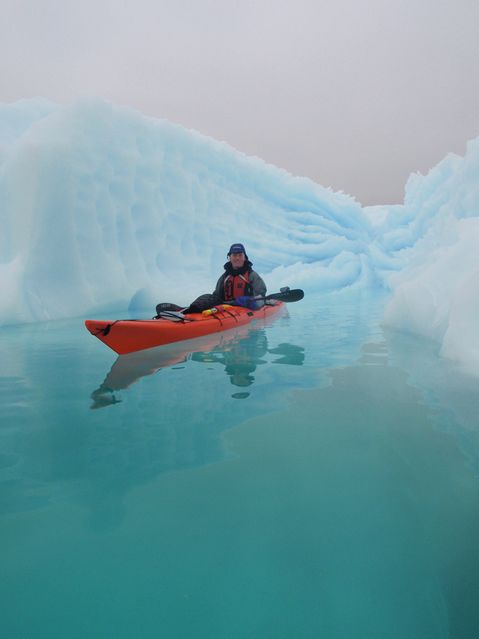
The Greenland ice sheet is a vast body of ice covering 660,235 sq miles, roughly 80% of the surface of Greenland. It is the second largest ice body in the world, after the Antarctic Ice Sheet. Some scientists predict that climate change may be near a "tipping point" where the entire ice sheet will melt in about 2000 years. If the entire 2,850,000 cubic kilometres (683,751 cu mi) of ice were to melt, it would lead to a global sea level rise of 7.2 m (23.6 ft).
Details
30 Apr 2014 13:15:00
Cenote In Mexico

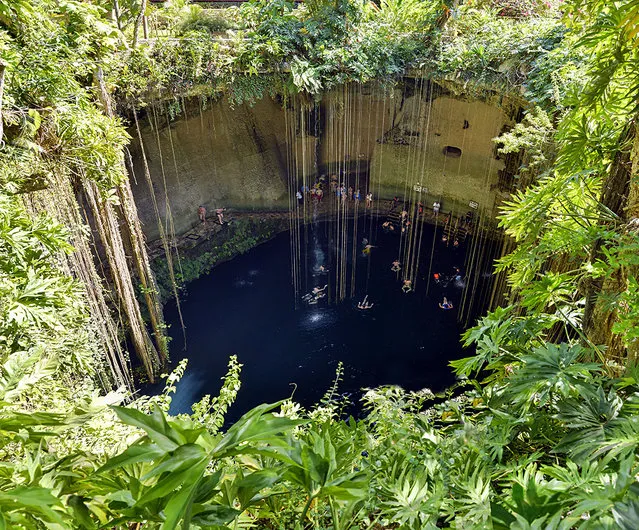
A cenote is a natural phenomenon, a sinkhole in the Earth’s surface. The Yucatan Peninsula in Mexico has an estimated 7,000 cenotes because it is primarily made up of porous limestone. For millions of years, rainfall slowly ate away at the limestone and a huge system of underground caves and caverns was formed. Many filled with water from rain or from the underground water table. When the roof of a water filled cave collapses, a cenote is born. The water found in a cenote may be fresh water, salt water, or both. Structurally it may be completely open, like a lake, almost completely closed with just a small opening at the top, or somewhere in between.
Details
06 Oct 2013 09:45:00