Tourists are watching the sunrise from a viewing platform on the Three Gorges Dam in Yichang, China, on June 23, 2024. (Photo by Costfoto/NurPhoto/Rex Features/Shutterstock)
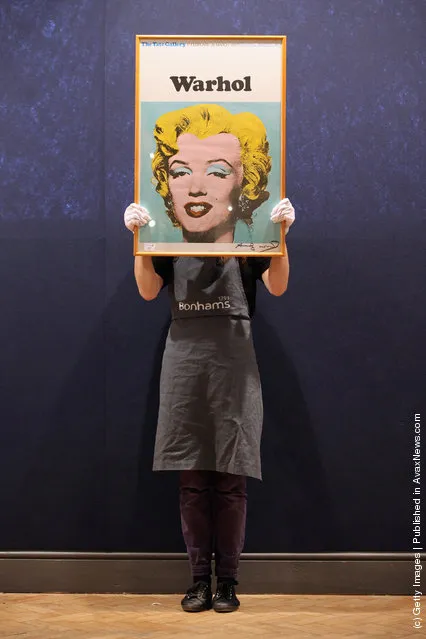
A gallery assistant holds a print of an Andy Warhol artwork estimated to fetch 1,500 GBP in Bonhams auction house on November 25, 2011 in London, England. The auction of prints of works ranging from old masters to contemporary artists takes place in London on November 29, 2011. (Photo by Oli Scarff/Getty Images)
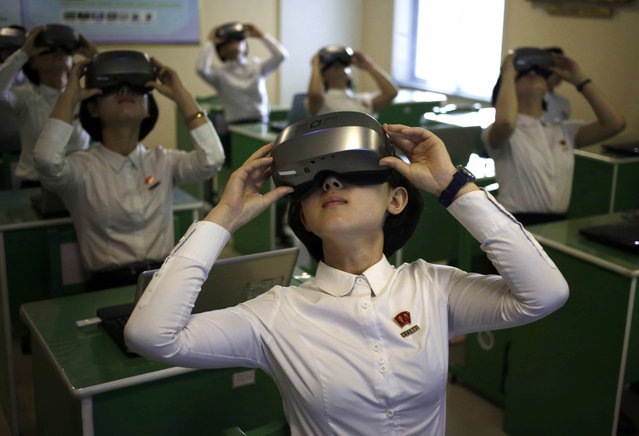
In this Thursday, June 14, 2018, file photo, students wear virtual reality goggles during a science class at Pyongyang Teachers' University, a teacher training college, in Pyongyang, North Korea. (Photo by Dita Alangkara/AP Photo)
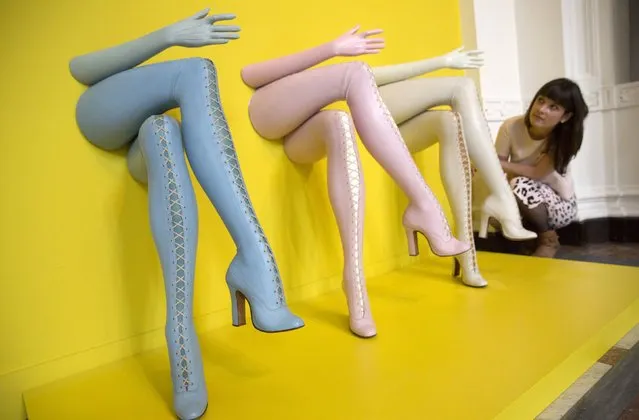
A gallery assistant poses with the 1972 work “Secretary” at a press viewing of the artist's exhibition “Allen Jones RA” at the Royal Academy of Arts in London November 11, 2014. (Photo by Neil Hall/Reuters)
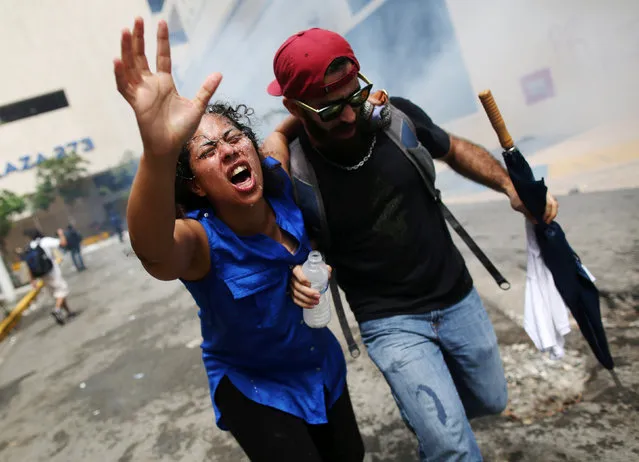
A woman affected by tear gas is assisted during a May Day protest against austerity measures, in San Juan, Puerto Rico May 1, 2018. (Photo by Alvin Baez/Reuters)
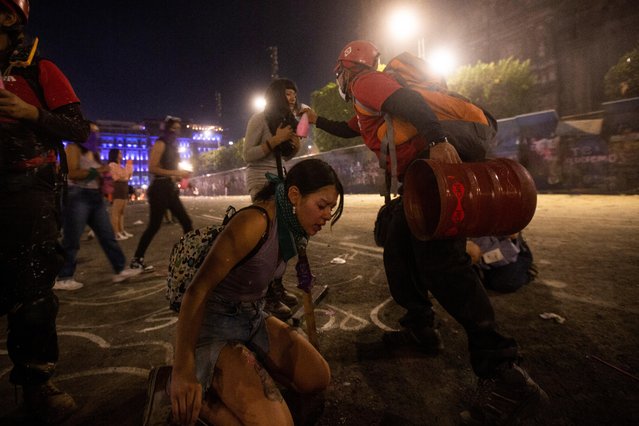
Demonstrators are assisted by members of Brigada Marabunta during a protest to mark International Women's Day, in Mexico City, Mexico on March 8, 2023. (Photo by Quetzalli Nicte-Ha/Reuters)
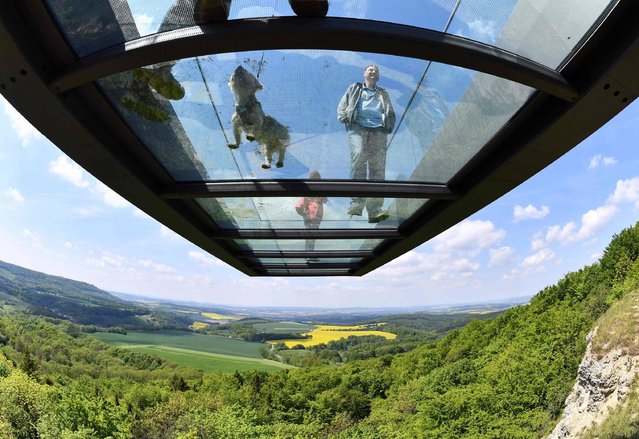
Visitors and a dog stand on the new “Skywalk” viewing platform on the Sonnenstein mountain in the Eichsfeld region near Bad Lauterberg im Harz, central Germany, on May 22, 2017. (Photo by Martin Schutt/AFP Photo/DPA)
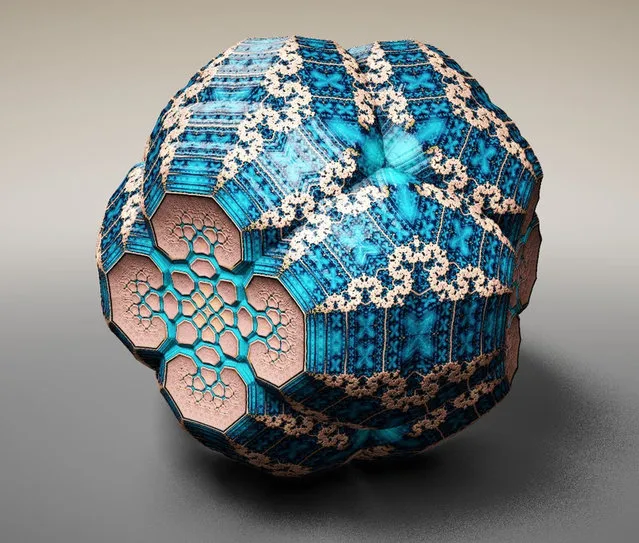
Edinburgh-based physicist-turned-web-designer Tom Beddard was inspired by geometry to create these virtual Fabergé fractals – made up of self-repeating patterns, so that structures within the object resemble the whole. “Within a 3D fractal, there is infinite detail”, says Beddard, 37. “The closer you zoom in, the more structure is revealed”. Beddard rendered the fractals using WebGL, a technology used to animate 3D scenes in a browser.