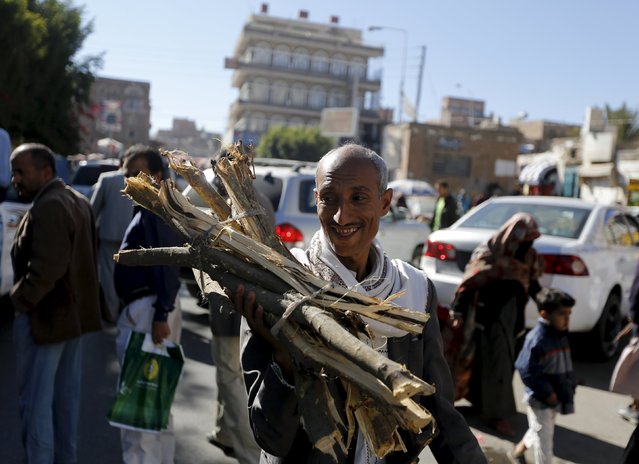
A man smiles as he carries firewood he bought on a street amid ongoing fuel and cooking gas shortages in Yemen's capital Sanaa December 2, 2015. (Photo by Khaled Abdullah/Reuters)
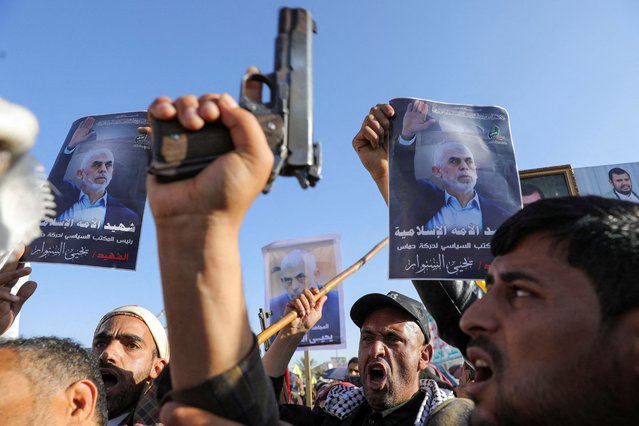
Protesters, mainly Houthi supporters, hold posters showing the late Hamas leader Yahya Sinwar as they rally to show support to Lebanon's Hezbollah and Palestinians in the Gaza Strip, in Sanaa, Yemen on October 18, 2024. (Photo by Khaled Abdullah/Reuters)
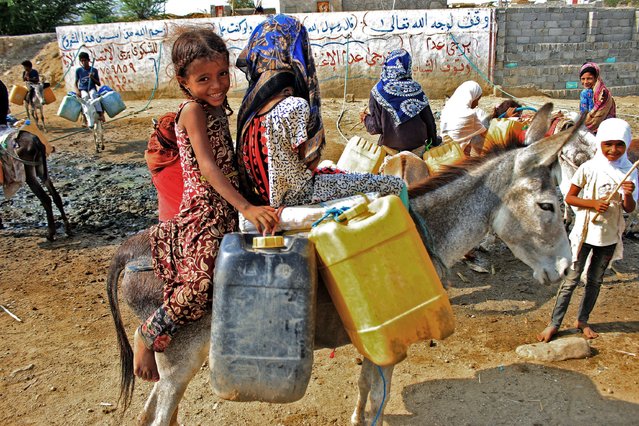
Children riding on donkeys queue to fill their jerrycans with water from a cistern at a make-shift camp for the internally displaced in Yemen's northern Hajjah province on July 12, 2021, amidst an extreme heat wave and severe water shortage. (Photo by Essa Ahmed/AFP Photo)
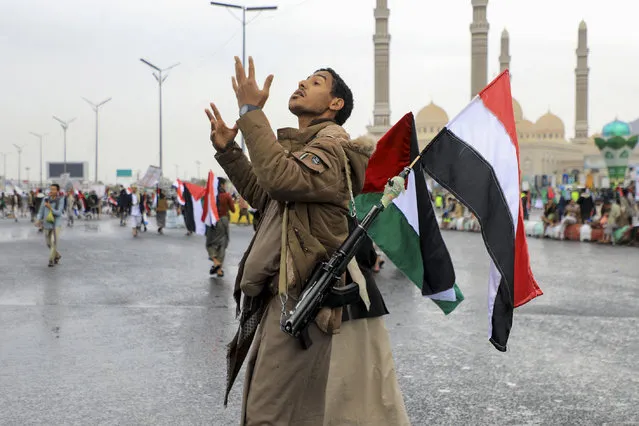
An armed demonstrator lifting a Palestinian and Yemeni flags gestures during an anti-Israel and anti-US rally in the Huthi-controlled capital Sanaa on January 19, 2024, protesting the US designation of Yemen's Huthi rebels as “terrorists”, after a series of attacks on Red Sea shipping amid ongoing battles between Israel and the militant Hamas group in Gaza. (Photo by Mohammed Huwais/AFP Photo)
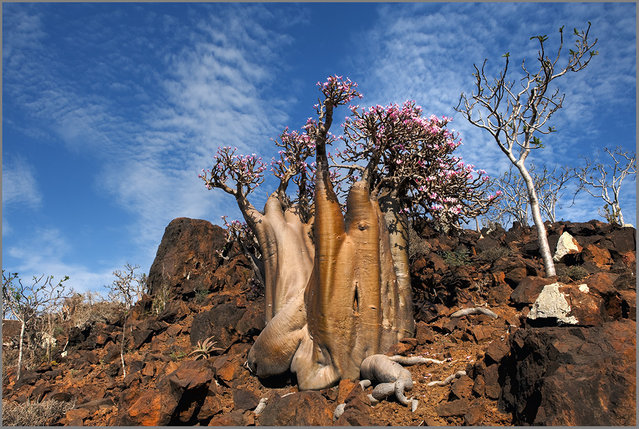
The largest island, also called Socotra, is about 95% of the landmass of the archipelago. It lies some 240 kilometres (150 mi) east of the Horn of Africa and 380 kilometres (240 mi) south of the Arabian Peninsula. The island is very isolated and through the process of speciation, a third of its plant life is found nowhere else on the planet. It has been described as the most alien-looking place on Earth. The island measures 132 kilometres (82 mi) in length and 49.7 kilometres (30.9 mi) in width.