Loading...
Done
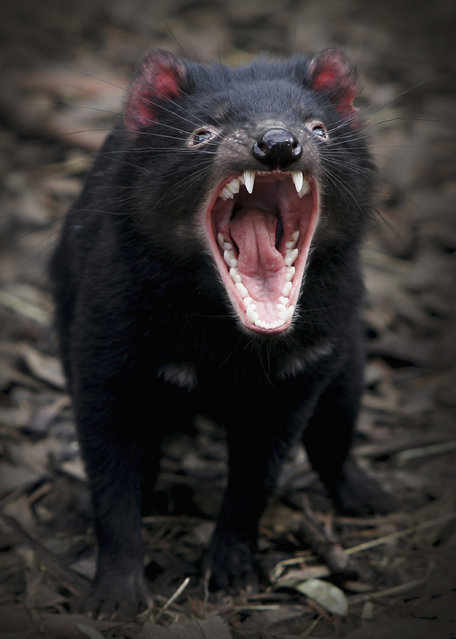
A Tasmanian Devil bears it's teeth at a quarantine facility August 31, 2005 in Hobart, Australia. The Devil, a native marsupial unique to Tasmania, is under threat from Devil Facial Tumor Disease (DFTD) which is decimating numbers throughout Tasmania. (Photo by Ian Waldie/Getty Images)

“The Tasmanian devil (Sarcophilus harrisii) is a carnivorous marsupial of the family Dasyuridae now found in the wild only in the Australian island state of Tasmania. The size of a small dog, it became the largest carnivorous marsupial in the world following the extinction of the thylacine in 1936. It is characterised by its stocky and muscular build, black fur, pungent odour, extremely loud and disturbing screech, keen sense of smell, and ferocity when feeding”. – Wikipedia. Photo: A Tasmanian Devil bears it's teeth at a quarantine facility August 31, 2005 in Hobart, Australia. (Photo by Ian Waldie/Getty Images)
Details
27 Jan 2014 09:45:00
A Ukrainian gunner sits in his 2S1 Gvozdika (122-mm self-propelled howitzer) on the front line in Southern Ukraine on October 8, 2022, amid the Russian invasion of Ukraine. (Photo by Dimitar Dilkoff/AFP Photo)

A Ukrainian gunner sits in his 2S1 Gvozdika (122-mm self-propelled howitzer) on the front line in Southern Ukraine on October 8, 2022, amid the Russian invasion of Ukraine. (Photo by Dimitar Dilkoff/AFP Photo)
Details
16 Dec 2022 05:12:00
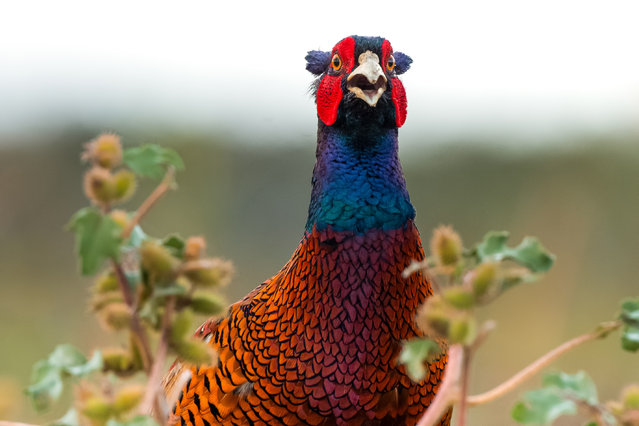
A pheasant is seen among grasses in Bursa, Turkiye on October 07, 2024. Pheasants mostly live in forested areas, thickets and wetlands. Unlike females, male pheasants have a much more remarkable structure with their long tails and feathers in bright and variable colors. Also, they feed on fruits, grains, seeds and invertebrates. (Photo by Alper Tuydes/Anadolu via Getty Images)

A pheasant is seen among grasses in Bursa, Turkiye on October 07, 2024. Pheasants mostly live in forested areas, thickets and wetlands. Unlike females, male pheasants have a much more remarkable structure with their long tails and feathers in bright and variable colors. Also, they feed on fruits, grains, seeds and invertebrates. (Photo by Alper Tuydes/Anadolu via Getty Images)
Details
27 Oct 2024 04:43:00
Anomaly Spotted In Russian Night Sky

These photos and video were taken in the Russian city of Astrakhan on the evening of June 7th, 2012. (Photo by Maxim Korotshenko)
Details
12 Jun 2012 10:06:00
“Business-class” cabins are seen at First Cabin hotel, which was converted from an old office building, in Tokyo, July 3, 2015. Record tourists to Japan are stretching the ability of hotels to accommodate them in a sector constrained by high costs, forcing developers to think out of the box for means to quickly increase lodging options without breaking the bank. (Photo by Toru Hanai/Reuters)

“Business-class” cabins are seen at First Cabin hotel, which was converted from an old office building, in Tokyo, July 3, 2015. Record tourists to Japan are stretching the ability of hotels to accommodate them in a sector constrained by high costs, forcing developers to think out of the box for means to quickly increase lodging options without breaking the bank. (Photo by Toru Hanai/Reuters)
Details
31 Jul 2015 10:57:00
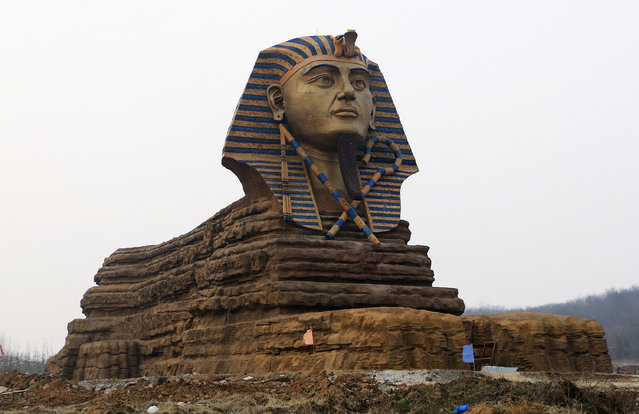
A full scale replica of the sphinx, which is part of an unfinished movie and animation tourism theme park, is pictured in Chuzhou, Anhui province, March 3, 2015. (Photo by Reuters/Stringer)

A full scale replica of the sphinx, which is part of an unfinished movie and animation tourism theme park, is pictured in Chuzhou, Anhui province, March 3, 2015. (Photo by Reuters/Stringer)
Details
31 Mar 2015 13:00:00
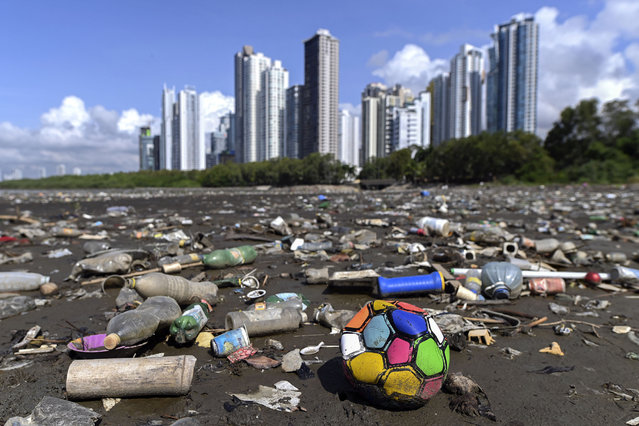
Garbage, including plastic waste, is seen at the beach of Costa del Este, in Panama City, on April 19, 2021. Every two weeks, Marine Biology students descend about five meters in the sea to take care of a coral nursery of the staghorn species (Acropora cervicornis) in Portobelo, Panama, with which they aim to restore reefs damaged by climate change and pollution, as part of the Reef2Reef project. (Photo by Luis Acosta/AFP Photo)

Garbage, including plastic waste, is seen at the beach of Costa del Este, in Panama City, on April 19, 2021. Every two weeks, Marine Biology students descend about five meters in the sea to take care of a coral nursery of the staghorn species (Acropora cervicornis) in Portobelo, Panama, with which they aim to restore reefs damaged by climate change and pollution, as part of the Reef2Reef project. (Photo by Luis Acosta/AFP Photo)
Details
21 Jun 2021 07:30:00
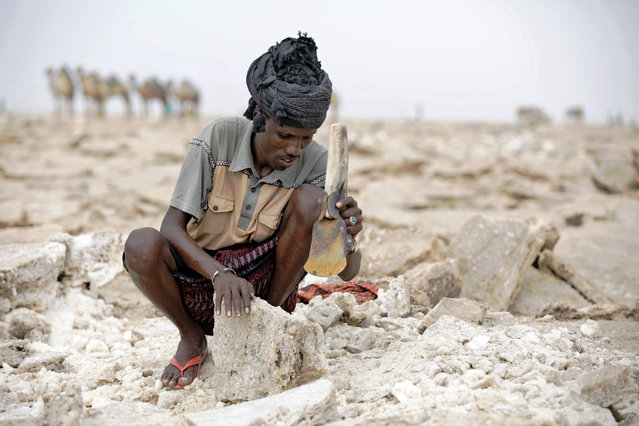
A man shaves blocks of salt from the Danakil Depression on 28 March 2017, in Afar, Ethiopia. (Photo by Zacharias Abubeker/AFP Photo)

A man shaves blocks of salt from the Danakil Depression on 28 March 2017, in Afar, Ethiopia. Every morning, hundreds of men converge on a dry lakebed in a remote corner of Ethiopia, where they cleave the ground open with handaxes to extract salt, just as their fathers and grandfathers once did. (Photo by Zacharias Abubeker/AFP Photo)
Details
19 Apr 2017 08:57:00