Loading...
Done
An aerial view shows a sinkhole 3.5 km (2 miles) to the east of Solikamsk-2 mine in Perm region, November 20, 2014. Shares in Russia's Uralkali, the world's top potash producer, fell sharply for a second day on Wednesday after a mine accident that could reduce global supplies and push up prices of the crop nutrient worldwide. (Photo by Reuters/Press service of Uralkali company)

An aerial view shows a sinkhole 3.5 km (2 miles) to the east of Solikamsk-2 mine in Perm region, November 20, 2014. Shares in Russia's Uralkali, the world's top potash producer, fell sharply for a second day on Wednesday after a mine accident that could reduce global supplies and push up prices of the crop nutrient worldwide. Uralkali shares have fallen 28 percent since Tuesday when it suspended work at its Solikamsk-2 mine, which accounts for a fifth of the company's output and 3.5 percent of global capacity, following an inflow of water. A sinkhole, stretching 30 by 40 metres (yards), found at an abandoned mine 3.5 km (2 miles) to the east, increased concern about the future of the mine because an inflow of water and the resulting sinkhole in 2006 forced another Uralkali operation to shut permanently. (Photo by Reuters/Press service of Uralkali company)
Details
22 Nov 2014 13:51:00
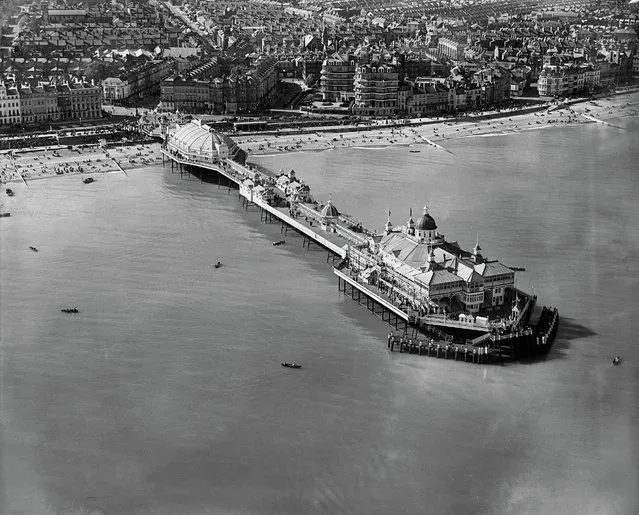
While the lido was described as bringing “modernism to the masses” on the British coast it was just the latest example of a trend that had been developing since Victorian times – transforming seaside towns into resorts for leisure and entertainment. In the latter half of the nineteenth century, the fashion was for local authorities to build great piers stretching from the promenade out into the sea

While the lido was described as bringing “modernism to the masses” on the British coast it was just the latest example of a trend that had been developing since Victorian times – transforming seaside towns into resorts for leisure and entertainment. In the latter half of the nineteenth century, the fashion was for local authorities to build great piers stretching from the promenade out into the sea. The Eastbourne Pier, pictured here in May 1931, was erected between 1866 and 1870 to an ingenious design by Eugenius Birch, which saw the structure sitting on special cups allowing the supporting struts to “move” in bad weather. Arranged on the pier's 1,000-foot length were kiosks, a theatre, a ballroom and a camera obscura. 1931. (Photo by Aerofilms Collection via “A History of Britain From Above”)
Details
25 Feb 2014 12:59:00


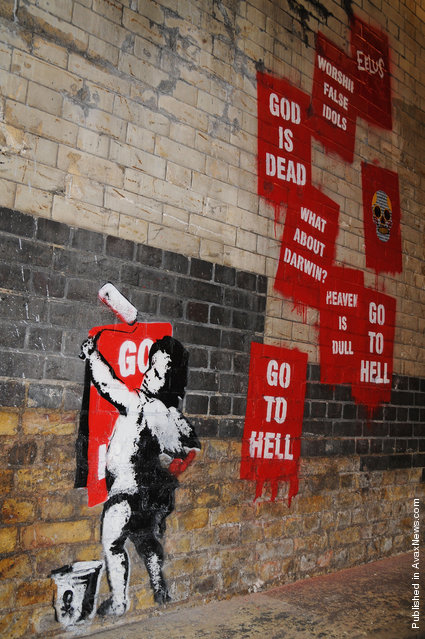
A giant new exhibition space created by famed graffiti artist Banksy opens to the public on May 3, 2008 in London, England. The disused tunnel beneath Waterloo station has been transformed by 30 artists from around the world. The three day event, tagged as the “Cans festival”, also invites the public to add their own stencil art. (Photo by Jim Dyson/Getty Images)
Details
13 Mar 2011 12:45:00
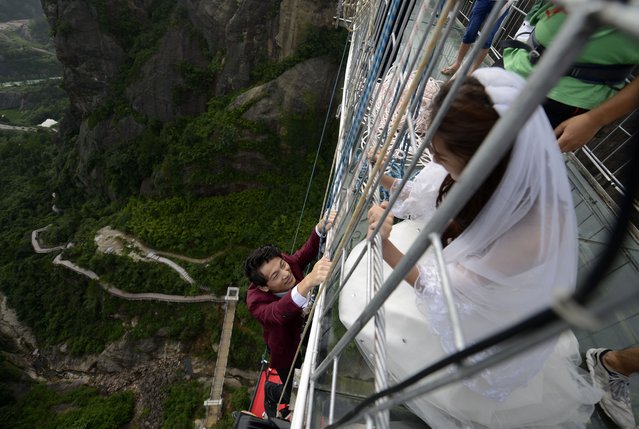
Newlyweds take wedding photos hanging from bridge, Yueyang, Hunan province, China on August 9, 2016. (Photo by Top Photo Corporation/Rex Features/Shutterstock)

Newlyweds take wedding photos hanging from bridge, Yueyang, Hunan province, China on August 9, 2016. They held such a special wedding ceremony on China's Qixi Festival. (Photo by Top Photo Corporation/Rex Features/Shutterstock)
Details
14 Sep 2016 10:41:00
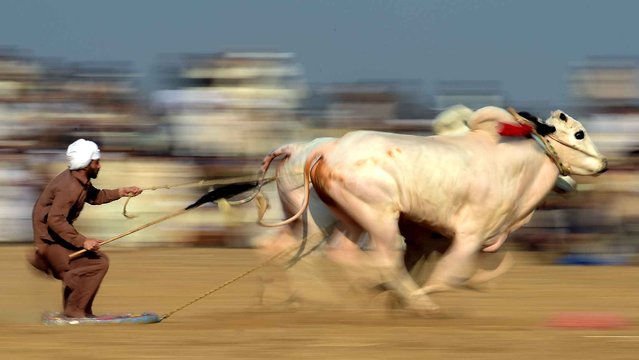
A Pakistani farmer guides his bulls as he competes in a traditional bull race in Khunda village in the northwestern district of Attock, some 80 kilometers from Islamabad on January 3, 2015. Tens of thousands of people gather whenever there is a bull race held in Pakistan which are usually the highlight of festivals organized in rural areas of the Asian country, and attract lots of spectators due to their thrilling nature. (Photo by Aamir Qureshi/AFP Photo)

A Pakistani farmer guides his bulls as he competes in a traditional bull race in Khunda village in the northwestern district of Attock, some 80 kilometers from Islamabad on January 3, 2015. Tens of thousands of people gather whenever there is a bull race held in Pakistan which are usually the highlight of festivals organized in rural areas of the Asian country, and attract lots of spectators due to their thrilling nature. The traditional competition attracts landlords and farmers from all around the province where the race is held, and they all bring their fastest and strongest bulls in hopes of gaining a reputation. (Photo by Aamir Qureshi/AFP Photo)
Details
10 Jan 2015 12:58:00
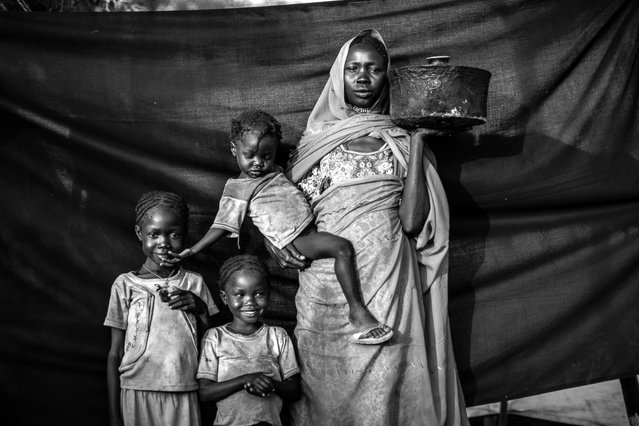
Magbola Alhadi, 20, and her three children pose for a portrait in Jamam refugee camp in Maban County, South Sudan on August 11th, 2012. Magboola and her family weathered aerial bombing raids for several months, but decided it was time to leave their village of Bofe the night that soldiers arrived and opened fire. (Photo by Brian Sokol/Panos Pictures)

Magbola Alhadi, 20, and her three children pose for a portrait in Jamam refugee camp in Maban County, South Sudan on August 11th, 2012. Magboola and her family weathered aerial bombing raids for several months, but decided it was time to leave their village of Bofe the night that soldiers arrived and opened fire. With her three children, she travelled for 12 days from Bofe to the town of El Fudj, on the South Sudanese border. The most important thing that Magboola was able to bring with her is the saucepan she holds in this photograph. It wasn't the largest pot that she had in Bofe, but it was small enough she could travel with it, yet big enough to cook sorghum for herself and her three daughters (from left: Aduna Omar, 6, Halima Omar, 4, and Arfa Omar, 2) during their journey. (Photo by Brian Sokol/Panos Pictures)
Details
18 Sep 2015 15:04:00
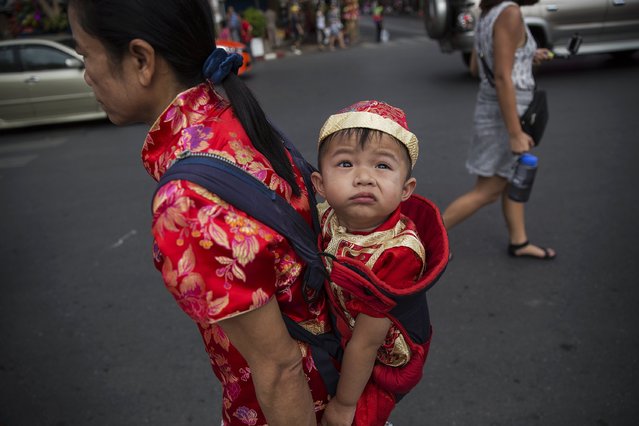
A woman carries her child, both wearing traditional red clothes celebrating the Chinese Lunar New Year in Bangkok February 19, 2015. (Photo by Damir Sagolj/Reuters)

A woman carries her child, both wearing traditional red clothes celebrating the Chinese Lunar New Year in Bangkok February 19, 2015. (Photo by Damir Sagolj/Reuters)
Details
20 Feb 2015 12:07:00
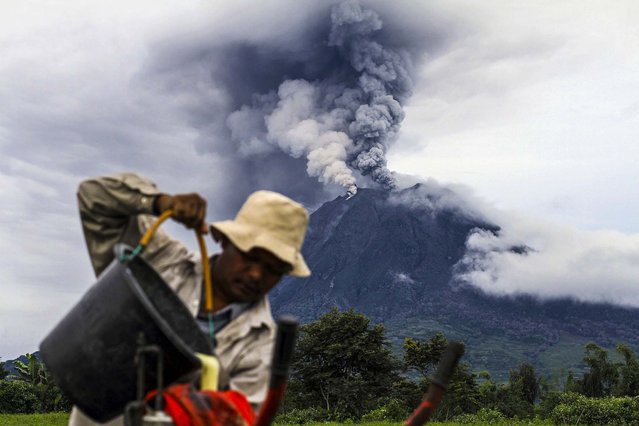
A villager pours pesticide from a bucket as Mount Sinabung spews ash at Kebayaken village in Karo district, Indonesia's North Sumatra province, on December 4, 2013. The country has ordered the evacuation of 15,000 residents near the active volcano. (Photo by Roni Bintang/Reuters)

A villager pours pesticide from a bucket as Mount Sinabung spews ash at Kebayaken village in Karo district, Indonesia's North Sumatra province, on December 4, 2013. The country has ordered the evacuation of 15,000 residents near the active volcano. (Photo by Roni Bintang/Reuters)
Details
07 Dec 2013 11:48:00