Loading...
Done
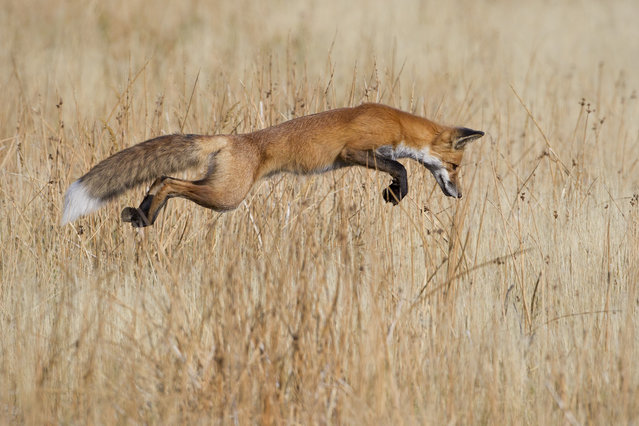
Canada: “Lucky pounce”. (Photo by Connor Stefanison/Wildlife Photographer of the Year 2013)

The winners of The London’s Natural History Museum's prestigious Wildlife Photographer of the Year for 2013 have finally been unveiled. Selected from almost 43,000 entries from 96 countries, the winners offer a glimpse of the stunning array of natural beauty on our planet. Photo: Canada: “Lucky pounce”. “Anticipating the pounce – that was the hardest part”, says Connor, who had come to Yellowstone National Park, Wyoming, USA, in search of wildlife as much as the spectacular landscape. He had found this fox, his first ever, on his last day in the park. It was so absorbed in hunting that Connor had plenty of time to get out of the car and settle behind a rock. It quartered the grassland, back and forth, and then started staring intently at a patch of ground, giving Connor just enough warning of the action to come. When it sprung up, Connor got his shot. And when it landed, the fox got his mouse. (Photo by Connor Stefanison/Wildlife Photographer of the Year 2013)
Details
17 Oct 2013 08:12:00
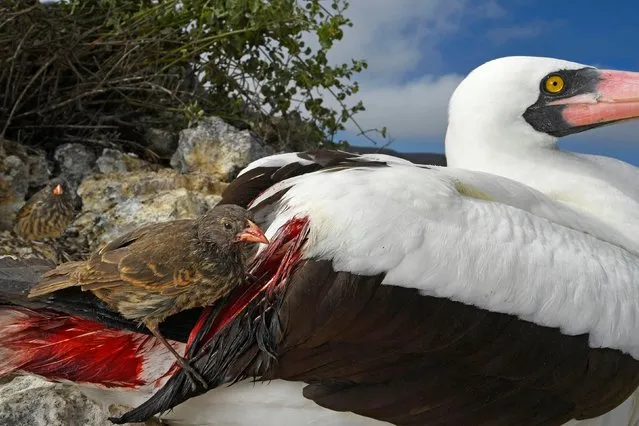
Bloodthirsty by Thomas P Peschak, Germany/South Africa — winner, Behaviour: birds. When rations run short on Wolf Island, in the remote northern Galápagos, the sharp-beaked ground finches become vampires. Their sitting targets are Nazca boobies and other large birds. The finches rely on a scant diet of seeds and insects, which regularly dries up, so they drink blood to survive. ‘I’ve seen more than half a dozen finches drinking from a single Nazca booby,’ says Tom. Rather than leave their nests the boobies tolerate the vampires, and the blood loss doesn’t seem to cause permanent harm. (Photo by Thomas P Peschak/2018 Wildlife Photographer of the Year)

Bloodthirsty by Thomas P. Peschak, Germany/South Africa — winner, Behaviour: birds. When rations run short on Wolf Island, in the remote northern Galápagos, the sharp-beaked ground finches become vampires. Their sitting targets are Nazca boobies and other large birds. The finches rely on a scant diet of seeds and insects, which regularly dries up, so they drink blood to survive. ‘I’ve seen more than half a dozen finches drinking from a single Nazca booby,’ says Tom. Rather than leave their nests the boobies tolerate the vampires, and the blood loss doesn’t seem to cause permanent harm. (Photo by Thomas P. Peschak/2018 Wildlife Photographer of the Year)
Details
19 Oct 2018 00:05:00
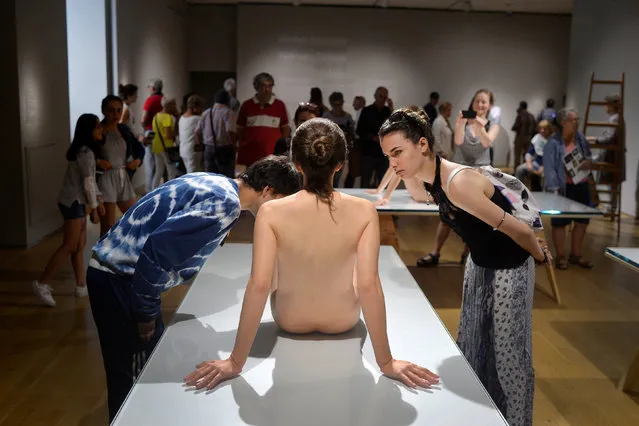
Visitors observe the sculpture “That Girl” by U.S. artist Paul McCarthy, at the Hyperrealist Sculpture 1973-2016 exhibition in the Museum of Bellas Artes in Bilbao, northern Spain, July 27, 2016. (Photo by Vincent West/Reuters)

Visitors observe the sculpture “That Girl” by U.S. artist Paul McCarthy, at the Hyperrealist Sculpture 1973-2016 exhibition in the Museum of Bellas Artes in Bilbao, northern Spain, July 27, 2016. (Photo by Vincent West/Reuters)
Details
29 Jul 2016 12:15:00
Swimmers in fancy costume take part in the New Year's Day swim at Saundersfoot in Wales, Britain, January 1, 2017. (Photo by Rebecca Naden/Reuters)

Swimmers in fancy costume take part in the New Year's Day swim at Saundersfoot in Wales, Britain, January 1, 2017. (Photo by Rebecca Naden/Reuters)
Details
02 Jan 2017 13:13:00
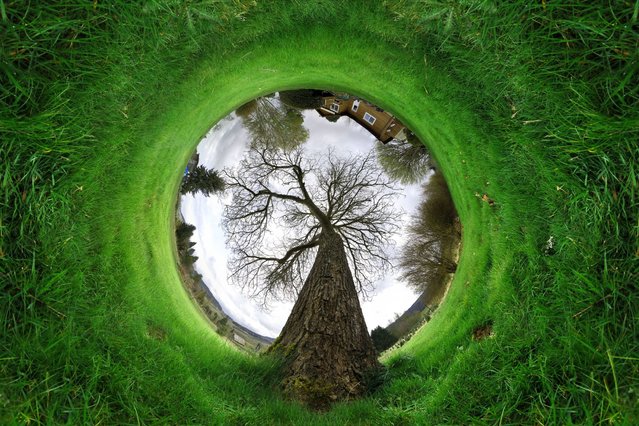
This incredible panoramic photographs are distorted to create miniature worlds and terrifying tunnels. (Photo by Caters News)

This incredible panoramic photographs are distorted to create miniature worlds and terrifying tunnels. (Photo by Caters News)
Details
25 Jan 2014 12:16:00
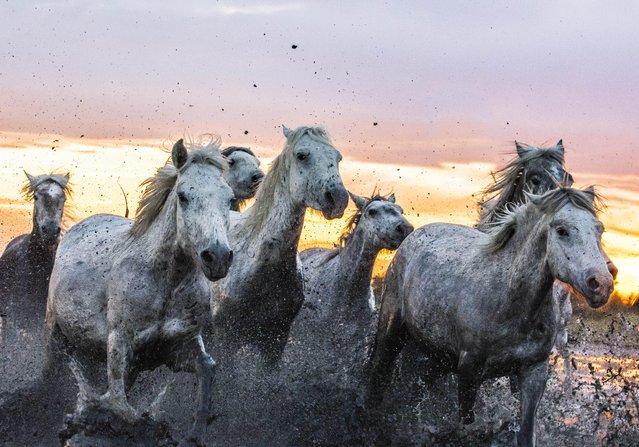
White horses of the Camargue thunder through the shallow salt flats at sunset on December 8, 2022. Known as Horses of the Sea, the breed native to the wetlands in southern France is one of the oldest in the world. (Photo by Nathalie Mountain/Media Drum Images)

White horses of the Camargue thunder through the shallow salt flats at sunset on December 8, 2022. Known as Horses of the Sea, the breed native to the wetlands in southern France is one of the oldest in the world. (Photo by Nathalie Mountain/Media Drum Images)
Details
18 Dec 2022 06:27:00
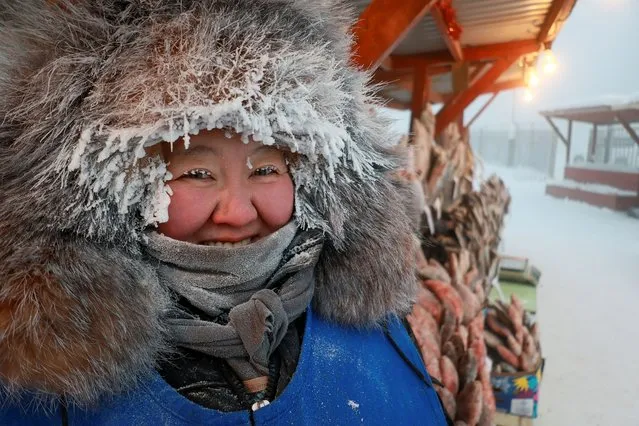
Vendor Nyurgusun Starostina, 47, poses for a picture at an open-air market on a frosty day in Yakutsk, Russia, December 5, 2023. Temperatures in parts of the Sakha Republic, also known as Yakutia and located in the northeastern part of Siberia, went below minus 50 degrees Celsius (minus 58 degrees Fahrenheit) on December 5. (Photo by Roman Kutukov/Reuters)

Vendor Nyurgusun Starostina, 47, poses for a picture at an open-air market on a frosty day in Yakutsk, Russia, December 5, 2023. Temperatures in parts of the Sakha Republic, also known as Yakutia and located in the northeastern part of Siberia, went below minus 50 degrees Celsius (minus 58 degrees Fahrenheit) on December 5. (Photo by Roman Kutukov/Reuters)
Details
20 Dec 2023 02:12:00
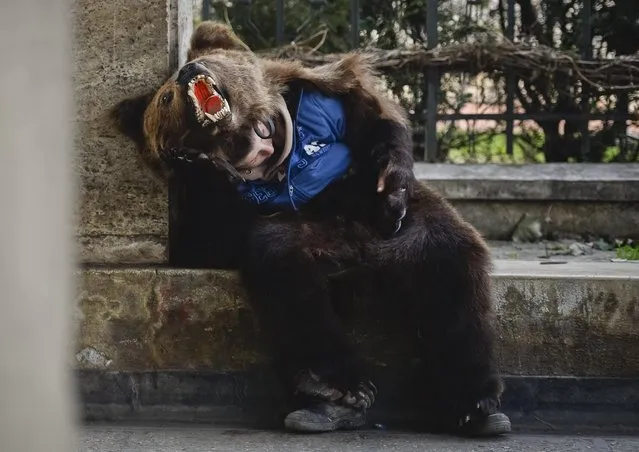
Florin Bors, aged 8 from Bacau, northern Romania, wearing a bear fur takes a break from performing a holiday season ritual in Bucharest, Romania, Tuesday, December 16, 2014. In pre-Christian rural traditions, dancers wearing colored costumes or animal furs, touring house to house in villages singing and dancing to ward off evil. (Photo by Octav Ganea/AP Photo/Mediafax)

Florin Bors, aged 8 from Bacau, northern Romania, wearing a bear fur takes a break from performing a holiday season ritual in Bucharest, Romania, Tuesday, December 16, 2014. In pre-Christian rural traditions, dancers wearing colored costumes or animal furs, touring house to house in villages singing and dancing to ward off evil. In recent years following the economic downturn in Romania, a European Union member since 2007, the tradition has moved to Romania's cities where dancers travel to perform the ritual for money. (Photo by Octav Ganea/AP Photo/Mediafax)
Details
20 Dec 2014 12:07:00