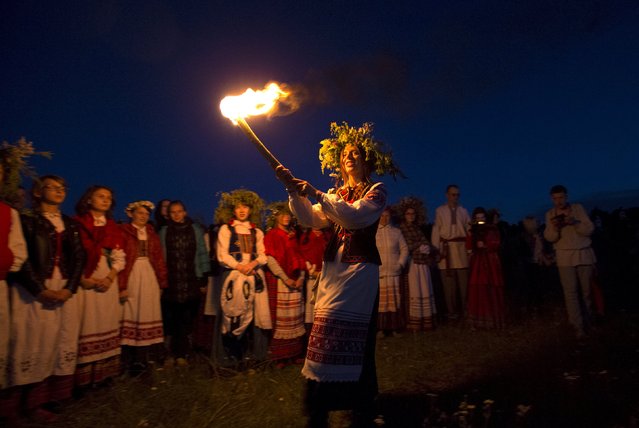
Belarusian people take part in the Ivan Kupala festival near the town of Rakov, west of Minsk June 27, 2015. The ancient tradition, originating from pagan times, is usually marked with grand overnight festivities. On Kupala night, people sing and dance around campfires, believing it will purge them of their sins and make them healthier. (Photo by Vasily Fedosenko/Reuters)
Indigenous dancers participate in a traditional healing ceremony for the mother earth at El Salvador del Mundo Square in San Salvador, December 10, 2014. Salvadorean indigenous organizations participated in a ceremony to ask for solutions to stop climate change and respect planet earth as the U.N. Climate Change Conference COP 20 is bring held in Peru. The two-week long United Nations climate summit opened on December 1 in Lima, with experts and analysts from around the world gathering to discuss melting glaciers and extreme weather patterns. (Photo by Jose Cabezas/Reuters)
Model Helen Kwok displays the nail art completed by a competitor at the Canada Nail Cup in Vancouver, Monday, February 16, 2015. Nail artists competed in multiple categories at the event, which according to organizers is the only nail competition in the country. (Photo by Darryl Dyck/AP Photo/The Canadian Press)
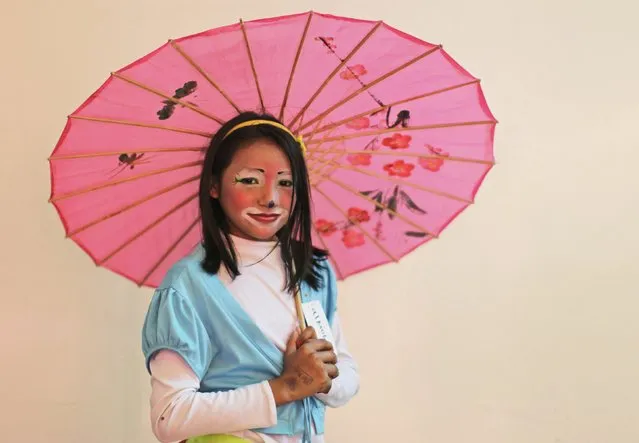
A Salvadorean clown going by the name of “Almohadita” poses during National Clown Day celebrations at Beethoven Square in San Salvador December 3, 2014. The Salvadorean congress declared the second Wednesday of December as National Clown Day to honour all Salvadorean clowns in their efforts to bring fun to the country, reported local media. (Photo by Jose Cabezas/Reuters)
Spectators await the start of a cinema screening at a Kinostar De Lux Multiplex in the Moscow suburb of Khimki, December 7, 2014. Furniture retailer IKEA has converted one of the cinema halls, completely replacing standard seats with their furniture, according to local media. There are 17 double beds fitted in the hall, which was renamed to “It wakes love”. (Photo by Sergei Karpukhin/Reuters)
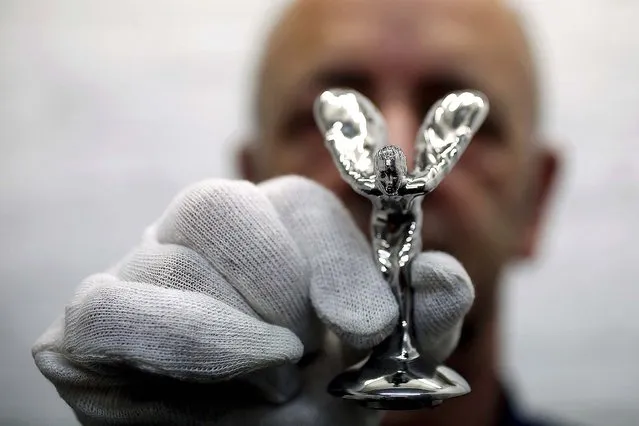
The Spirit of Ecstasy, also called “Emily”, “Silver Lady” or “Flying Lady,” was designed by English sculptor Charles Robinson Sykes and carries with her a story about a secret passion between John Walter Edward Douglas-Scott-Montagu (second Lord Montagu of Beaulieu after 1905, a pioneer of the automobile movement, and editor of The Car Illustrated magazine) and his love and the model for the emblem, his secretary Eleanor Velasco Thornton. Photo: Worker Ronald Little displays a finished “Spirit of Ecstasy”. (Photo by Stefan Wermuth/Reuters)
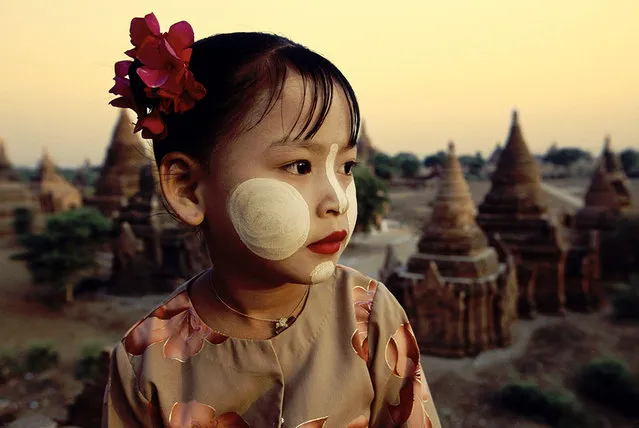
The Kingdom of Pagan (also commonly known as the Pagan Dynasty and the Pagan Empire) was the first kingdom to unify the regions that would later constitute modern-day Burma (Myanmar). Pagan's 250-year rule over the Irrawaddy valley and its periphery laid the foundation for the ascent of Burmese language and culture, the spread of Burman ethnicity in Upper Burma, and the growth of Theravada Buddhism in Burma and in mainland Southeast Asia.