Loading...
Done
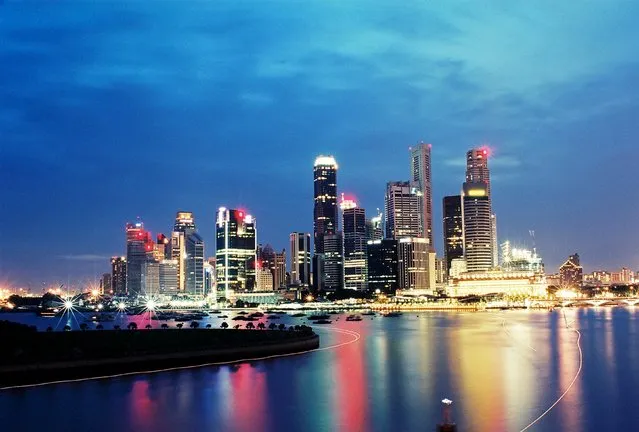
Small transportation boats, known as bumboats, leave trails of light as they travel across Marina Bay past the skyline of Singapore in this photo taken in 2004. Singapore holds a Jubilee weekend from 7 to 10 August to celebrate the 50th anniversary of its independence. (Photo by Edgar Su/Reuters)

Small transportation boats, known as bumboats, leave trails of light as they travel across Marina Bay past the skyline of Singapore in this photo taken in 2004. Singapore holds a Jubilee weekend from 7 to 10 August to celebrate the 50th anniversary of its independence. Fifty years ago, hundreds of small boats lined the Singapore river in the city centre. Today, most small boats are gone, except a handful of neon-lit tourist ferries. Maritime trade is still the backbone of the city-state but after decades of rapid growth Singapore, which at less than half the size of London is among the world’s most densely populated nations, is also a popular tourist destination and a thriving global financial hub. (Photo by Edgar Su/Reuters)
Details
01 Aug 2015 12:26:00
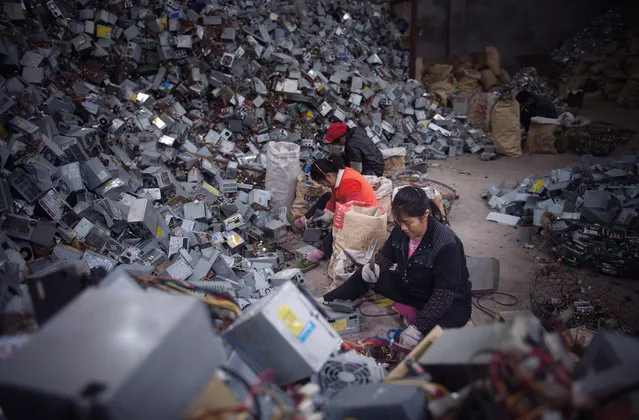
“The sustainable development goals cannot be met unless waste management is addressed as a priority”, says UK waste management charity Waste Aid. “E-waste is one of the fastest growing categories of the 7-10bn tonnes of waste produced globally every year”, adds director Mike Webster. “In our view, decent waste management is a basic right and we want governments around the world take this issue much more seriously – in 2012 only 0.2% of international aid went on improving solid waste management – it’s just not enough”. (Photo by Kai Loeffelbein/laif Agentur)

Sustainable development goal target 12.5 is to reduce waste. But with a planet increasingly dependent on technology, is that even possible? As of today, over 30m tonnes of electronic waste has been thrown out so far this year, according to the World Counts. Most e-waste is sent to landfills in Asia and Africa where it is recycled by hand, exposing the people who do it to environmental hazards. Kai Loeffelbein’s photographs of e-waste recycling in Guiyu, southern China show what happens to discarded computers. (Photo by Kai Loeffelbein/laif Agentur)
Details
19 Oct 2016 12:14:00
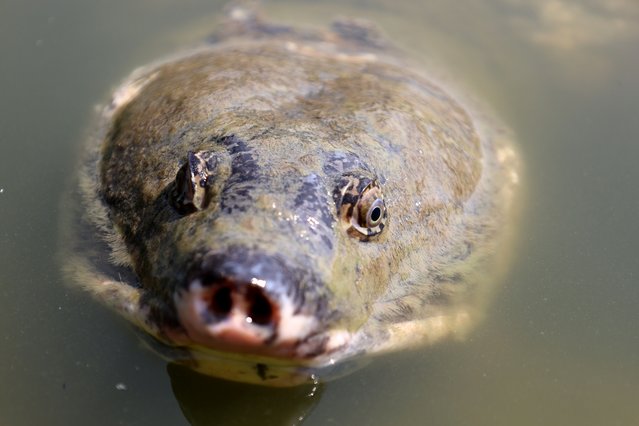
Black softshell turtle or Bostami turtle (Nilssonia nigricans), extremely rare and critically endangered species of tortoise is seen in a pond in Chittagong, Bangladesh on March 1, 2022. For decades, the breeding grounds have shrunk and their habitat has been threatened by habitat pollution. Through conservation methods and protection of the species, some of these turtles can be found today throughout the wild, and scientists and environmental biologists are continuing to work hard to preserve this endangered species and their natural habitat. (Photo by Mohammad Shajahan/Anadolu Agency via Getty Images)

Black softshell turtle or Bostami turtle (Nilssonia nigricans), extremely rare and critically endangered species of tortoise is seen in a pond in Chittagong, Bangladesh on March 1, 2022. For decades, the breeding grounds have shrunk and their habitat has been threatened by habitat pollution. (Photo by Mohammad Shajahan/Anadolu Agency via Getty Images)
Details
26 May 2024 04:02:00
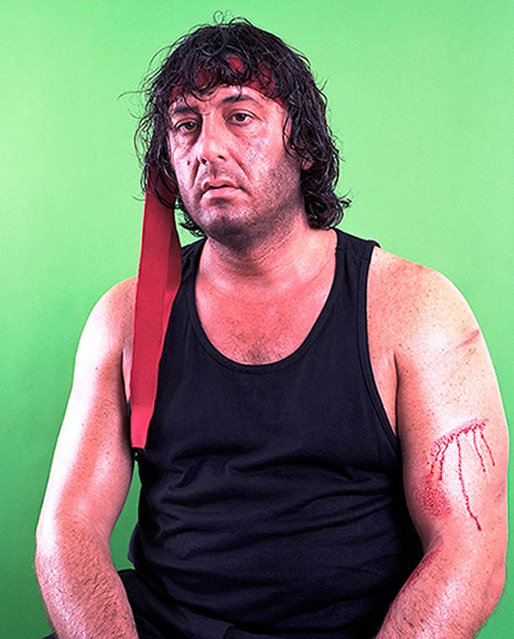
Nicolas Silberfaden: Superheroes

Due to the current economic, social and cultural crisis in The United States of America today, I have decided to do a photographic project consisting of a series of studio portraits of superhero and celebrity impersonators that live and work in the city of Los Angeles. Most of them unemployed Americans, they decided to suit up with their costumes and hit the streets, animate parties and events in efforts to make ends meet. Making them pose in their costumes against a colorful backdrop, I ask them to manifest feelings of genuine sadness – honest emotions that are a consequence of our current times. The result is a somber, striking visual image that contradicts the iconic nature of strength and moral righteousness typical in American superhero and celebrity imagery. Creating the illusion that Superman does exist – that he too was fallible and affected by America’s downturn.

Nicolas Silberfaden
Details
06 Dec 2012 12:13:00
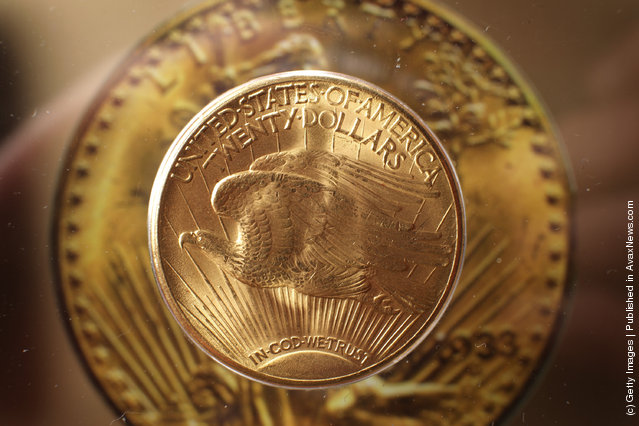
A 'Double Eagle' gold twenty dollar coin

“A Double Eagle is a gold coin of the United States with a denomination of $20. (Its gold content of 0.9675 troy oz was worth $20 at the then official price of $20.67/oz). The coins are made from a 90% gold (0.900 fine = 21.6 kt) and 10% copper alloy”. – Wikipedia

Photo: A “Double Eagle” gold twenty dollar coin is displayed above a catalogue picture showing the reverse side of the coin at Goldsmith's Hall on March 2, 2012 in London, England. Nearly half a million of these coins were originally minted in the midst of the Great Depression in the US. Only 13 are known today after the rest were melted down before they ever left the US Mint, sacrificed as part of a strategy to stabalise the American economy. In 2002 a Double Eagle sold at auction for $7.6 million. (Photo by Peter Macdiarmid/Getty Images)
Details
03 Mar 2012 10:37:00
Russians Go To The Polls In Presidential Election And The Kremlin Prepares For Protests

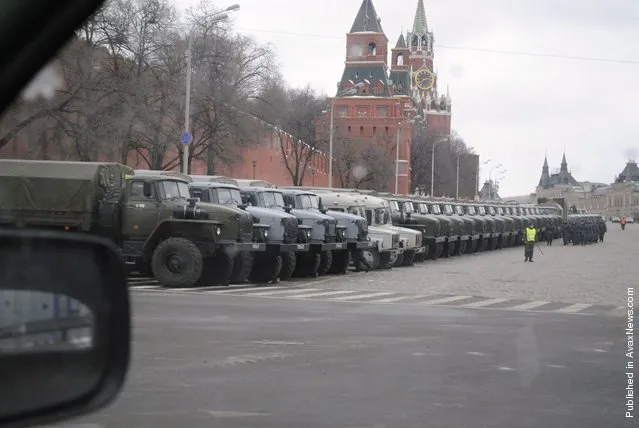
(Excuse me for the clumsy electronic translator) Today in Moscow presidential elections are spent. Abundantly clear that without dependence from their results the winner will be declared Vladimir Putin. It can lead to the mass protest. Therefore the authorities have deduced on streets of thousand soldiers and policemen. For example, personally I (Avax) see from the window: four buses and two trucks with RIOT police. In photos more low – Moscow on March 04, 2012. A Garden Ring, The Tverskaya street, The Mayoralty, The State Duma, and The Bolshoi theater. (Photos by: Vladimir Maltsev; Source: LiveJournal; Rustem Adagamov; Source: LiveJournal).
Details
04 Mar 2012 13:22:00
Negin Ekhpulwak, leader of the Zohra orchestra, an ensemble of 35 women, practises on a piano at Afghanistan's National Institute of Music, in Kabul, Afghanistan April 9, 2016. (Photo by Ahmad Masood/Reuters)

Negin Ekhpulwak, leader of the Zohra orchestra, an ensemble of 35 women, practises on a piano at Afghanistan's National Institute of Music, in Kabul, Afghanistan April 9, 2016. Playing instruments was banned under Taliban rule in Afghanistan, and even today, many conservative Muslims frown on most forms of music. Living in an orphanage in the capital, Kabul, 19-year-old Negin Ikhpolwak leads an ensemble of 35 women that plays both Western and Afghan musical instruments. In a country notorious internationally for harsh restrictions on women in most areas of life, Negin's story highlights a double challenge. (Photo by Ahmad Masood/Reuters)
Details
19 Apr 2016 13:47:00
(L-R) A man nicknamed "Barcelona", Alexey Bolotov and Alexey Jakushin drink vodka as they travel by a pioneer motorised railcar on their way to Kalach, Sverdlovsk region, Russia October 18, 2015. The "pioneer," a light auxiliary rail vehicle, is a popular form of transport among people who live along the Alapayevsk railway. (Photo by Maxim Zmeyev/Reuters)

(L-R) A man nicknamed "Barcelona", Alexey Bolotov and Alexey Jakushin drink vodka as they travel by a pioneer motorised railcar on their way to Kalach, Sverdlovsk region, Russia October 18, 2015. The "pioneer," a light auxiliary rail vehicle, is a popular form of transport among people who live along the Alapayevsk railway. In a remote corner of the Urals region at the end of a narrow-gauge railway is Kalach, population about a dozen. Three decades ago 600 people called the village home, but the local forestry industry suffered as the former Soviet Union imploded and people moved away in search of work. In Kalach today there are no telephones, no mobile reception and only a few hours of electricity a day. (Photo by Maxim Zmeyev/Reuters)
Details
15 Nov 2015 08:06:00