Loading...
Done
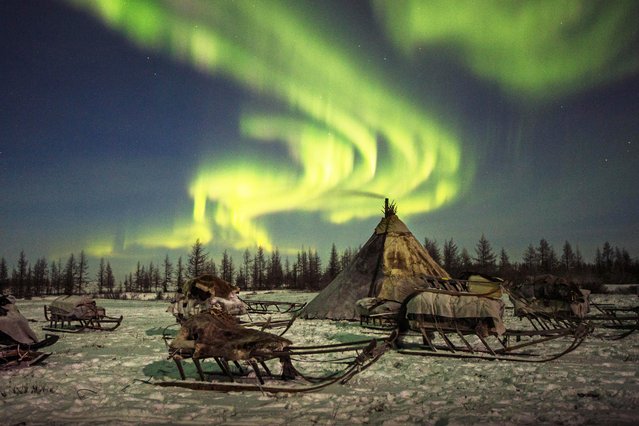
An empty camp is shown beneath a colourful sky in Siberia, December 2016. (Photo by Timothy Allen/Barcroft Productions)

A British photographer has captured life at the “edge of the world”. Timothy Allen, best known for his work on BBC's Human Planet, trekked through the freezing Siberian wilderness for 16 days as he joined part of an 800km migration of reindeer in the Yamal-Nenets region – a name that roughly translates to “edge of the world”. The stunning pictures feature the nomadic Nenets tribe, who drink blood to survive in -45°C temperatures. Timothy's epic journey, which will be revealed in an eight-minute documentary on Animal Planet USA, saw him travel across the bleak terrain of the frozen Ob River with the Nenets people in December last year. Here: An empty camp is shown beneath a colourful sky in Siberia, December 2016. (Photo by Timothy Allen/Barcroft Productions)
Details
19 Sep 2017 07:48:00
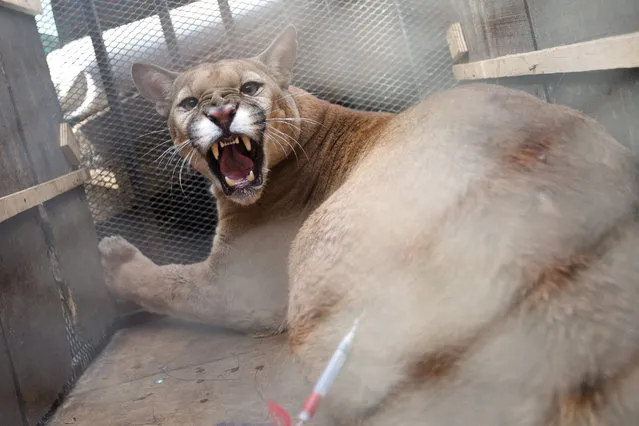
A male puma, named Bordo arrives for an examination and tests at a veterinary in Brasilia, Brazil, 31 October 2017 (issued 01 November 2017). Bordo, a young male puma, captured when he was a cub, will become the first animal of his species to be released in a sanctuary in the Brazilian savannah in Goias State close to Brasilia. The sanctuary, a preserve for wild cats,  is in the first phase and is located on private lands but state funded. (Photo by Joedson Alves/EPA/EFE)

A male puma, named Bordo arrives for an examination and tests at a veterinary in Brasilia, Brazil, 31 October 2017 (issued 01 November 2017). Bordo, a young male puma, captured when he was a cub, will become the first animal of his species to be released in a sanctuary in the Brazilian savannah in Goias State close to Brasilia. The sanctuary, a preserve for wild cats, is in the first phase and is located on private lands but state funded. (Photo by Joedson Alves/EPA/EFE)
Details
05 Nov 2017 08:13:00
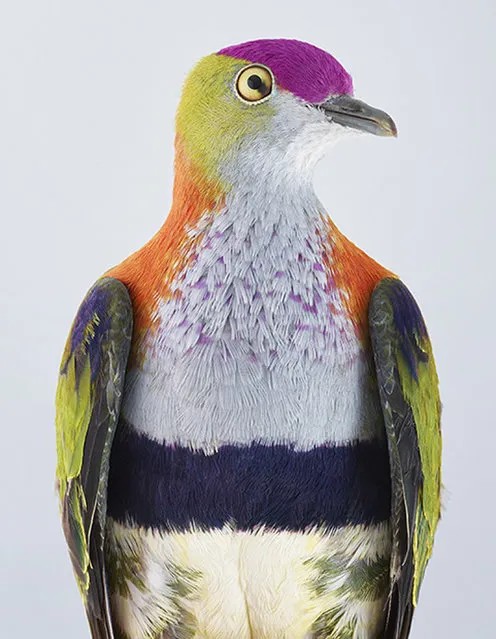
The series, which was photographed between 2015 and 2017, is currently on display at the Purdy Hicks Gallery in London, running through August 24, 2018. (Photo by Leila Jefferies/Caters News Agency)

This photographer has made it her mission to change people’s perception of pigeons – focusing on some of the most beautiful of the more than 300 species found globally. Rather than focus on the gray, nondescript birds people usually associate with the term “pigeon”, Leila Jeffreys has instead decided to snap the more vibrant varieties. Whether it be the wompoo pigeon, with its deep purple breast and green wings, or the rose-crowned fruit dove, with its pink head, Jeffreys, 46, gives the birds the same attention she would give a human model. (Photo by Leila Jefferies/Caters News Agency)
Details
14 Aug 2018 00:01:00
High angle view of a young woman reading in a bathtub, turning page, enjoying time with herself. Candles and red wine. Valentines day concept, International womans day. (Photo by Vuk Saric/Getty Images)

High angle view of a young woman reading in a bathtub, turning page, enjoying time with herself. Candles and red wine. Valentines day concept, International womans day. (Photo by Vuk Saric/Getty Images)
Details
25 May 2024 01:51:00
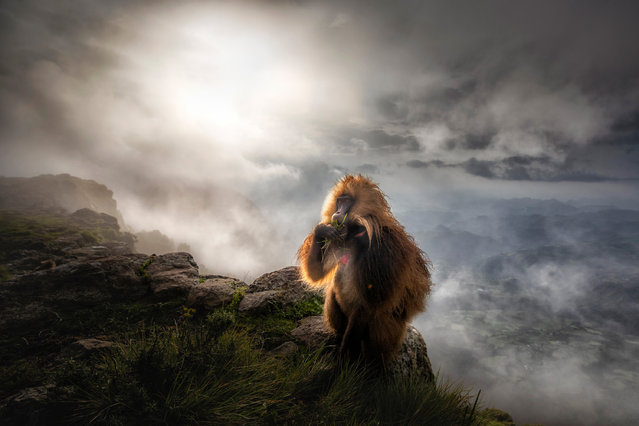
Highly commended, mammals: Gelada after the storm – Marco Gaiotti (Italy). “Gelada baboons are the only monkey species in the world that feed on grasses. They are native to the tableland of Ethiopia. Every morning large family groups wander from their sleeping places in the steep rock face, up to 1,000 metres high, to the feeding grounds at the tablelands. This image clearly depicts their feeding strategy: they pull out bunches of grass, sort the stalks and then lift them to their mouth. This shot was taken towards the end of the rainy season after a heavy storm”. (Photo by Marco Gaiotti/2019 GDT European Wildlife Photographer of the Year)

Highly commended, mammals: Gelada after the storm – Marco Gaiotti (Italy). “Gelada baboons are the only monkey species in the world that feed on grasses. They are native to the tableland of Ethiopia. Every morning large family groups wander from their sleeping places in the steep rock face, up to 1,000 metres high, to the feeding grounds at the tablelands. This image clearly depicts their feeding strategy: they pull out bunches of grass, sort the stalks and then lift them to their mouth. This shot was taken towards the end of the rainy season after a heavy storm”. (Photo by Marco Gaiotti/2019 GDT European Wildlife Photographer of the Year)
Details
31 Oct 2019 00:03:00
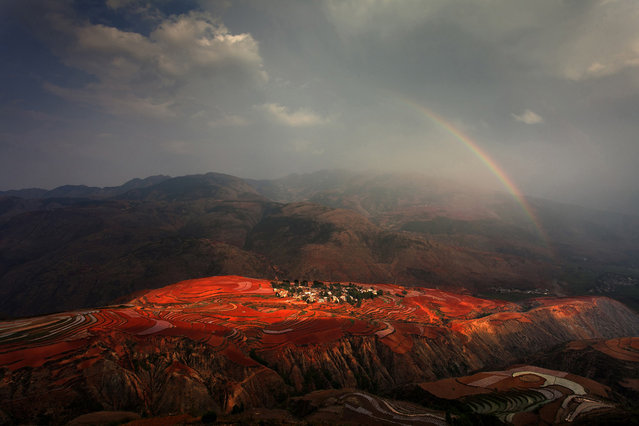
“Red Land: Sunset Cloud Village is one of the most picturesque places in Red Land, China. As its name indicates, it's best to see before sunset. The reddish brown soil turns redder after rainfall and after farmers plow the land”. (Photo and comment by Peng Jiang/National Geographic Photo Contest via The Atlantic)

“Red Land: Sunset Cloud Village is one of the most picturesque places in Red Land, China. As its name indicates, it's best to see before sunset. The reddish brown soil turns redder after rainfall and after farmers plow the land”. (Photo and comment by Peng Jiang/National Geographic Photo Contest via The Atlantic)


Details
05 Dec 2012 11:07:00
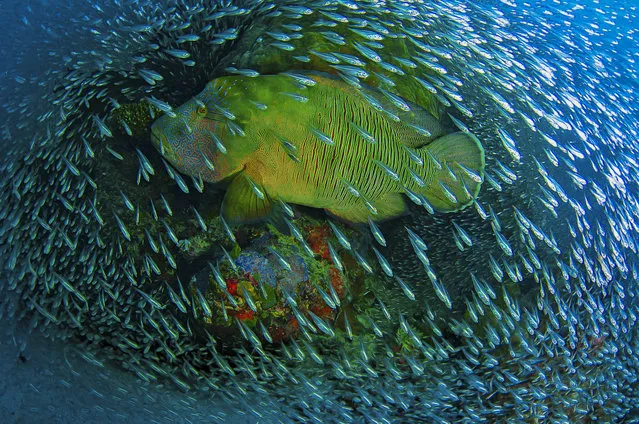
“7584 Fish”. On a windy day right after a Cyclone passed the far northern Great Barrier Reef i took some friends out to the reef. Never before i saw that many glass fish on this particular coral “bommie”. Just when i setup my camera, this Napoleon Wrasse swam right through the school of fish building a living frame. Photo location: Cairns, Great Barrier Reef, Flynn Reef, Australia. (Photo and caption by Christian Miller/National Geographic Photo Contest)

“7584 Fish”. On a windy day right after a Cyclone passed the far northern Great Barrier Reef i took some friends out to the reef. Never before i saw that many glass fish on this particular coral “bommie”. Just when i setup my camera, this Napoleon Wrasse swam right through the school of fish building a living frame. Photo location: Cairns, Great Barrier Reef, Flynn Reef, Australia. (Photo and caption by Christian Miller/National Geographic Photo Contest)
Details
07 Oct 2014 11:48:00
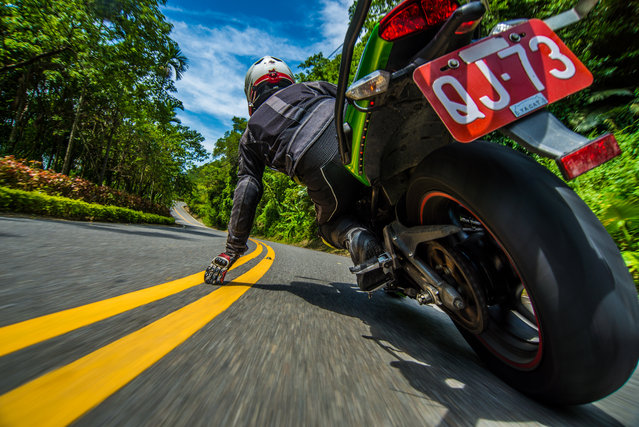
“Freedom”. After the 30 years banning import large motorcycle, in 2007, the Taiwan government reopened the import licensing of the motorcycle displacement over 550 cubic centimeter. Those large bikes, which were never seen before, were strange thought and treated unequally frequently. However, those adversity will not stop those enthusiastic bike riders from chasing the road of freedom. Photo location: Taiwan. (Photo and caption by 火花 羅/National Geographic Photo Contest)

“Freedom”. After the 30 years banning import large motorcycle, in 2007, the Taiwan government reopened the import licensing of the motorcycle displacement over 550 cubic centimeter. Those large bikes, which were never seen before, were strange thought and treated unequally frequently. However, those adversity will not stop those enthusiastic bike riders from chasing the road of freedom. Photo location: Taiwan. (Photo and caption by 火花 羅/National Geographic Photo Contest)
Details
14 Oct 2014 11:14:00