Loading...
Done
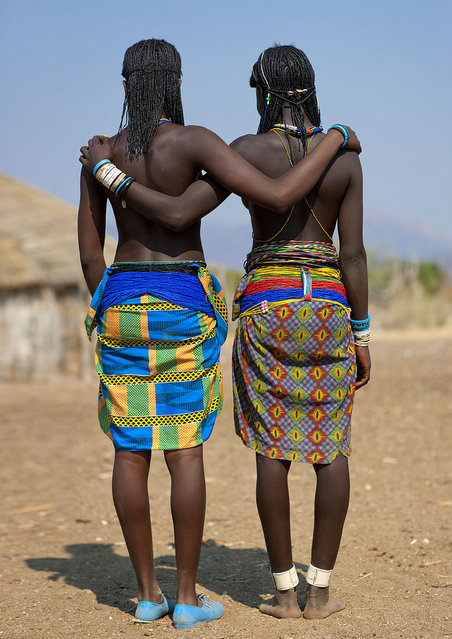
“Show us our butts! Mucawana tribe – Angola. In Soba village, the Muhacaona (Mucawana) tribe, perhaps the best place i have visited. They use cow dung and fat to make this so nice haircut, and love the beads. They asked me to make pictures of their backs... and butts to see on the camera screen if everything was perfect!”. (Eric Lafforgue)

“Show us our butts! Mucawana tribe – Angola. In Soba village, the Muhacaona (Mucawana) tribe, perhaps the best place i have visited. They use cow dung and fat to make this so nice haircut, and love the beads. They asked me to make pictures of their backs... and butts to see on the camera screen if everything was perfect!”. (Photo and comments by Eric Lafforgue)
Details
09 Nov 2012 15:04:00

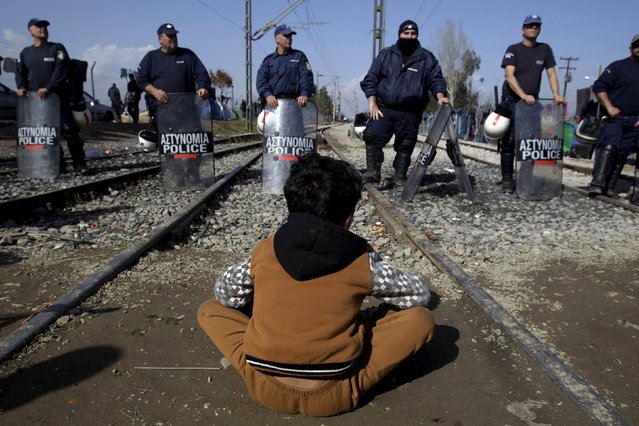
A refugee sits in front of a Greek riot police cordon during a protest at the Greek-Macedonian border, near the Greek village of Idomeni, March 1, 2016. (Photo by Alexandros Avramidis/Reuters)

A refugee sits in front of a Greek riot police cordon during a protest at the Greek-Macedonian border, near the Greek village of Idomeni, March 1, 2016. (Photo by Alexandros Avramidis/Reuters)
Details
02 Mar 2016 13:19:00
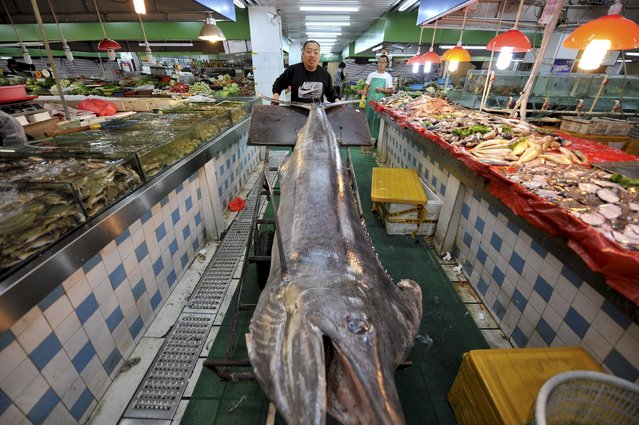
A seafood vendor moves a giant swordfish to his stall at a market in Qingdao, Shandong province, China, September 12, 2015. (Photo by Reuters/Stringer)

A seafood vendor moves a giant swordfish to his stall at a market in Qingdao, Shandong province, China, September 12, 2015. The 4.1-metre-long (13.5 feet) swordfish, weighed about 309.5 kilograms (682 lbs), was caught by local fishermen on Friday, local media reported. (Photo by Reuters/Stringer)
Details
13 Sep 2015 13:44:00
Models wait backstage during the Ukrainian Fashion Week in Kiev, October 16, 2015. (Photo by Valentyn Ogirenko/Reuters)

Models wait backstage during the Ukrainian Fashion Week in Kiev, October 16, 2015. (Photo by Valentyn Ogirenko/Reuters)
Details
19 Oct 2015 08:08:00
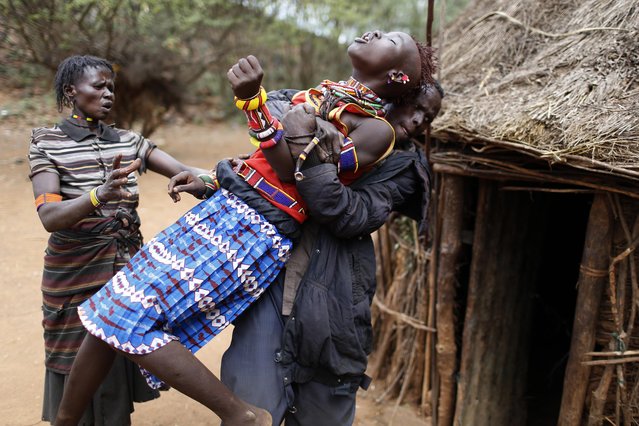
A man holds a girl as she tries to escape when she realised she is to to be married, about 80 km (50 miles) from the town of Marigat in Baringo County, Kenya,  December 7, 2014. As Pokot tradition dictates, the future husband arrived to her family home with a group of men to collect the girl. The men arrived with the last settled dowry of livestock for the girl's family.  (Photo by Siegfried Modola/Reuters)

A man holds a girl as she tries to escape when she realised she is to to be married, about 80 km (50 miles) from the town of Marigat in Baringo County, Kenya, December 7, 2014. As Pokot tradition dictates, the future husband arrived to her family home with a group of men to collect the girl. The men arrived with the last settled dowry of livestock for the girl's family. In this case it was 20 goats, three camels and 10 cows, given during a period of several weeks. (Photo by Siegfried Modola/Reuters)
Details
11 Dec 2014 14:07:00
Children Photos By Kim Anderson Part 1

Kim Anderson photography career, now overseen from his home base in a Swiss mountainside village, began the way of many shutter bugs. His early photos focused on fashion and people, as well as photography for advertising agencies.
Details
25 Mar 2014 13:11:00
Paintings Created With Liquid Resin By Jessica Dunegan

Dressed in a torn sleeveless t-shirt, sweatpants, and an ominous looking gas mask, the talented mind of Jessica Dunegan swirls with creative ideas for turn flat pictures into surreal pieces of art with depth, texture, and shine. Jessica’s selection of media is far different than most creators of surreal portraits.
Details
04 May 2014 21:34:00
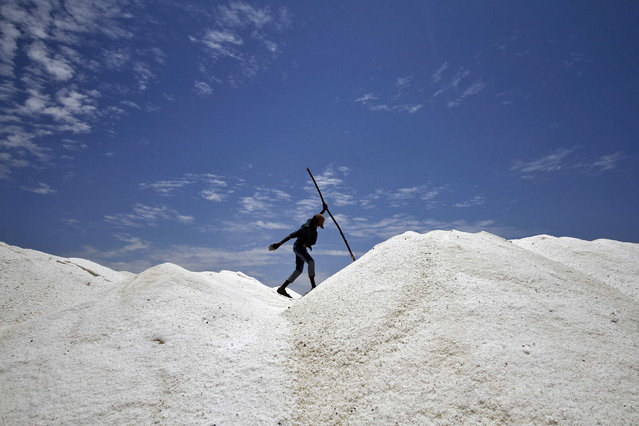
A worker walks through a salt pan on the eve of May Day or Labour Day on the outskirts of the southern Indian city of Chennai April 30, 2014. India is the third largest salt producing country in the world after China and U.S. with global annual production about 230 million tonnes, according to government data. (Photo by Reuters/Babu)

A worker walks through a salt pan on the eve of May Day or Labour Day on the outskirts of the southern Indian city of Chennai April 30, 2014. India is the third largest salt producing country in the world after China and U.S. with global annual production about 230 million tonnes, according to government data. (Photo by Reuters/Babu)
Details
04 May 2014 09:22:00