Loading...
Done
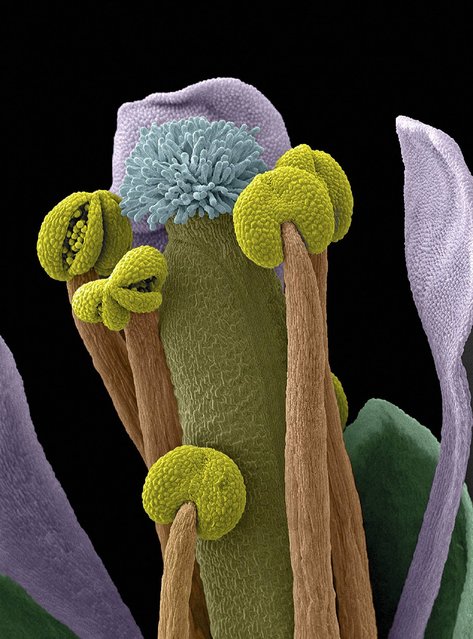
Scanning electron micrograph (SEM) of an Arabidopsis thaliana flower, also commonly known as thale cress. Some of the anthers are open, revealing pollen grains ready for dispersal. Arabidopsis was the first plant to have its entire genome sequenced and is widely used as a model organism in molecular and plant biology. Horizontal width of image is 1200 microns. Magnification 100x. (Photo by Stefan Eberhard/Wellcome Images)

Beautiful, strange and occasionally alarming pictures from the shortlist for this year’s Wellcome image awards – which celebrate the very best in science photography and imaging – from an x-ray of a bat to a micrograph of a kidney stone. The exhibition opens on 12 March at three science centres and the Museum of Science and Industry in Manchester. Photo: Scanning electron micrograph (SEM) of an Arabidopsis thaliana flower, also commonly known as thale cress. Some of the anthers are open, revealing pollen grains ready for dispersal. Arabidopsis was the first plant to have its entire genome sequenced and is widely used as a model organism in molecular and plant biology. Horizontal width of image is 1200 microns. Magnification 100x. (Photo by Stefan Eberhard/Wellcome Images)
Details
11 Mar 2014 05:58:00
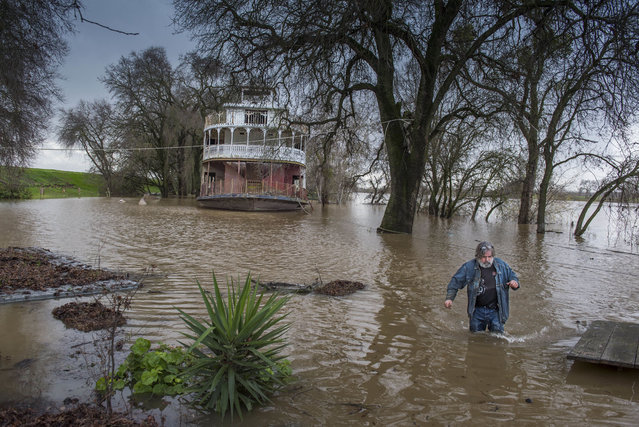
Rick Sorenson, owner of the Rio Ramaza Marina, wades in the Sacramento River after securing an old paddlewheel boat on his property as the river makes its way up the levee on Garden Highway in Sacramento, Calif., Monday, January 9, 2017. (Photo by Hector Amezcua/The Sacramento Bee via AP Photo)

Rick Sorenson, owner of the Rio Ramaza Marina, wades in the Sacramento River after securing an old paddlewheel boat on his property as the river makes its way up the levee on Garden Highway in Sacramento, Calif., Monday, January 9, 2017. (Photo by Hector Amezcua/The Sacramento Bee via AP Photo)
Details
21 Jan 2017 11:35:00
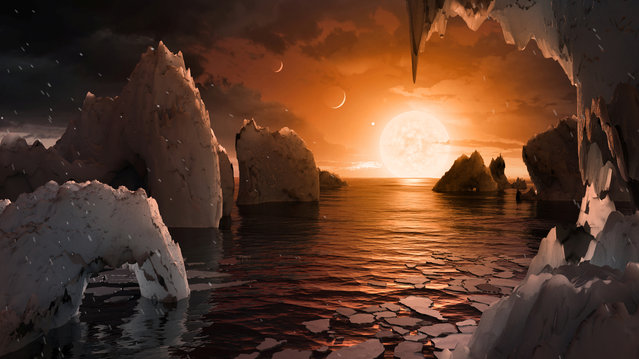
The possible surface of TRAPPIST-1f, one of seven newly discovered planets in the TRAPPIST-1 system that scientists using the Spitzer Space Telescope and ground based telescopes have discovered. (Photo by Reuters/NASA/JPL-Caltech)

The possible surface of TRAPPIST-1f, one of seven newly discovered planets in the TRAPPIST-1 system that scientists using the Spitzer Space Telescope and ground based telescopes have discovered. (Photo by Reuters/NASA/JPL-Caltech)
Details
07 Mar 2017 00:02:00
A man carries his dog as he prays during Vesak Day, an annual celebration of Buddha's birth, enlightenment and death, at Wat Yai Chai Mongkhon temple in Ayutthaya, Thailand, May 10, 2017. (Photo by Athit Perawongmetha/Reuters)

A man carries his dog as he prays during Vesak Day, an annual celebration of Buddha's birth, enlightenment and death, at Wat Yai Chai Mongkhon temple in Ayutthaya, Thailand, May 10, 2017. (Photo by Athit Perawongmetha/Reuters)
Details
11 May 2017 07:12:00
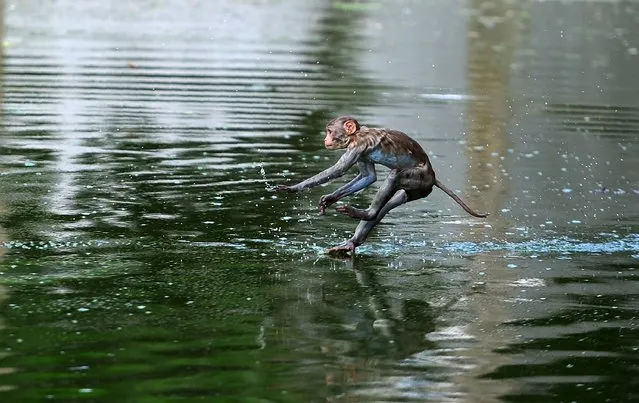
A monkey leaps into a pond on a hot day in Allahabad on May 19, 2017. According to local reports temperatures have soared in the northern Indian city to 47.28 Celsius. (Photo by Sanjay Kanojia/AFP Photo)

A monkey leaps into a pond on a hot day in Allahabad on May 19, 2017. According to local reports temperatures have soared in the northern Indian city to 47.28 Celsius. (Photo by Sanjay Kanojia/AFP Photo)
Details
21 May 2017 08:31:00
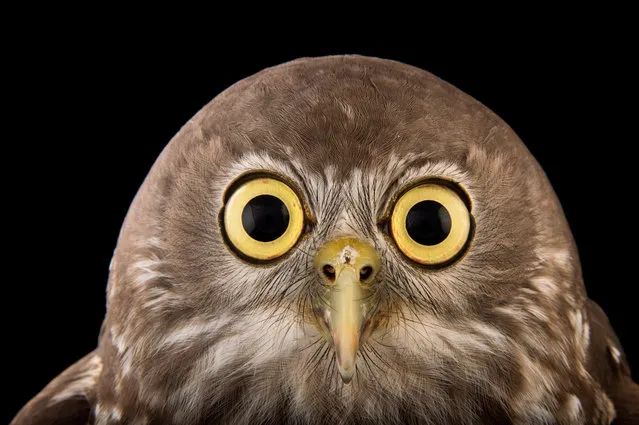
The National Geographic Photo Ark is a travelling exhibition of photographer Joel Sartore’s quest to create a photo archive of biodiversity around the world. So far, Sartore has captured studio portraits of more than 6,000 species – a number that he hopes to double. On 1 July, the ark will open at Melbourne zoo – the first time it has been exhibited in the southern hemisphere. More than 50 portraits will be on display, including many of Australian endangered animals being protected by programs at the zoo itself. These captions have been edited from text supplied by Melbourne zoo. Here: Barking owl. So-named because its call sounds like a barking dog, these birds are native to Australia, Indonesia and Papua New Guinea. In Victoria they are listed as an endangered species, and in 2003 there were estimated to be fewer than 50 breeding pairs. The main threat to the species in Victoria is loss of habitat, especially large trees with hollows in which they can nest and on which many of their prey depend. Apart from a bark, they may utter a chilling scream when they feel threatened. (Photo by Joel Sartore/National Geographic Photo Ark/The Guardian)

The National Geographic Photo Ark is a travelling exhibition of photographer Joel Sartore’s quest to create a photo archive of biodiversity around the world. So far, Sartore has captured studio portraits of more than 6,000 species – a number that he hopes to double. On 1 July, the ark will open at Melbourne zoo – the first time it has been exhibited in the southern hemisphere. More than 50 portraits will be on display, including many of Australian endangered animals being protected by programs at the zoo itself. These captions have been edited from text supplied by Melbourne zoo. Here: Barking owl. (Photo by Joel Sartore/National Geographic Photo Ark/The Guardian)
Details
01 Jul 2017 07:45:00
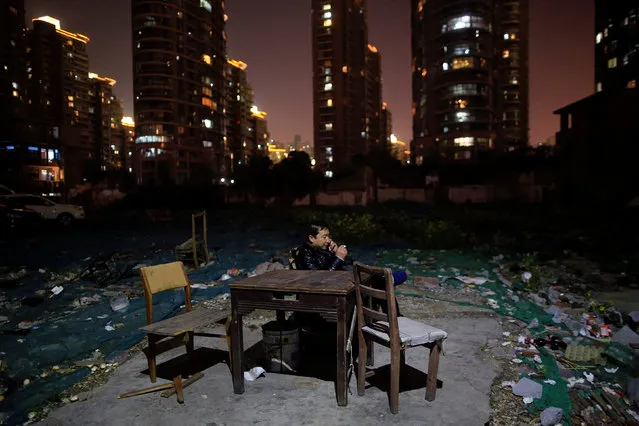
Li Guoqiang talks on his phone outside his house at Guangfuli neighbourhood, in Shanghai, China, April 1, 2016. Li, 38, is a deliveryman who rents a place at Guangfuli. (Photo by Aly Song/Reuters)

Li Guoqiang talks on his phone outside his house at Guangfuli neighbourhood, in Shanghai, China, April 1, 2016. Li, 38, is a deliveryman who rents a place at Guangfuli. In a corner of Shanghai, surrounded by a cement wall, lies one of the world's most valuable fields of debris and garbage. On paper, the Guangfuli neighbourhood is a real estate investor's dream: a plot in the middle of one of the world's most expensive and fast-rising property markets. But the reality is more like a developer's nightmare, thanks to hundreds of people living there who have refused to budge from their ramshackle homes for nearly 16 years as the local authority sought to clear the land for new construction. (Photo by Aly Song/Reuters)
Details
06 May 2016 13:54:00
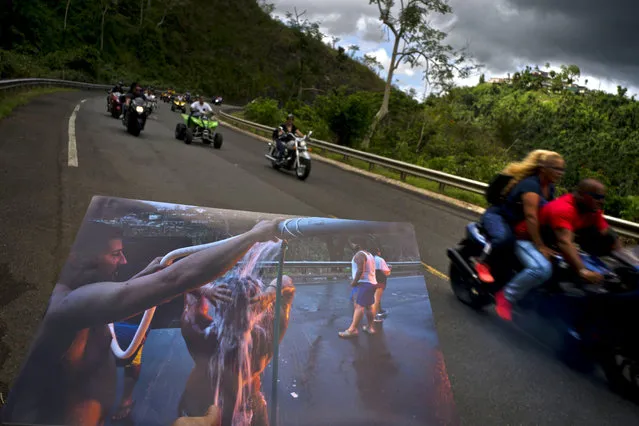
A printed photograph taken on September 28, 2017 shows people bathing on the highway after Hurricane Maria destroyed people's homes, held up at the same spot of the highway where motorcyclists ride past in Naranjito, Puerto Rico, May 27, 2018. Thanks to the owners of the land alongside the highway, creek water was piped to the side of the road for people without water to use for bathing, washing clothes and dishes. (Photo by Ramon Espinosa/AP Photo)

A printed photograph taken on September 28, 2017 shows people bathing on the highway after Hurricane Maria destroyed people's homes, held up at the same spot of the highway where motorcyclists ride past in Naranjito, Puerto Rico, May 27, 2018. Thanks to the owners of the land alongside the highway, creek water was piped to the side of the road for people without water to use for bathing, washing clothes and dishes. (Photo by Ramon Espinosa/AP Photo)
Details
02 Jun 2018 00:03:00