Loading...
Done
Spectators dressed as leprechauns attend St Patrick's Day parade in Dublin on March 17, 2014. (Photo by Peter Muhly/AFP Photo)

Spectators dressed as leprechauns attend St Patrick's Day parade in Dublin on March 17, 2014. (Photo by Peter Muhly/AFP Photo)
Details
18 Mar 2014 09:12:00
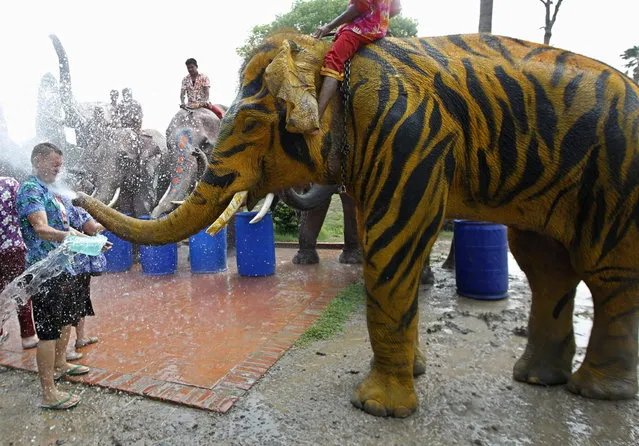
Elephants spray tourists with water in celebration of the Songkran water festival in Thailand's Ayutthaya province, about 80 km (50 miles) north of Bangkok, April 9, 2014. (Photo by Rungroj Yongrit/EFE)

Elephants spray tourists with water in celebration of the Songkran water festival in Thailand's Ayutthaya province, about 80 km (50 miles) north of Bangkok, April 9, 2014. (Photo by Rungroj Yongrit/EFE)
Details
12 Apr 2014 13:30:00
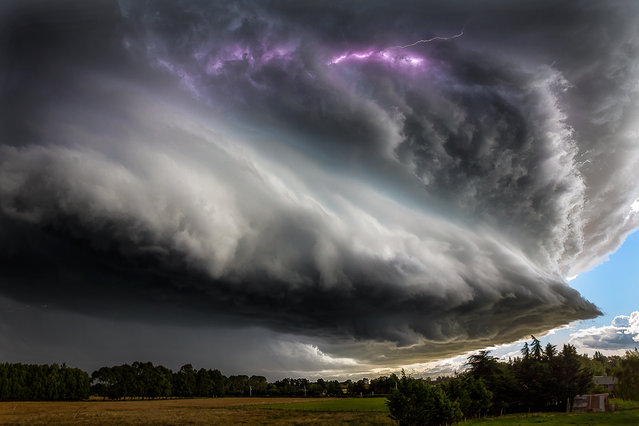
“Thunderstruck”. Summer stom. A super cell formed off the coast of New Zealand, intensified and swept across Christchurch and North Canterbury, February 23, 2014. Photo location: Christchurch, New Zealand. (Photo and caption by David Hardy/National Geographic Photo Contest)

“Thunderstruck”. Summer stom. A super cell formed off the coast of New Zealand, intensified and swept across Christchurch and North Canterbury, February 23, 2014. Photo location: Christchurch, New Zealand. (Photo and caption by David Hardy/National Geographic Photo Contest)
Details
15 Apr 2014 11:46:00
In this Thursday, May 8, 2014 photo, guests look down from the Tilt!, a new tourist attraction that provides guests a unique view of the downtown area from the 94th floor of the John Hancock Building, after it was unveiled in Chicago. People hold onto handrails as the glass and steel facade tilts forward 30 degrees. (Photo by Ashlee Rezin/AP Photo/Sun-Times Media)

In this Thursday, May 8, 2014 photo, guests look down from the Tilt!, a new tourist attraction that provides guests a unique view of the downtown area from the 94th floor of the John Hancock Building, after it was unveiled in Chicago. People hold onto handrails as the glass and steel facade tilts forward 30 degrees. (Photo by Ashlee Rezin/AP Photo/Sun-Times Media)
Details
10 May 2014 14:30:00
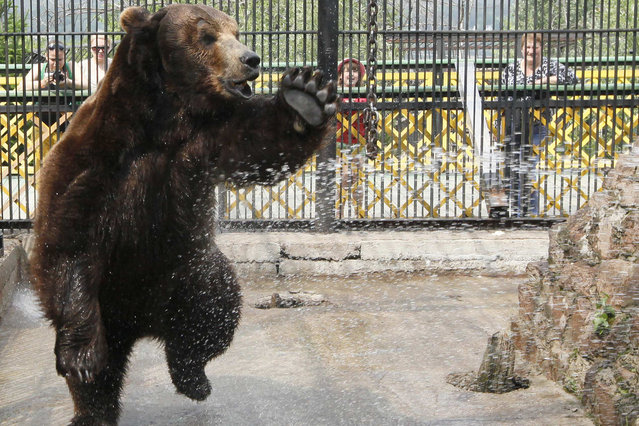
Buyan, a male Siberian brown bear, is given a shower by a zoo employee in his enclosure at the Royev Ruchey zoo in Russia's Siberian city of Krasnoyarsk June 24, 2014. The Siberian city has been experiencing temperatures of around 30 degrees Celsius over the last week. (Photo by Ilya Naymushin/Reuters)

Buyan, a male Siberian brown bear, is given a shower by a zoo employee in his enclosure at the Royev Ruchey zoo in Russia's Siberian city of Krasnoyarsk June 24, 2014. The Siberian city has been experiencing temperatures of around 30 degrees Celsius over the last week. (Photo by Ilya Naymushin/Reuters)
Details
28 Jun 2014 14:01:00
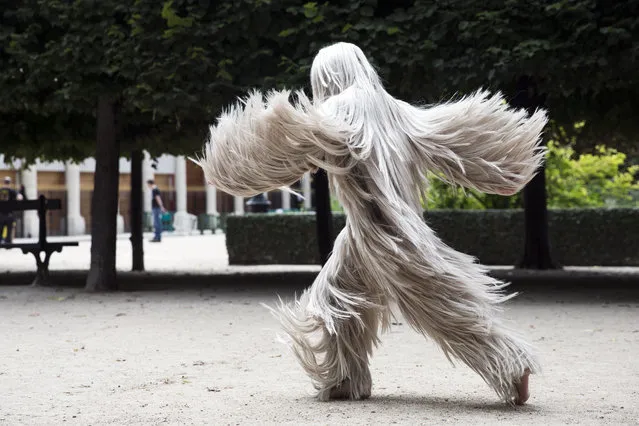
A performer presents a creation from the Haute Coiffure Fall-Winter 2014/15 collection by French designer Charlie Le Mindu during the Paris Fashion Week, in Paris, France, July 7, 2014. The presentation of the Haute Couture collections runs from 06 to 10 July. (Photo by Etienne Laurent/EPA)

A performer presents a creation from the Haute Coiffure Fall-Winter 2014/15 collection by French designer Charlie Le Mindu during the Paris Fashion Week, in Paris, France, July 7, 2014. The presentation of the Haute Couture collections runs from 06 to 10 July. (Photo by Etienne Laurent/EPA)
Details
12 Jul 2014 15:26:00
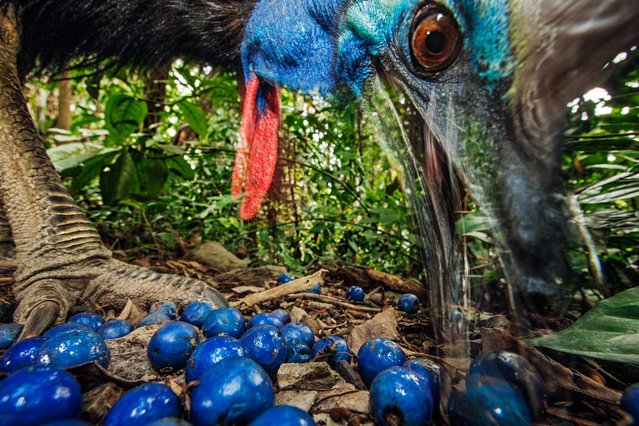
“Cassowaries are large, flightless birds related to emus and (more distantly) to ostriches, rheas, and kiwis”, writes Olivia Judson in the September issue of National Geographic magazine. (Photo by Christian Ziegler/National Geographic)

“Cassowaries are large, flightless birds related to emus and (more distantly) to ostriches, rheas, and kiwis”, writes Olivia Judson in the September issue of National Geographic magazine. How large? People-size: Adult males stand well over five foot five and top 110 pounds. Females are even taller, and can weigh more than 160 pounds. Dangerous when roused, they’re shy and peaceable when left alone. But even birds this big and tough are prey to habitat loss. The dense New Guinea and Australia rain forests where they live have dwindled. Today cassowaries might number 1,500 to 2,000. And because they help shape those same forests – by moving seeds from one place to another – “if they vanish”, Judson writes, “the structure of the forest would gradually change” too. (Photo by Christian Ziegler/National Geographic)

Details
06 Jan 2014 12:21:00
People watch dragon dance performance in front of a business establishment in celebration of Chinese New Year at Manila's Chinatown district of Binondo, Philippines, Friday, January 31, 2014. (Photo by Bullit Marquez/AP Photo)

People watch dragon dance performance in front of a business establishment in celebration of Chinese New Year at Manila's Chinatown district of Binondo, Philippines, Friday, January 31, 2014. (Photo by Bullit Marquez/AP Photo)
Details
03 Feb 2014 11:10:00