Loading...
Done
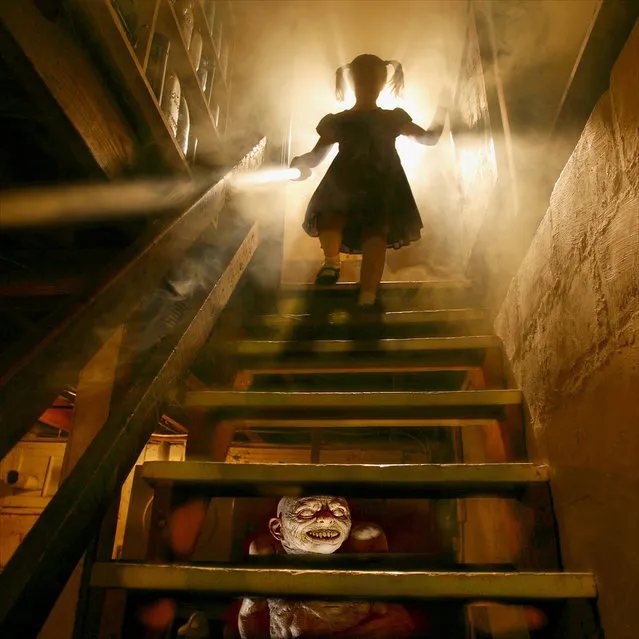
“Basement”. (Photo by Joshua Hoffine/The Washington Post)

Joshua Hoffine, based in Kansas City, Mo., and a self-proclaimed “Horror Photographer”, is interested in the psychology of fear. In his project “After Dark, My Sweet”, Hoffine’s surreal and staged images render these fears visible with the “visual grammar of a child”. Through elaborate sets, costumes, makeup and fog machines, Hoffine’s children act out these terrifying scenes in front of his camera. Here: “Basement”. (Photo by Joshua Hoffine/The Washington Post)
Details
29 Oct 2016 11:47:00
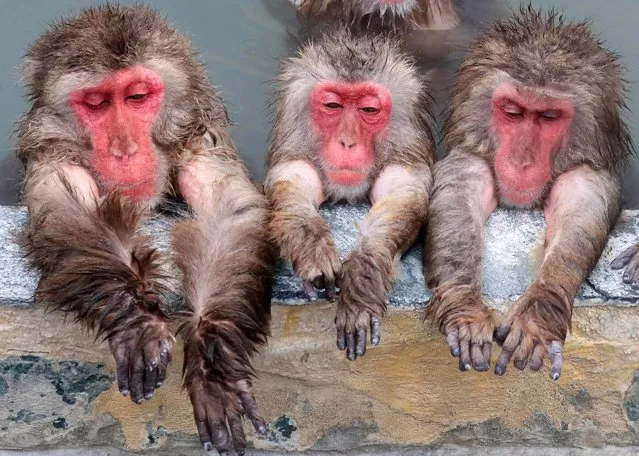
Japanese macaques are relaxed in an outdoor hot spring bath at Hakodate Tropical Botanical Garden on December 1, 2016 in Hakodate, Hokkaido, Japan. (Photo by The Asahi Shimbun via Getty Images)

Japanese macaques are relaxed in an outdoor hot spring bath at Hakodate Tropical Botanical Garden on December 1, 2016 in Hakodate, Hokkaido, Japan. The garden offers the hot spring treatment to macaques until May next year. (Photo by The Asahi Shimbun via Getty Images)
Details
02 Dec 2016 11:37:00
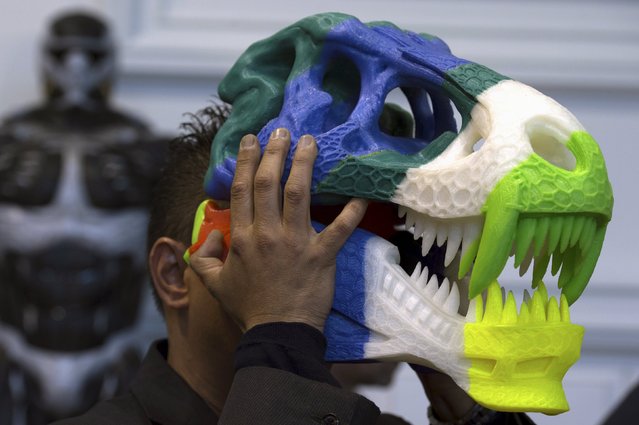
A 3D printing professional wears his T-Rex skull creation during a 3D printing show in Brussels, Belgium, October 18, 2015. (Photo by Eric Vidal/Reuters)

A 3D printing professional wears his T-Rex skull creation during a 3D printing show in Brussels, Belgium, October 18, 2015. (Photo by Eric Vidal/Reuters)
Details
21 Oct 2015 08:01:00
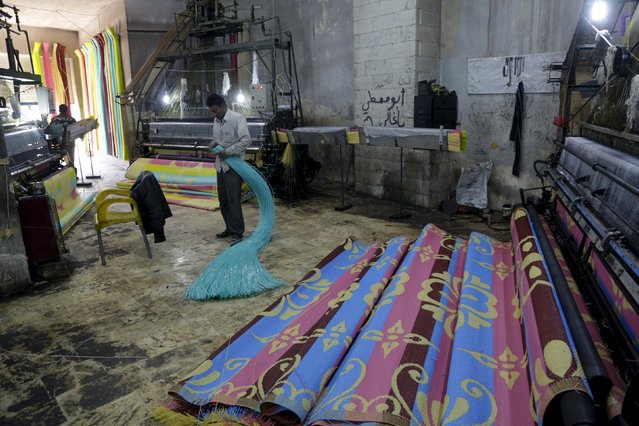
A man prepares plastic strings, used to produce mats, inside a mat factory in the rebel-controlled area of Maarshureen town in Idlib province, Syria, December 22, 2015. The town is known for the significant number of mat factories which exports its production mainly to nearby Iraq through checkpoints controlled by insurgents. But in the past months the business has declined due to heavy airstrikes against insurgents, vendors said. (Photo by Khalil Ashawi/Reuters)

A man prepares plastic strings, used to produce mats, inside a mat factory in the rebel-controlled area of Maarshureen town in Idlib province, Syria, December 22, 2015. The town is known for the significant number of mat factories which exports its production mainly to nearby Iraq through checkpoints controlled by insurgents. But in the past months the business has declined due to heavy airstrikes against insurgents, vendors said. (Photo by Khalil Ashawi/Reuters)
Details
24 Dec 2015 08:00:00
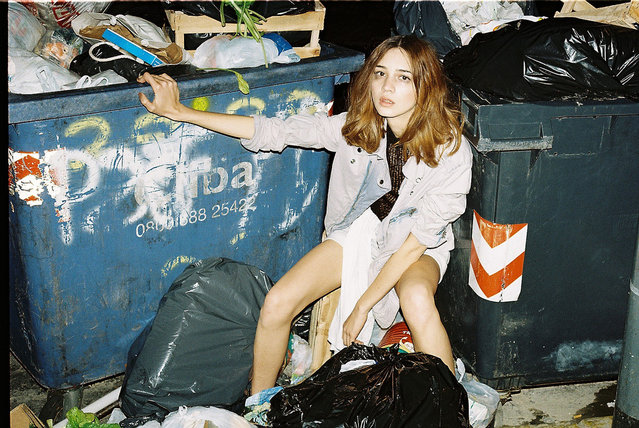
“Sin techos”. (Photo by Gastón Suaya)

“Sin techos”. (Photo by Gastón Suaya)
Details
06 Feb 2014 11:21:00
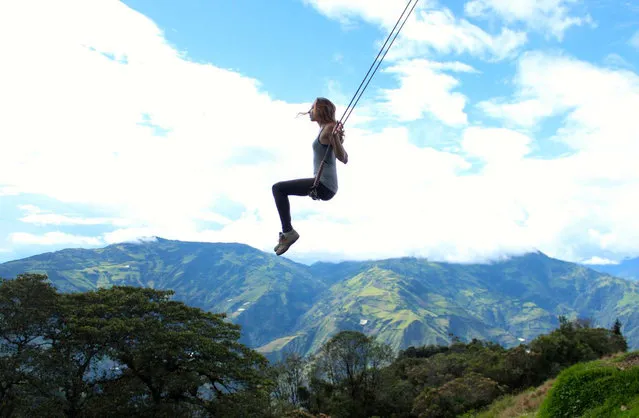
The Crazy Swing At Casa Del Arbol in Ecuador

Located at La Casa Del Arbol or “The Treehouse” in Baños, Ecuador, this small house was built for the stunning view on the Tungurahua Volcano it offers. But the real attraction is the swing attached to one of the tree's branches. It is far from your average swing, and it is surnamed the "Swing at the End of the World" for a good reason. Located off a giant cliff at over 2,600 meters above sea level and with absolutely no safety features, this swing promises a serious thrill to whoever is brave enough to ride it.
Details
10 Mar 2014 13:49:00
Vandenberg Project by Andreas Franke

“24.27 N, 81.44 W. These coordinates mark the spot of the final resting place of an old brave soldier, the USS General Hoyt S. Vandenberg. In 2009 it underwent a complete change when the creaky steel monster became a mystical bearer of secrets. In May of that year, the Vandenberg was lowered down into the darkness of the ocean off the coast of Florida to become an artificial reef, where it would dwell in rigor mortis at a depth of 130 feet. This lively, animate, secretive nothingness, this menacing, wild emptiness would haunt and seduce the renowned Austrian photographer and passionate diver Andreas Franke...”. – The Sinking World (Photo by Andreas Franke)
Details
07 Apr 2013 09:50:00
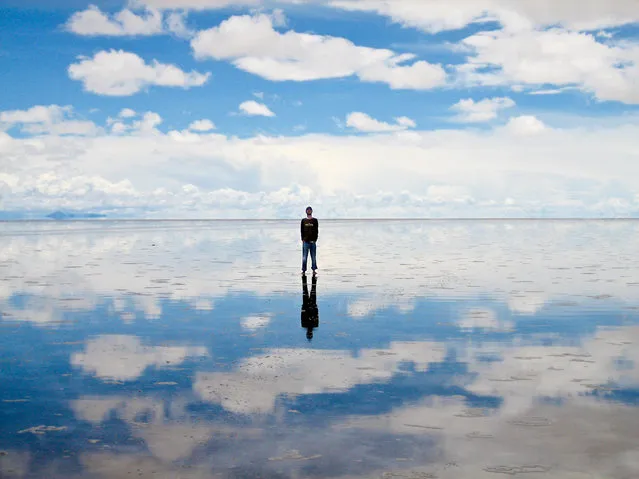
Salar de Uyuni

Salar de Uyuni (or Salar de Tunupa) is the world's largest salt flat at 10,582 square kilometers (4,086 sq mi). It is located in the Potosí and Oruro departments in southwest Bolivia, near the crest of the Andes, and is elevated 3,656 meters (11,995 ft) above mean sea level. The Salar was formed as a result of transformations between several prehistoric lakes. It is covered by a few meters of salt crust, which has an extraordinary flatness with the average altitude variations within one meter over the entire area of the Salar.
Details
04 Aug 2012 08:42:00