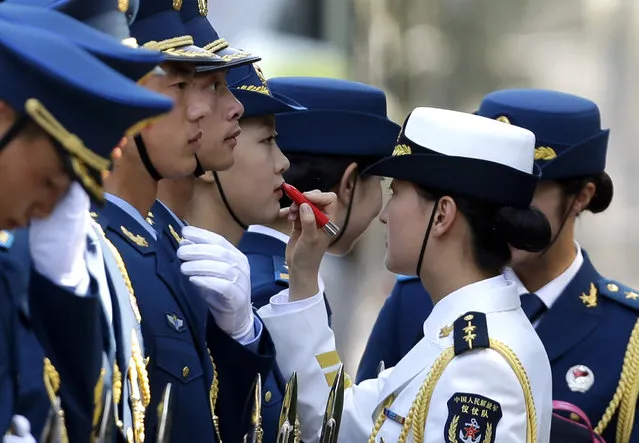
A female honor guard has lipstick applied as they prepare for an official welcoming ceremony outside the Great Hall of the People in Beijing, China on June 11, 2014. (Photo by Jason Lee/Reuters)
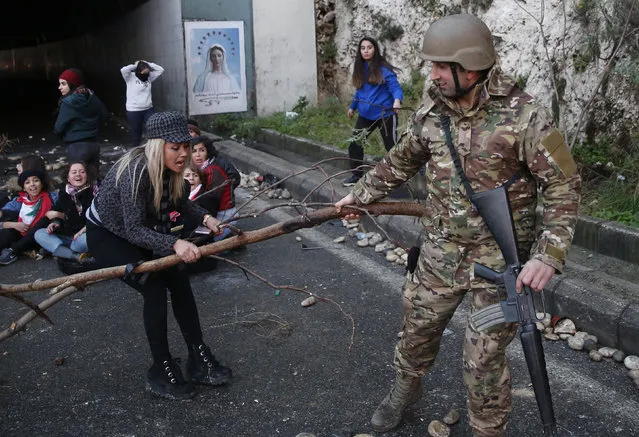
An army soldier takes a tree branch from an anti-government protester who is blocking a major highway that links the capital Beirut to northern Lebanon, in the town of Nahr el-Kalb, north of Beirut, Lebanon, Friday, January 3, 2020. Lebanon is facing its worst economic crisis in decades, while protests against corruption and mismanagement have gripped the country since October. (AP Photo/Hussein Malla)
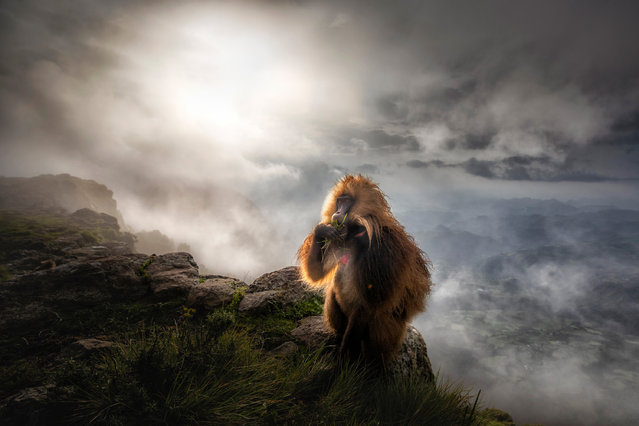
Highly commended, mammals: Gelada after the storm – Marco Gaiotti (Italy). “Gelada baboons are the only monkey species in the world that feed on grasses. They are native to the tableland of Ethiopia. Every morning large family groups wander from their sleeping places in the steep rock face, up to 1,000 metres high, to the feeding grounds at the tablelands. This image clearly depicts their feeding strategy: they pull out bunches of grass, sort the stalks and then lift them to their mouth. This shot was taken towards the end of the rainy season after a heavy storm”. (Photo by Marco Gaiotti/2019 GDT European Wildlife Photographer of the Year)
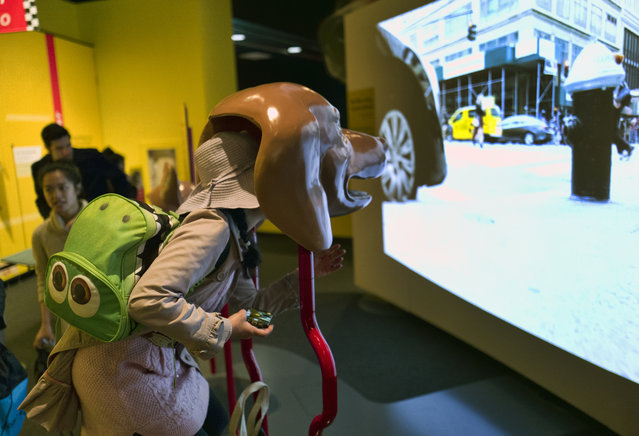
In this Tuesday, March 12, 2019 photo, a visitor takes part in an immersive experience showing visitors how dogs see from inside the head of a dog at the California Science Center in Los Angeles. A new exhibit at a Los Angeles museum examines the relationship between dogs and humans and explores why the two species seem to think so much alike and get along so well. “Dogs! A Science Tail” opens Saturday, March 16, 2019, at the California Science Center. (Photo by Richard Vogel/AP Photo)
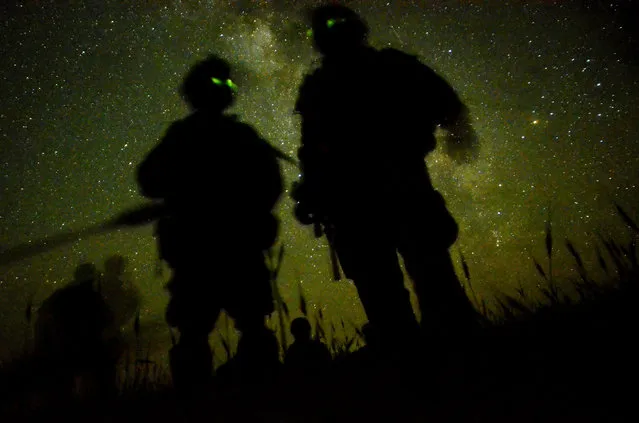
U.S. Army soldiers with the 1st Battalion, 501st Infantry Regiment deployed to Combat Outpost Sabari, Afghanistan scan their area as they begin a multi-day air assault mission near the Pakistani border of eastern Afghanistan's Khost province May 2, 2012. (Photo by Staff Sgt. Joshua L. DeMotts/U.S. Air Force)
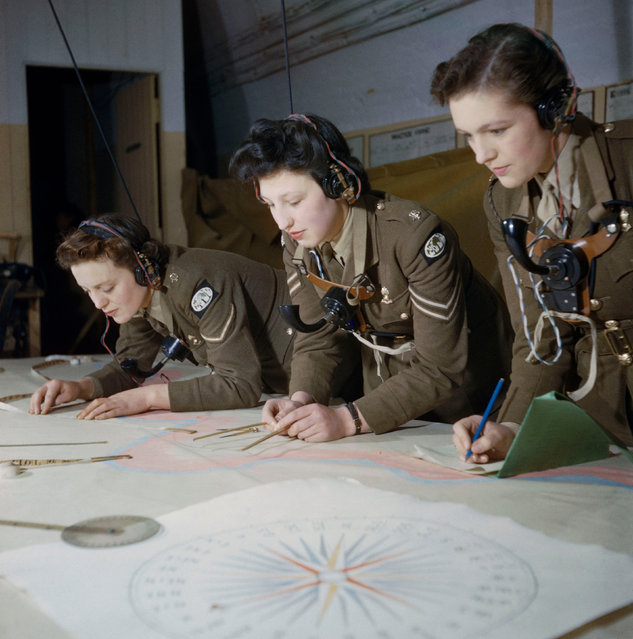
Auxiliary Territorial Service (ATS) plotters at work at Coastal Artillery Headquarters in Dover, December 1942. The Auxiliary Territorial Service was the women's branch of the British Army during the Second World War. It was formed on 9 September 1938, initially as a women's voluntary service, and existed until 1 February 1949, when it was merged into the Women's Royal Army Corps. The ATS had its roots in the Women's Auxiliary Army Corps (WAAC), which was formed in 1917 as a voluntary service. During the First World War its members served in a number of jobs including clerks, cooks, telephonists and waitresses. The WAAC was disbanded after four years in 1921. (Photo by Ted Dearberg/IWM/PA Wire)
A reveller helps a woman prepare her costume after the normal Notting Hill Carnival festivities were cancelled for a second year running, amid the coronavirus disease (COVID-19) outbreak, in London, Britain, August 30, 2021. (Photo by Beresford Hodge/Reuters)
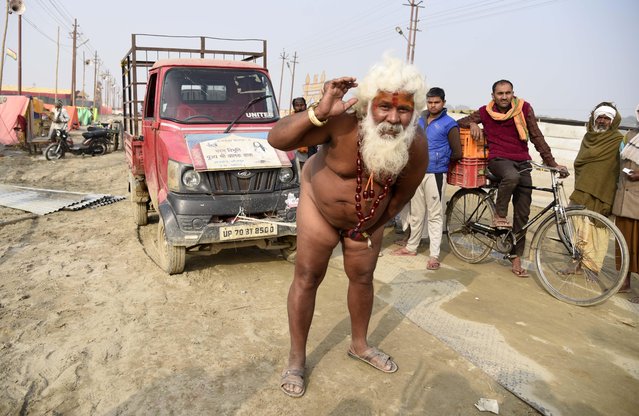
A naked holy man pulls a vehicle using his pen*s during the Magh mela festival in Allahabad, India on January 3, 2018. (Photo by Prabhat Kumar Verma/ZUMA Wire/Rex Features/Shutterstock)