Loading...
Done
Ophiocordyceps Sinensis A.K.A. Caterpillar Fungus

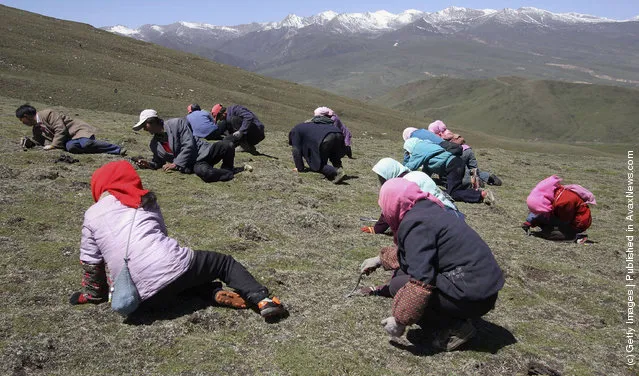
“There are over 680 documented species of the sac fungus genus Ophiocordyceps, and one of the best known of these is Ophiocordyceps sinensis, colloquially known as caterpillar fungus. The fungus is known in Tibetan as yartsa gunbu or yatsa gunbu. O. sinensis is known in the West as a medicinal mushroom and its use has a long history in Traditional Chinese medicine as well as Traditional Tibetan medicine. The highly valuable fungus-caterpillar combination is hand-collected and is used as an aphrodisiac and as a treatment for a variety of ailments from fatigue to cancer”. – Wikipedia

Photo: Nomads dig for Chinese caterpillar fungus from a mountain May 25, 2007 in Guide County, Hainan Prefecture, Qinghai Province, China. Nomads can earn about 2,000 yuan to 5,000 yuan (about U.S. $260 to $653 ) through their work during the fifty-day Chinese caterpillar fungus gathering season. (Photo by China Photos/Getty Images)
Details
26 Sep 2011 10:47:00
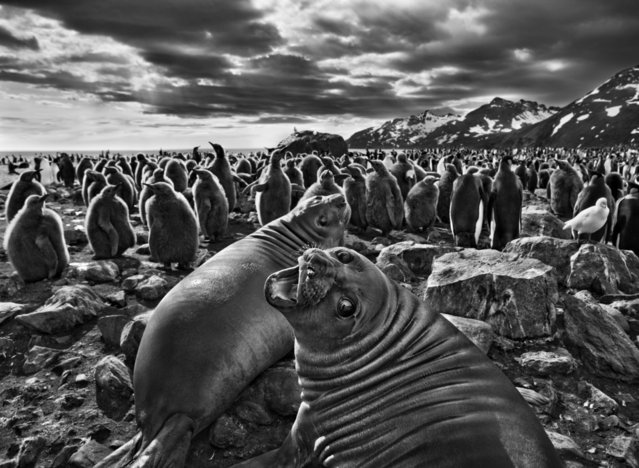
On South Georgia, a barren island in the far South Atlantic, a pair of southern elephant seal calves beckon before a colony of king penguins. “The male seals can grow to almost five tons,” says Salgado, “but these are just babies. This one looked at me with beautiful eyes”. (Photo by Sebastião Salgado/Amazonas/Contact Press Images)

Sebastião Salgado is a Brazilian documentary photographer living in Paris. He has produced several books, and his work has been exhibited extensively around the world. His latest work, «Genesis», premieres at The Natural History Museum in London on April 11, on view through September 8, 2013. Photo: On South Georgia, a barren island in the far South Atlantic, a pair of southern elephant seal calves beckon before a colony of king penguins. “The male seals can grow to almost five tons,” says Salgado, “but these are just babies. This one looked at me with beautiful eyes”. (Photo by Sebastião Salgado/Amazonas/Contact Press Images)
Details
30 Apr 2013 12:17:00
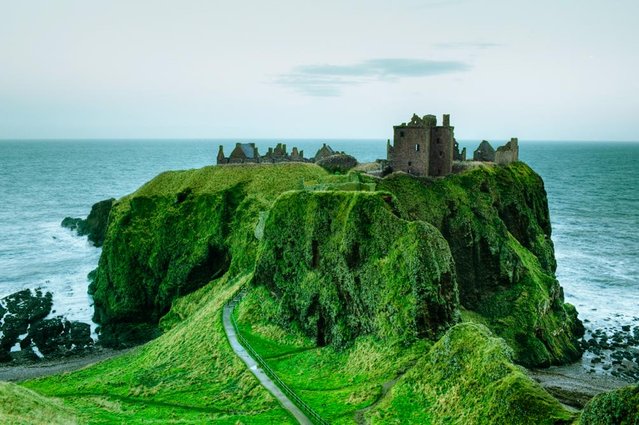
Dunnottar Castle In Scottish

Dunnottar Castleis a ruined medieval fortress located upon a rocky headland on the north-east coast of Scotland, about 3 kilometres (1.9 mi) south of Stonehaven. The surviving buildings are largely of the 15th and 16th centuries, but the site is believed to have been fortified in the Early Middle Ages. Dunnottar has played a prominent role in the history of Scotland through to the 18th-century Jacobite risings because of its strategic location and the strength of its situation. Dunnottar is best known as the place where the Honours of Scotland, the Scottish crown jewels, were hidden from Oliver Cromwell's invading army in the 17th century. The property of the Keiths from the 14th century, and the seat of the Earl Marischal, Dunnottar declined after the last Earl forfeited his titles by taking part in the Jacobite rebellion of 1715. The castle was restored in the 20th century and is now open to the public.
Details
13 Jan 2014 11:31:00
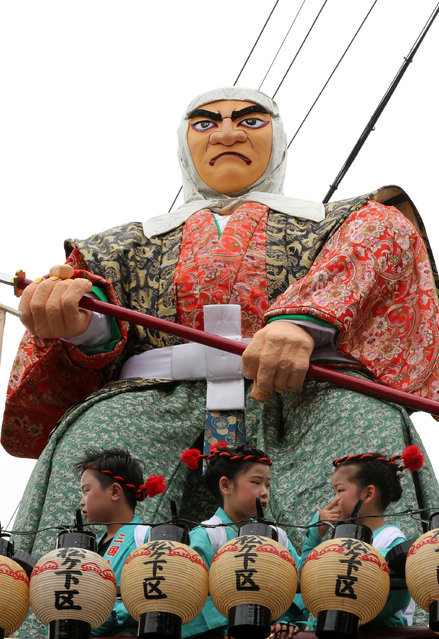
Children dressed in festival costume sit on the huge paper doll of historical Japanese figure named Hashi-Benkeii on the carts during the Mikuini annual festival on May 20, 2014 in Sakai, Japan. The annual festival takes place from May 19-21 and is attended by thousands of visitors. During the festival people dressed in traditional Japanese costumes pull carts carrying 6 meter high dolls of Japanese historical figures through the narrow streets. The origins of the festival are unclear but its history can be traced back more than 250 years. (Photo by Buddhika Weerasinghe/Getty Images)

Children dressed in festival costume sit on the huge paper doll of historical Japanese figure named Hashi-Benkeii on the carts during the Mikuini annual festival on May 20, 2014 in Sakai, Japan. The annual festival takes place from May 19-21 and is attended by thousands of visitors. During the festival people dressed in traditional Japanese costumes pull carts carrying 6 meter high dolls of Japanese historical figures through the narrow streets. The origins of the festival are unclear but its history can be traced back more than 250 years. (Photo by Buddhika Weerasinghe/Getty Images)
Details
21 May 2014 08:49:00
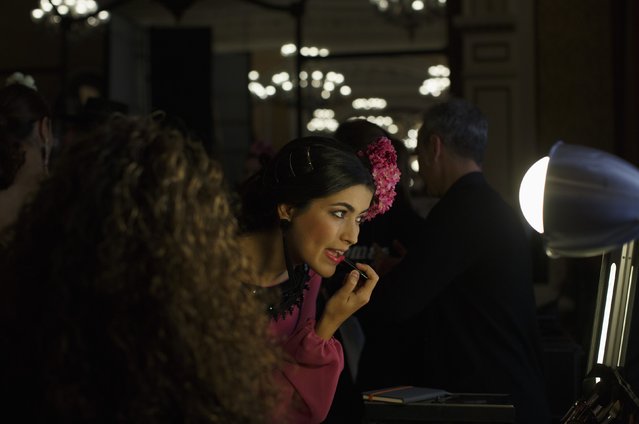
A model applies lipstick backstage during the “We Love Flamenco” fashion show in the Andalusian capital of Seville January 14, 2015. The show will run until January 18. (Photo by Marcelo del Pozo/Reuters)

A model applies lipstick backstage during the “We Love Flamenco” fashion show in the Andalusian capital of Seville January 14, 2015. The show will run until January 18. (Photo by Marcelo del Pozo/Reuters)
Details
15 Jan 2015 13:34:00
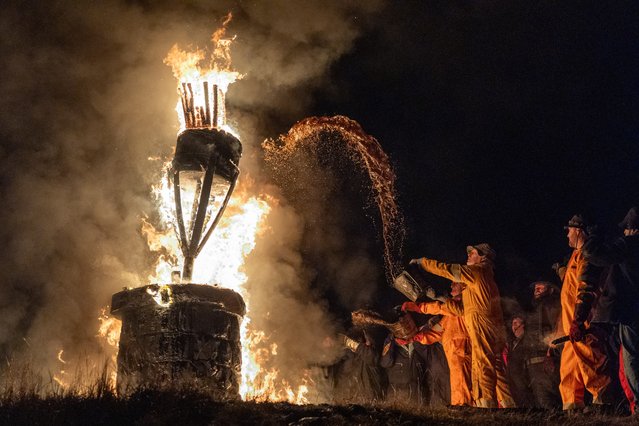
People take part in the Burning of the Clavie fire festival in Burghead, Moray, UK on Saturday, January 11, 2025. Burghead welcomes in the New Year twice each year, on both January 11th and the more traditional January 1st. (Photo by Jane Barlow/PA Images via Getty Images)

People take part in the Burning of the Clavie fire festival in Burghead, Moray, UK on Saturday, January 11, 2025. Burghead welcomes in the New Year twice each year, on both January 11th and the more traditional January 1st. (Photo by Jane Barlow/PA Images via Getty Images)
Details
18 Mar 2025 03:43:00
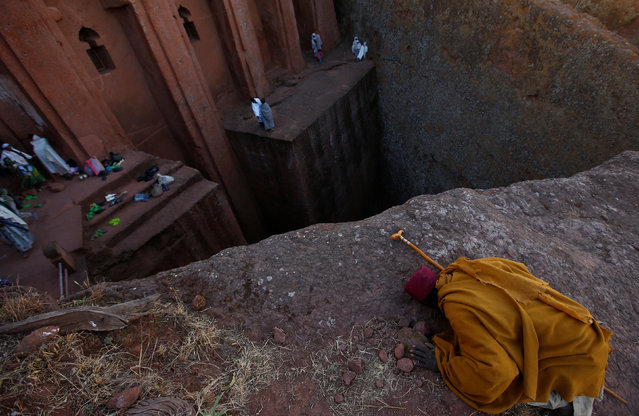
An Ethiopian Orthodox monk prays within a rock hewn church ahead of Ethiopian Christmas in Lalibela, January 6, 2017, which is celebrated on January 7. (Photo by Tiksa Negeri/Reuters)

An Ethiopian Orthodox monk prays within a rock hewn church ahead of Ethiopian Christmas in Lalibela, January 6, 2017, which is celebrated on January 7. (Photo by Tiksa Negeri/Reuters)
Details
08 Jan 2017 14:20:00
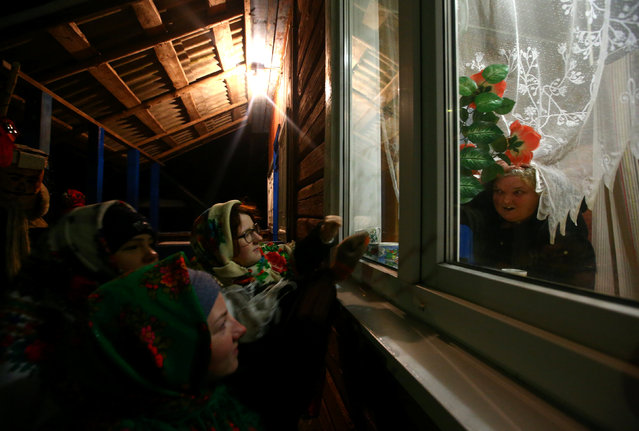
People celebrate the pagan rite called “Kolyadki” and mark the New Year, according to the Julian calendar on January 13, in the village of Vosava, Belarus January 13, 2017. (Photo by Vasily Fedosenko/Reuters)

People celebrate the pagan rite called “Kolyadki” and mark the New Year, according to the Julian calendar on January 13, in the village of Vosava, Belarus January 13, 2017. (Photo by Vasily Fedosenko/Reuters)
Details
15 Jan 2017 10:23:00