Loading...
Done
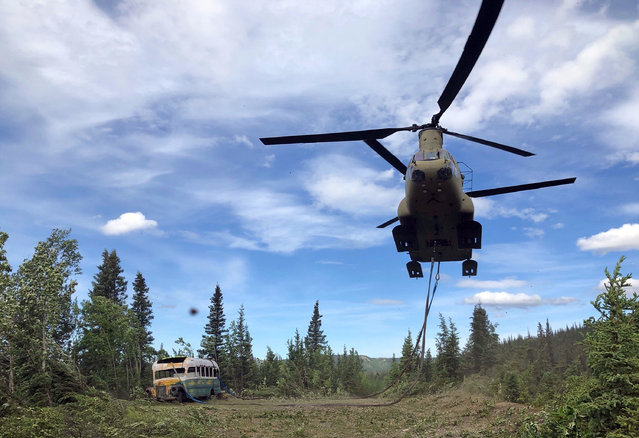
In this photo released by the Alaska National Guard, Alaska Army National Guard soldiers use a CH-47 Chinook helicopter to removed an abandoned bus, popularized by the book and movie “Into the Wild”, out of its location in the Alaska backcountry Thursday, June 18, 2020, as part of a training mission. Alaska Natural Resources Commissioner Corri Feige, in a release, said the bus will be kept in a secure location while her department weighs various options for what to do with it. (Photo by Sgt. Seth LaCount/Alaska National Guard via AP Photo)

In this photo released by the Alaska National Guard, Alaska Army National Guard soldiers use a CH-47 Chinook helicopter to removed an abandoned bus, popularized by the book and movie “Into the Wild”, out of its location in the Alaska backcountry Thursday, June 18, 2020, as part of a training mission. Alaska Natural Resources Commissioner Corri Feige, in a release, said the bus will be kept in a secure location while her department weighs various options for what to do with it. (Photo by Sgt. Seth LaCount/Alaska National Guard via AP Photo)
Details
20 Jun 2020 00:03:00
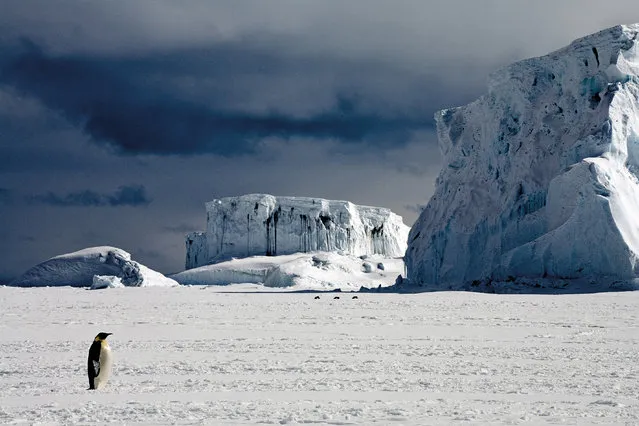
Image from Camille Seamans new book, “Melting Away”. (Photo by Camille Seaman/Barcroft Media)

Documenting the effects of climate change first hand over the past eight years, Camille Seaman fears we may be on the road to the last iceberg. Photographing the enormous frozen floats at both poles for the past eight years, the Californian adventurer has seen the receding ice shelves and experienced the changing warmer weather. Feeling that her intimate and emotional work documents a snapshot of history, Camille presents her series “The Last Iceberg” as a study of what she sees as the personality of each huge iceberg. Drawing parallels with the famous novel, “The Last of the Mohicans”, Camille, 42, wonders whether these unique, almost alien natural features will become a thing of the past or part of nature's renewal process. (Photo by Camille Seaman/Barcroft Media)
Details
02 Dec 2014 12:10:00
These snaps capture true winter wonderlands – as Mother Nature's icy grip takes hold of America's National Parks. From snow-capped mountains in Yosemite to an icy still Glacier Bay, the incredible images show their beauty is year round. In other breath-taking shots crisp frost lines the paths through Great Smokey Mountains and Crater Lake has had more than a dusting of snow. (Photo by U.S. Department of the Interior/Cater News)

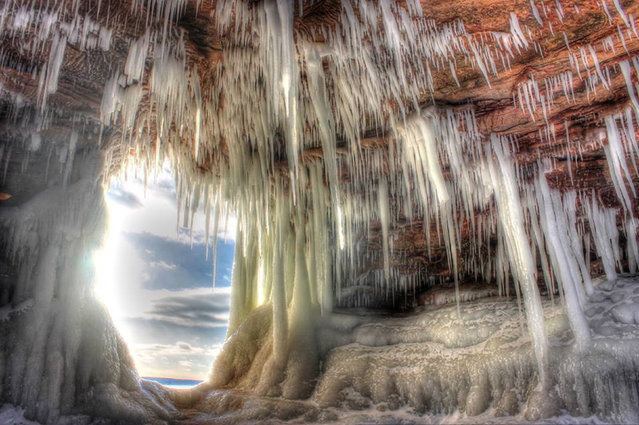
These snaps capture true winter wonderlands – as Mother Nature's icy grip takes hold of America's National Parks. From snow-capped mountains in Yosemite to an icy still Glacier Bay, the incredible images show their beauty is year round. In other breath-taking shots crisp frost lines the paths through Great Smokey Mountains and Crater Lake has had more than a dusting of snow. Here: Apostle Island National Lakeshore Park in Wisconsin. (Photo by U.S. Department of the Interior/Cater News)
Details
22 Dec 2014 13:20:00
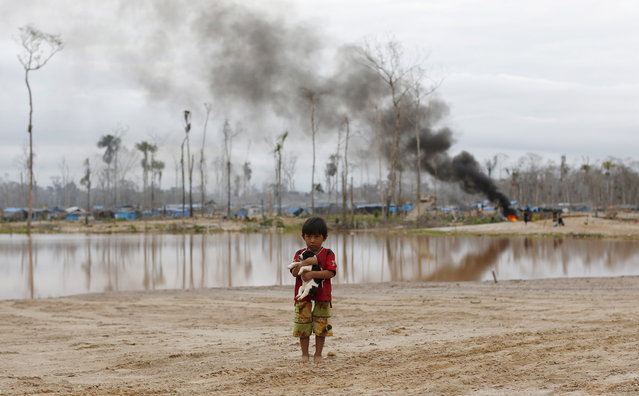
A boy carries a dog as he stands after a Peruvian police operation to destroy illegal gold mining camps in a zone known as Mega 14, in the southern Amazon region of Madre de Dios July 14, 2015. Peruvian police razed dozens of illegal gold mining camps at the edge of an Amazonian nature reserve this week, part of a renewed bid to halt the spread of wildcatting in a remote rainforest region. (Photo by Janine Costa/Reuters)

A boy carries a dog as he stands after a Peruvian police operation to destroy illegal gold mining camps in a zone known as Mega 14, in the southern Amazon region of Madre de Dios July 14, 2015. Peruvian police razed dozens of illegal gold mining camps at the edge of an Amazonian nature reserve this week, part of a renewed bid to halt the spread of wildcatting in a remote rainforest region. (Photo by Janine Costa/Reuters)
Details
18 Jul 2015 12:29:00
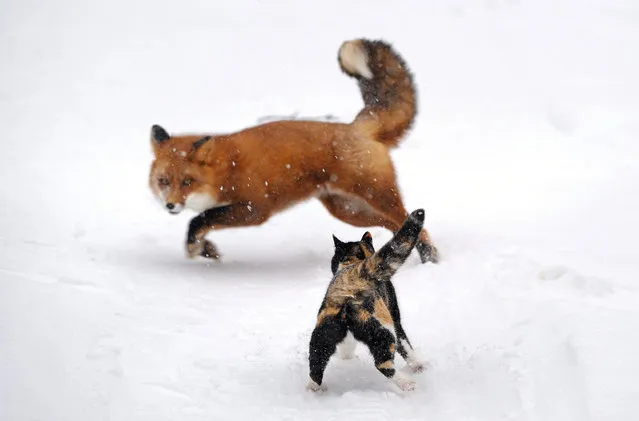
Respect, Kronotsky nature reserve, Russia. The photographer’s cat, Ryska – her name means little lynx in Russian – stands outside their cabin and with aggressive posturing warns off a fox. In winter, foxes would regularly visit the cabin searching for food. If one peered in at the window, possible when the snow was deep, Ryska would sit on the other side, fur raised, and growl. When outside, she would hold her ground. The foxes were not always frightened and so encounters could be a sort of dance. (Photo by Igor Shpilenok/Unforgettable Behaviour/NHM)

Respect, Kronotsky nature reserve, Russia. The photographer’s cat, Ryska – her name means little lynx in Russian – stands outside their cabin and with aggressive posturing warns off a fox. In winter, foxes would regularly visit the cabin searching for food. If one peered in at the window, possible when the snow was deep, Ryska would sit on the other side, fur raised, and growl. When outside, she would hold her ground. The foxes were not always frightened and so encounters could be a sort of dance. (Photo by Igor Shpilenok/Unforgettable Behaviour/NHM)
Details
08 Apr 2017 09:14:00
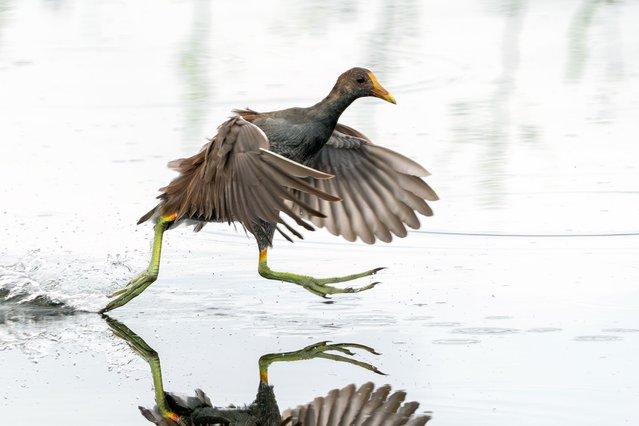
A common gallinule runs across the water to escape a nearby alligator at Green Cay Nature Center in Boynton Beach, Florida on September 4, 2025. Unlike most waterbirds, gallinules have long toes that allow them to walk on floating vegetation. The species is known for its loud, cackling calls that often echo through wetlands. (Photo by Ronen Tivony/NurPhoto/Rex Features/Shutterstock)

A common gallinule runs across the water to escape a nearby alligator at Green Cay Nature Center in Boynton Beach, Florida on September 4, 2025. Unlike most waterbirds, gallinules have long toes that allow them to walk on floating vegetation. The species is known for its loud, cackling calls that often echo through wetlands. (Photo by Ronen Tivony/NurPhoto/Rex Features/Shutterstock)
Details
21 Sep 2025 03:35:00
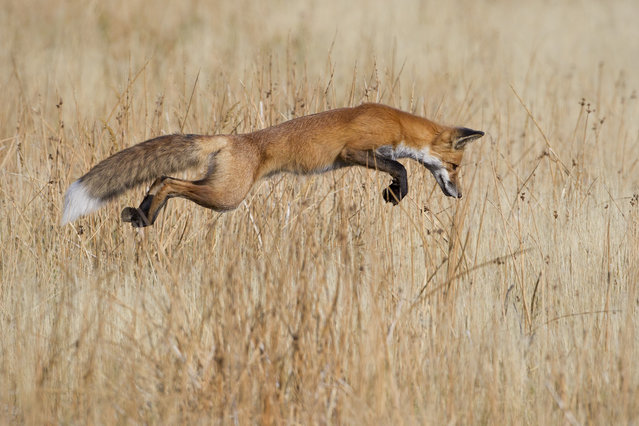
Canada: “Lucky pounce”. (Photo by Connor Stefanison/Wildlife Photographer of the Year 2013)

The winners of The London’s Natural History Museum's prestigious Wildlife Photographer of the Year for 2013 have finally been unveiled. Selected from almost 43,000 entries from 96 countries, the winners offer a glimpse of the stunning array of natural beauty on our planet. Photo: Canada: “Lucky pounce”. “Anticipating the pounce – that was the hardest part”, says Connor, who had come to Yellowstone National Park, Wyoming, USA, in search of wildlife as much as the spectacular landscape. He had found this fox, his first ever, on his last day in the park. It was so absorbed in hunting that Connor had plenty of time to get out of the car and settle behind a rock. It quartered the grassland, back and forth, and then started staring intently at a patch of ground, giving Connor just enough warning of the action to come. When it sprung up, Connor got his shot. And when it landed, the fox got his mouse. (Photo by Connor Stefanison/Wildlife Photographer of the Year 2013)
Details
17 Oct 2013 08:12:00
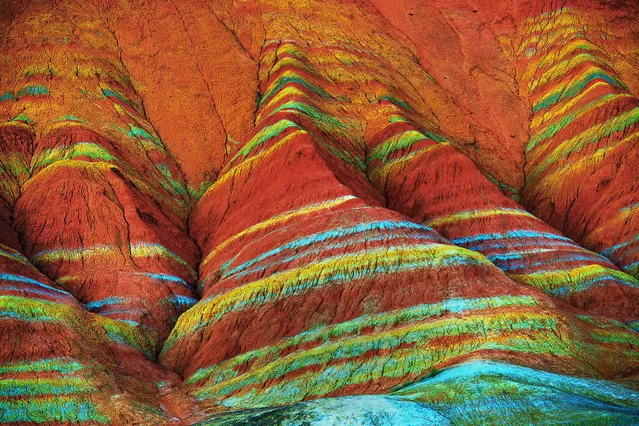
View of colourful rock formations at the Zhangye Danxia Landform Geological Park in Gansu Province, China. The Zhangye Danxia Landform Geological Park is 40km from Zhangye city. The park spans more than 400 square kilometers in Gansu. The unusual terrain is the result of red sandstone and mineral deposits carved over the years by natural forces. A number of boardwalks have been built to encourage visitors to explore the rock formations. (Photo by ImagineChina/The Grosby Group)

View of colourful rock formations at the Zhangye Danxia Landform Geological Park in Gansu Province, China. The Zhangye Danxia Landform Geological Park is 40km from Zhangye city. The park spans more than 400 square kilometers in Gansu. The unusual terrain is the result of red sandstone and mineral deposits carved over the years by natural forces. (Photo by ImagineChina/The Grosby Group)
Details
02 Dec 2013 09:12:00