India's Central Reserve Police Force personnel take part in a rehearsal for the Republic Day parade on a cold winter morning in New Delhi January 8, 2014. (Photo by Ahmad Masood/Reuters)
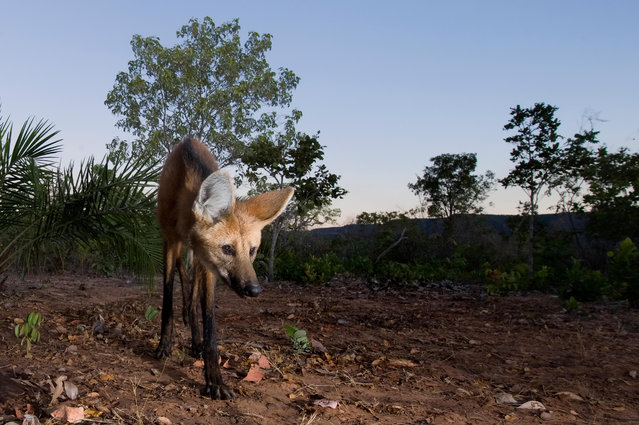
Global wildlife populations will decline by 67% by 2020 unless urgent action is taken to reduce human impact on species and ecosystems, warns the biennial Living Planet Index report from WWF (World Wide Fund for Nature) and ZSL (Zoological Society of London). From elephants to eels, here are some of the wildlife populations most affected by human activity. Here: The maned wolf is among the large mammals in the Brazilian Cerrado that are threatened by the increasing conversion of grasslands into farmland for grazing and growing crops. (Photo by Ben Cranke/Nature Picture Library/Alamy Stock Photo)
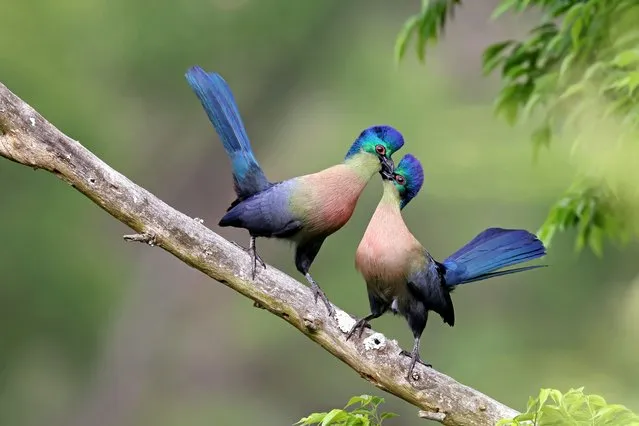
Portrait category, bronze award winner. Purple-crested Turaco Gallirex porphyreolophus. Lower Mpushini, near Pietermaritzburg, KwaZulu-Natal, South Africa. (Photo by Richard Flack/Bird Photographer of the Year 2022)
A man falls from a horse at a rodeo exhibition during Tradition Day, aimed to preserve gaucho traditions, in San Antonio de Areco, Argentina, Sunday, November 13, 2022. Tradition Day is celebrated to honor the birth of Argentine writer Jose Hernandez, author of the country's national poem “The Gaucho Martin Fierro”. (Photo by Natacha Pisarenko/AP Photo)
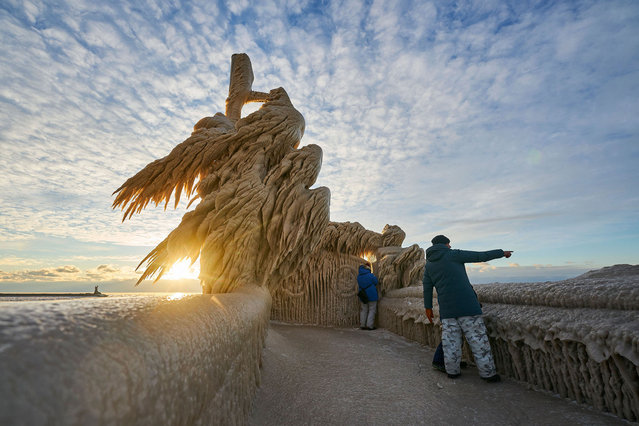
People explore the ice covered pier in Port Stanley, Ontario, Canada, on December 27, 2022. The ice formations were created by a large winter storm which hit the region on over the Christmas weekend. Temperatures were expected to moderate across the eastern and midwest US on December 27, after days of freezing weather from "the blizzard of the century" left at least 49 dead and caused Christmas travel chaos. (Photo by Geoff Robins/AFP Photo)
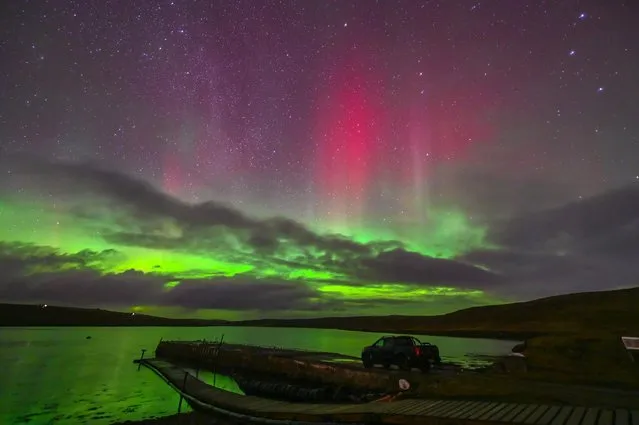
The northern lights as seen from from Yell in the Shetland Islands, Scotland on January 15, 2023. The aurora borealis is caused by collisions between electrically charged particles released from the sun that enter the Earth’s atmosphere and collide with gases such as oxygen and nitrogen. (Photo by Ryan Nisbet/Capture Media Agency)
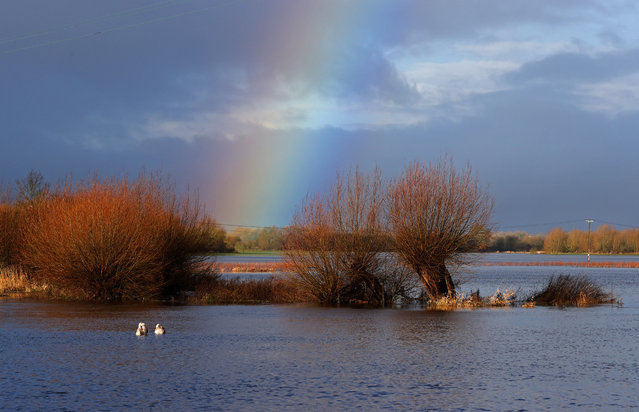
A rainbow rises over flooded fields after the Rivers Thames and Churn burst their banks, in Cricklade, western England on January 3, 2024, following Storm Henk which brought strong winds and heavy rain across much of the country. (Photo by Adrian Dennis/AFP Photo)
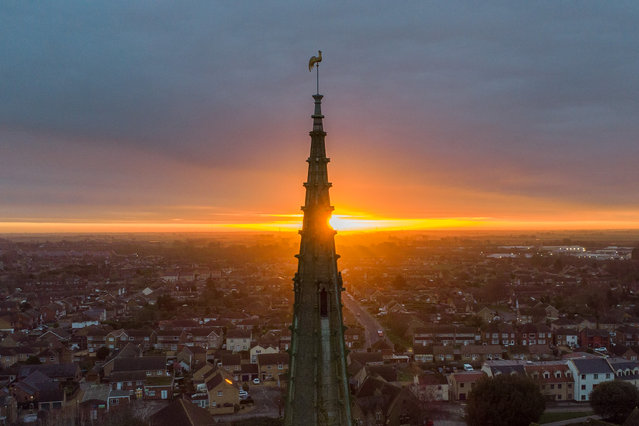
The sun rises this morning behind the 173ft spire of St Mary's church in the market town of Whittlesey in Cambridgeshire, UK on February 17, 2024. The church dates from the 13th century with the Ashlar faced tower added in the 15th century. (Photo by Andrew McCaren/London News Pictures)