Loading...
Done
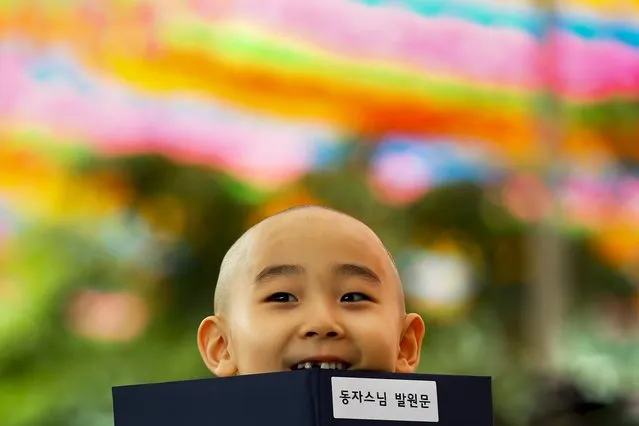
A novice monk holds a book during an inauguration ceremony at Jogye temple in Seoul, May 11, 2015. Ten children on Monday were given the opportunity to experience life as Buddhist monks by staying at the temple until Buddha's birthday in two weeks. The writing on the book reads, “Novice Monk Prayer”. (Photo by Thomas Peter/Reuters)

A novice monk holds a book during an inauguration ceremony at Jogye temple in Seoul, May 11, 2015. Ten children on Monday were given the opportunity to experience life as Buddhist monks by staying at the temple until Buddha's birthday in two weeks. The writing on the book reads, “Novice Monk Prayer”. (Photo by Thomas Peter/Reuters)
Details
12 May 2015 11:41:00
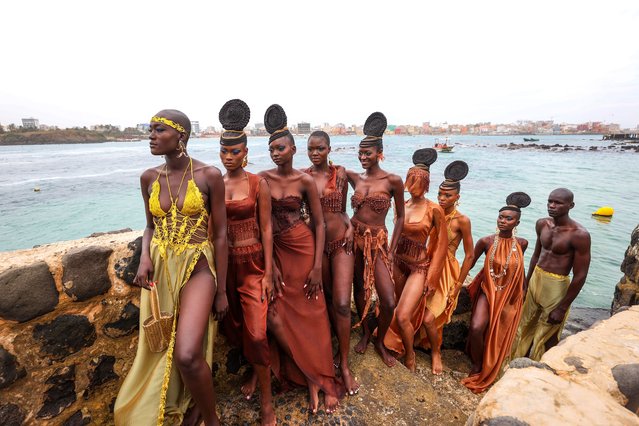
Models showcase designs aboard fishing boats off Ngor Island during the 23rd Dakar Fashion Week, organized by Senegalese-French designer Adama N'Diaye, founder of the brand “Adama Paris”, on December 6, 2025, in Dakar, Senegal. (Photo by Cem Ozdel/Anadolu via Getty Images)

Models showcase designs aboard fishing boats off Ngor Island during the 23rd Dakar Fashion Week, organized by Senegalese-French designer Adama N'Diaye, founder of the brand “Adama Paris”, on December 6, 2025, in Dakar, Senegal. (Photo by Cem Ozdel/Anadolu via Getty Images)
Details
17 Dec 2025 09:44:00


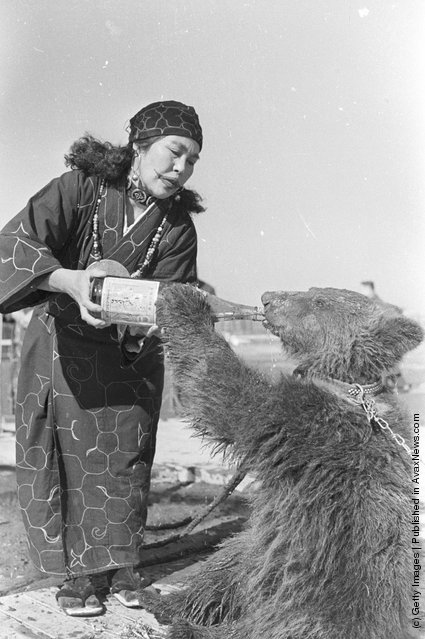
“The Ainu (アイヌ?), also called Aynu, Aino (アイノ), and in historical texts Ezo (蝦夷), are indigenous people or groups in Japan and Russia. Historically they spoke the Ainu language and related varieties and lived in Hokkaidō, the Kuril Islands, and much of Sakhalin. Most of those who identify themselves as Ainu still live in this same region, though the exact number of living Ainu is unknown. This is due to ethnic issues in Japan resulting in those with Ainu backgrounds hiding their identities and confusion over mixed heritages. In Japan, because of intermarriage over many years with Japanese, the concept of a 'pure Ainu' ethnic group is no longer feasible. Official estimates of the population are of around 25,000, while the unofficial number is upwards of 200,000 people”. – Wkipedia

Photo: A captive bear drinking from a large bottle held by an Ainu tribeswoman. (Photo by Evans/Three Lions/Getty Images). Circa 1955

Details
24 Mar 2011 14:01:00
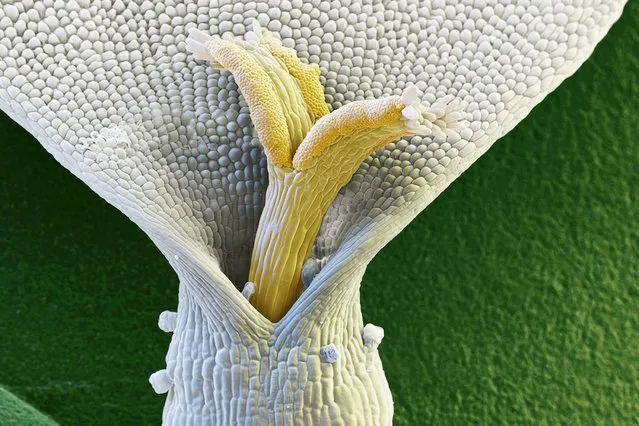
The floret of a Chamomile flower up close and personal. (Photo by Oliver Meckes/Barcroft Media)

These images have been created using a colour scanning electron microscope (SEM) by the award-winning Eye of Science, comprised of snapper Oliver Meckes and biologist Nicole Ottawa. For a decade the pair, based in Reutlingen in the south of Germany, worked with an old SEM they saved from the scrapheap, but for the last five years they have used a £250,000 FEI Quanta Series Field Emission SEM. Oliver said: “Flowers are beautiful in 'normal' view, but when you look closer, some parts get very bizarre and unexpected structures appear – flowers within flowers, worlds within worlds”. Photo: The floret of a Chamomile flower up close and personal. (Photo by Oliver Meckes/Barcroft Media)
Details
26 May 2014 13:51:00
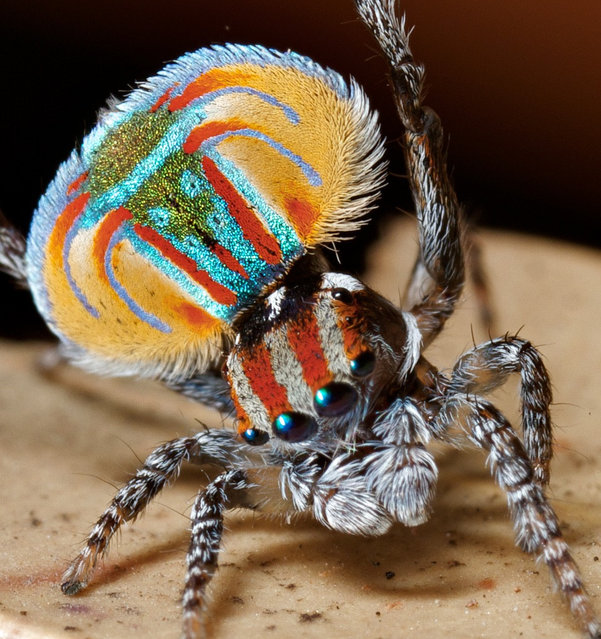
Peacock spider

Jumping spiders are often very colourful spiders. Maratus volans is not an exception. Although tiny, male spiders have an iridescent colouring of red, green and blue.
Details
22 Dec 2012 12:39:00
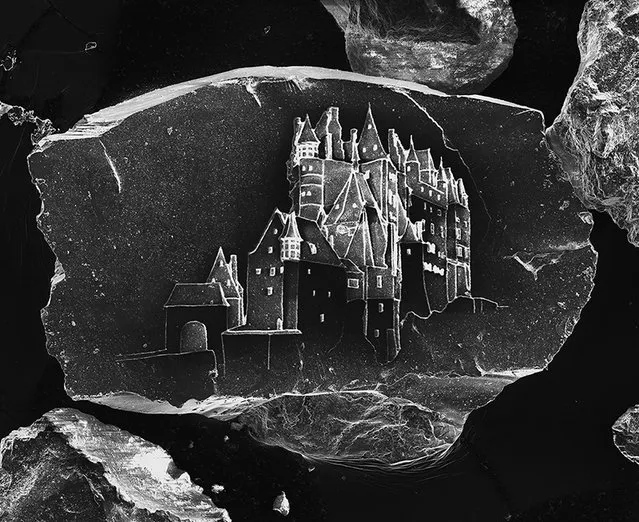
Castles Etched on Grains of Sand

Artist Vik Muniz is known for his gigantic composite installations and sculptures created from thousands of individual objects. In this new collaboration with artist and MIT researcher Marcelo Coelho, Muniz takes the opposite approach and explores the microscopic with a new series of sandcastles etched onto individual grains of sand.
Details
13 Apr 2014 08:55:00
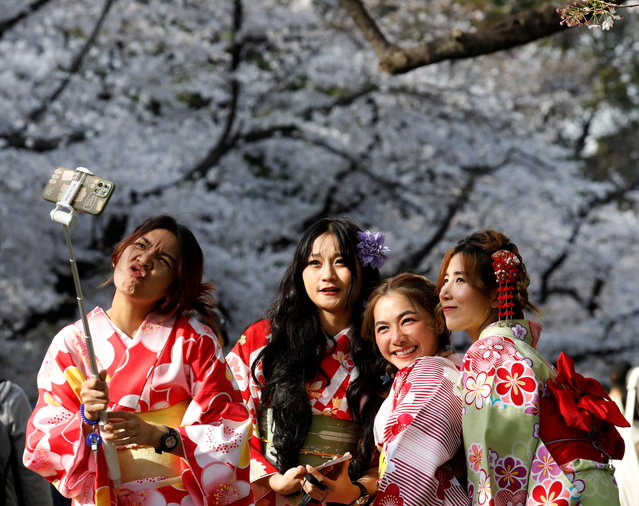
Kimono-clad women from Thailand take selfies among blooming cherry blossoms at Ueno Park in Tokyo, Japan, March 27, 2021. (Photo by Kim Kyung-Hoon/Reuters)

Kimono-clad women from Thailand take selfies among blooming cherry blossoms at Ueno Park in Tokyo, Japan on March 27, 2021. (Photo by Kim Kyung-Hoon/Reuters)
Details
03 Apr 2021 10:15:00
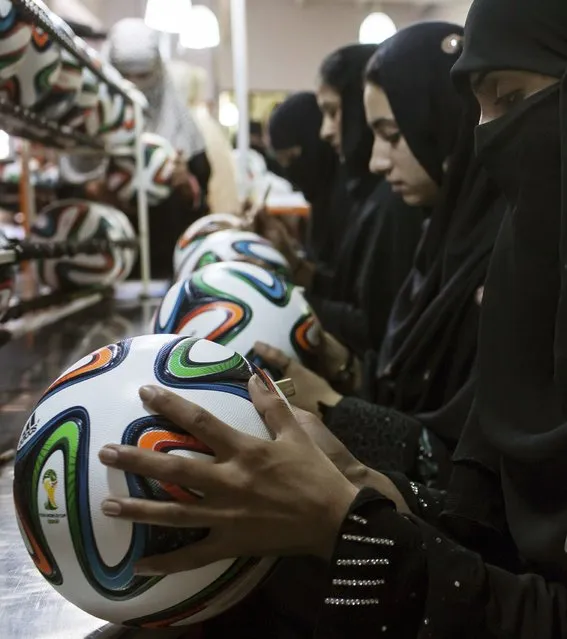
Employees conduct a final check to fix any cavities in the seams of balls inside the soccer ball factory that produces official match balls for the 2014 World Cup in Brazil, in Sialkot, Punjab province May 16, 2014. (Photo by Sara Farid/Reuters)

Employees conduct a final check to fix any cavities in the seams of balls inside the soccer ball factory that produces official match balls for the 2014 World Cup in Brazil, in Sialkot, Punjab province May 16, 2014. It was when he felt the roar of the crowd at the 2006 World Cup in Germany that Pakistani factory owner Khawaja Akhtar first dreamt up a goal of his own: to manufacture the ball for the biggest soccer tournament on the planet. Last year he finally got his chance – but only 33 days to make it happen. (Photo by Sara Farid/Reuters)
Details
26 May 2014 13:59:00