Loading...
Done
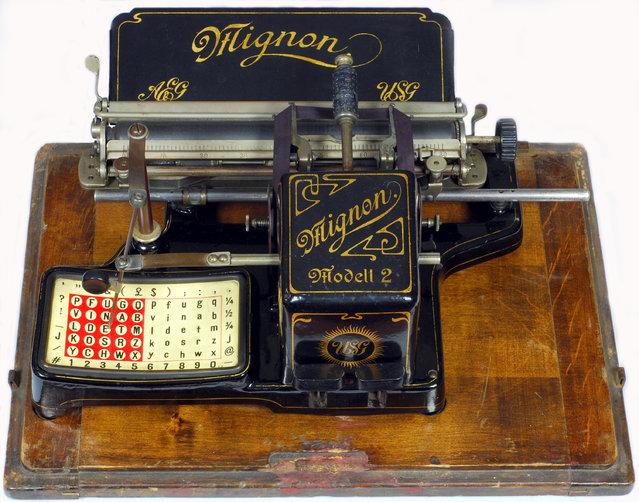
Mignon 2. A.E.G., Berlin, Germany, 1905. Despite its unusual appearance, the Mignon typewriter is of a very clever design, giving a smooth and fast operation for typing

«Mignon 2». A.E.G., Berlin, Germany, 1905. Despite its unusual appearance, the Mignon typewriter is of a very clever design, giving a smooth and fast operation for typing. (Photo and caption by Martin Howard/Martin Howard Collection)
Details
25 Sep 2013 08:37:00
Visitors wear masks as they catch some shade under the Oscar Mayer Wienermobile amid 50 acres of Ranunculus flowers at “The Flower Fields” in Carlsbad, California, U.S., March 31, 2021. (Photo by Mike Blake/Reuters)

Visitors wear masks as they catch some shade under the Oscar Mayer Wienermobile amid 50 acres of Ranunculus flowers at “The Flower Fields” in Carlsbad, California, U.S., March 31, 2021. (Photo by Mike Blake/Reuters)
Details
23 Jan 2022 04:38:00
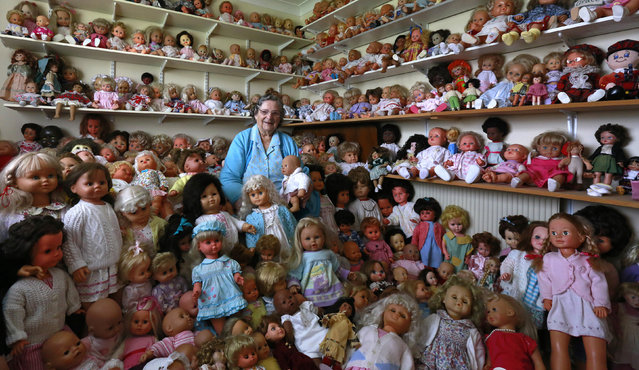
Mary Hickey poses with her collection of dolls at her home in Ashbourne, Ireland October 9, 2013. Hickey has been collecting the dolls for over thirty years and now owns over 420 dolls. (Photo by Cathal McNaughton/Reuters)

Mary Hickey poses with her collection of dolls at her home in Ashbourne, Ireland October 9, 2013. Hickey has been collecting the dolls for over thirty years and now owns over 420 dolls. (Photo by Cathal McNaughton/Reuters)
Details
16 Mar 2017 00:01:00
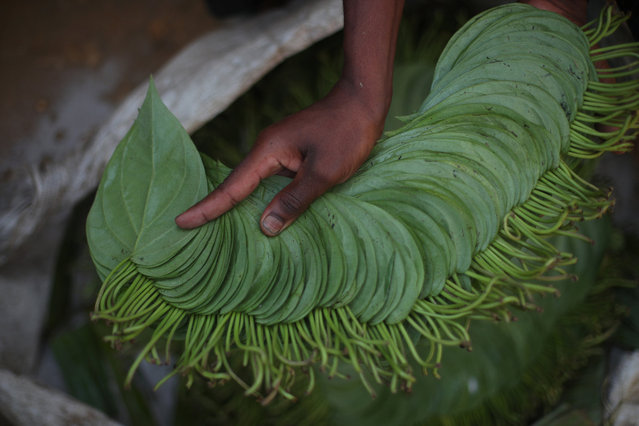
Faruk, 17, a Rohingya refugee trader holds betel leaves which are on sale at a stall in Palong Khali refugee camp near Cox's Bazar, Bangladesh, November 3, 2017. He left his village in Myanmar when the military opened fire towards the Rohingya. “I buy this betel leaf from Palong Khali market, in one bundle there are 160 pieces, I buy it for 80 taka and I sell it for 100 taka. Bangladeshi's and I sell for the same rate in the camp. Outside in the local market it is 80 taka per bundle. My problem is that I don't have money so I can't buy anything to eat, I can't buy fish to eat”, he said. (Photo by Hannah McKay/Reuters)

Faruk, 17, a Rohingya refugee trader holds betel leaves which are on sale at a stall in Palong Khali refugee camp near Cox's Bazar, Bangladesh, November 3, 2017. He left his village in Myanmar when the military opened fire towards the Rohingya. “I buy this betel leaf from Palong Khali market, in one bundle there are 160 pieces, I buy it for 80 taka and I sell it for 100 taka (1 Bangladeshi Taka = 0.012 US Dollar). Bangladeshi's and I sell for the same rate in the camp. Outside in the local market it is 80 taka per bundle. My problem is that I don't have money so I can't buy anything to eat, I can't buy fish to eat”, he said. (Photo by Hannah McKay/Reuters)
Details
27 Nov 2017 08:54:00
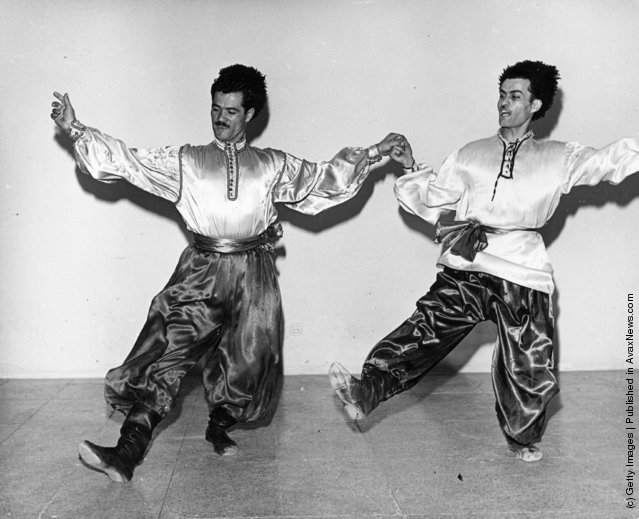
1961: Two traditional folk dancers performing in Teheran, Iran

Two traditional folk dancers performing in Teheran, Iran. (Photo by Keystone Features/Getty Images). 25th January 1961
Details
07 Dec 2011 12:54:00
Aluminum Wire Sculptures By Seung Mo Park

Korean artist Seung Mo Park continues to amaze with his astonishingly crafted figurative sculptures made with tightly wrapped layers of aluminum wire based on fiberglass forms. The works shown here are part of the Brooklyn-based artist’s Human series where he recreates the delicate wrinkles and folds of clothing as well as the sinuous musculature of the human body in metallic layers remeniscent of tree rings. He’s also sculpted bicycles, musical insturments and other forms as part of his Object series.
Details
17 Jan 2014 12:02:00
New Yorkers Celebrate At West Indian Day Parade

“The Labor Day Parade (or West Indian Carnival), is an annual celebration held on American Labor Day (the first Monday in September), in Crown Heights, Brooklyn, New York. Ms. Jessie Waddell and some of her West Indian friends started the Carnival in Harlem in the 1920s by staging costume parties in large enclosed places like the Savoy, Renaissance and Audubon Ballrooms due to the cold wintry weather of February. This is the usual time for the pre-Lenten celebrations held in most countries around the world. However, because of the very nature of Carnival, and the need to parade in costume to music, indoor confinement did not work well. The earliest known Carnival street parade was held on September 1, 1947. The Trinidad Carnival Pageant Committee was the founding force behind the parade, which was held in Harlem. The parade route was along Seventh Avenue, starting at 110th St.” – Wikipedia

Photo: A reveler looks on during the West Indian-American Day Parade September 5, 2011 in the Brooklyn borough of New York City. More than 2 million spectators were expected to attend the celebration of Caribbean culture. (Photo by Mario Tama/Getty Images)

Details
06 Sep 2011 11:18:00
Miss Venezuela Ivian Sarcos Miss World 2011

Miss Venezuela Ivian Sarcos receives her Miss World 2012 sash from Miss World 2011 by Miss World 2010, Alexandria Mills (R) in the Miss world 2011 World Final on November 6, 2011 in London, England. (Photo by Jeremy O'Donnell/Getty Images)
Details
07 Nov 2011 10:54:00