Loading...
Done
People get covered with powdered colors to celebrate the Holi festival in Bangalore, India on March 21, 2019. Holi is observed at the end of the winter season on the last full moon day of the lunar month Phalguna, which usually falls in the later part of February or March. (Photo by Jagadeesh N.V./EPA/EFE/Rex Features/Shutterstock)

People get covered with powdered colors to celebrate the Holi festival in Bangalore, India on March 21, 2019. Holi is observed at the end of the winter season on the last full moon day of the lunar month Phalguna, which usually falls in the later part of February or March. (Photo by Jagadeesh N.V./EPA/EFE/Rex Features/Shutterstock)
Details
16 Apr 2020 00:05:00
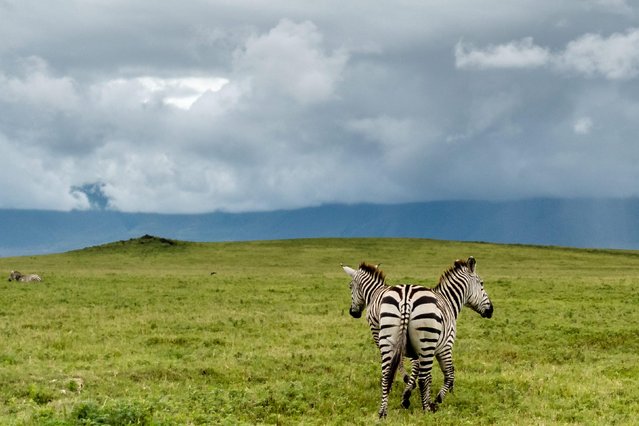
Two zebras stand so close in Ngorongoro Crater, Tanzania. (Photo by Zhayynn James/Solent News)

Two zebras stand so close in Ngorongoro Crater, Tanzania. (Photo by Zhayynn James/Solent News)
Details
10 May 2020 00:01:00
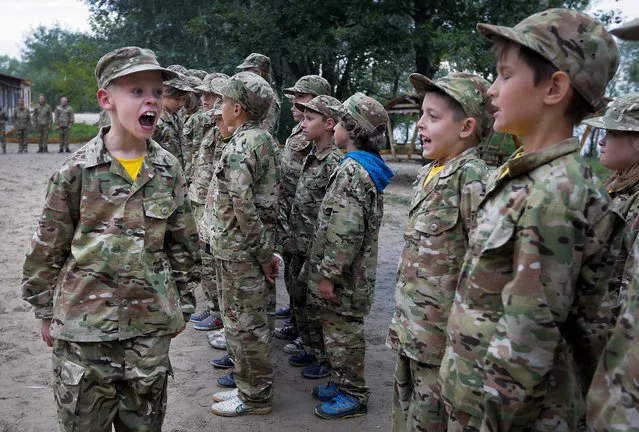
In this photo taken on Friday, July 14, 2017, a student at a paramilitary camp for children calls the rank to attention outside Kiev, Ukraine. (Photo by Efrem Lukatsky/AP Photo)

In this photo taken on Friday, July 14, 2017, a student at a paramilitary camp for children calls the rank to attention outside Kiev, Ukraine. As the deadly conflict in eastern Ukraine entered its third year, some parents in Ukraine are anxious to make sure their children are ready to fight it, instead of swimming and playing volleyball. (Photo by Efrem Lukatsky/AP Photo)
Details
05 Aug 2017 08:21:00
A bystander walks past a fresco by street artist Seth depicting a girl with a Ukrainian flag walking on tanks in Paris on March 01, 2022. (Photo by Joel Saget/AFP Photo)

A bystander walks past a fresco by street artist Seth depicting a girl with a Ukrainian flag walking on tanks in Paris on March 01, 2022. (Photo by Joel Saget/AFP Photo)
Details
15 Mar 2022 05:50:00
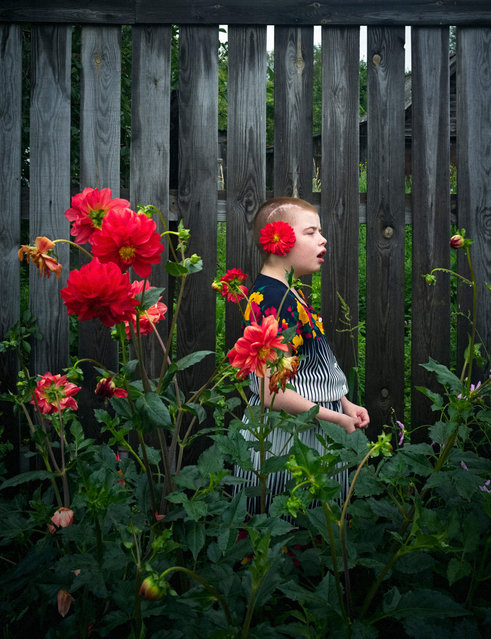
Portrait of a girl from the neuropsychiatric boarding facility for girls. (Photo by Anastasia Rudenko)

“Elat’ma, the Ryazan Oblast region of Russia. This small town is only 300 kilometers (186 miles) from modern Moscow but remains 60 years in the past, dominated by the spirit of socialism. The air of the communist ‘50s can be seen in the town’s architecture, celebrations and other occurrences. But neither its beauty nor its ties to a socialist past brought photographer Anastasia Rudenko to this village. Elat’ma is unique in that it functions as a town for mentally disabled people”. – Michelle Cohan via CNN. (Photo by Anastasia Rudenko)
Details
09 Sep 2014 08:20:00
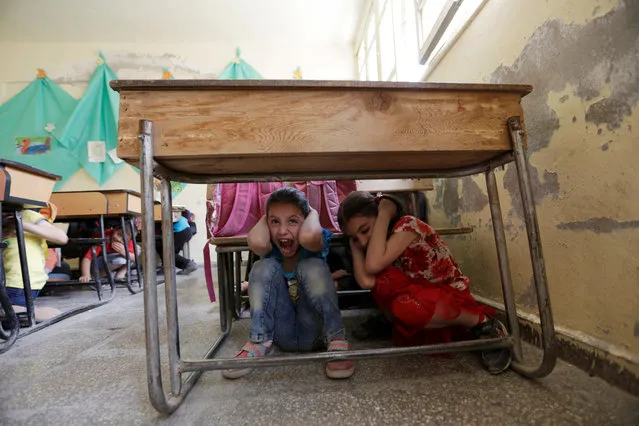
Children attend a war safety awareness class conducted by civil defence members, in the rebel-controlled area of Maaret al-Numan town in Idlib province, Syria May 14, 2016. (Photo by Khalil Ashawi/Reuters)

Children attend a war safety awareness class conducted by civil defence members, in the rebel-controlled area of Maaret al-Numan town in Idlib province, Syria May 14, 2016. (Photo by Khalil Ashawi/Reuters)
Details
20 Sep 2016 09:17:00
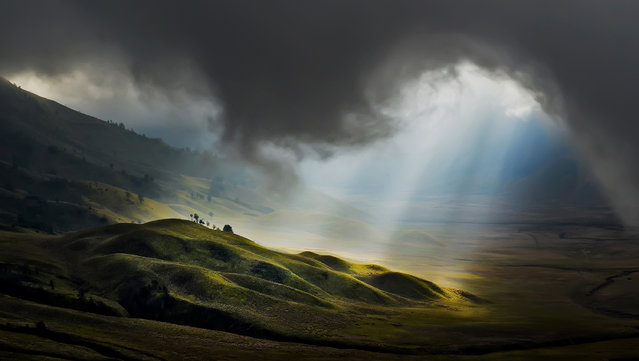
“Light From Heaven”. Taken around Mount Bromo, East Java, Indonesia in the morning. Photo location: East Java, Indonesia. (Photo and caption by Pimpin Nagawan/National Geographic Photo Contest)

“Light From Heaven”. Taken around Mount Bromo, East Java, Indonesia in the morning. Photo location: East Java, Indonesia. (Photo and caption by Pimpin Nagawan/National Geographic Photo Contest)

ATTENTION! All pictures are presented in high resolution. To see Hi-Res images – just TWICE click on any picture. In other words, click small picture – opens the BIG picture. Click BIG picture – opens VERY BIG picture.
Details
29 Nov 2013 12:36:00
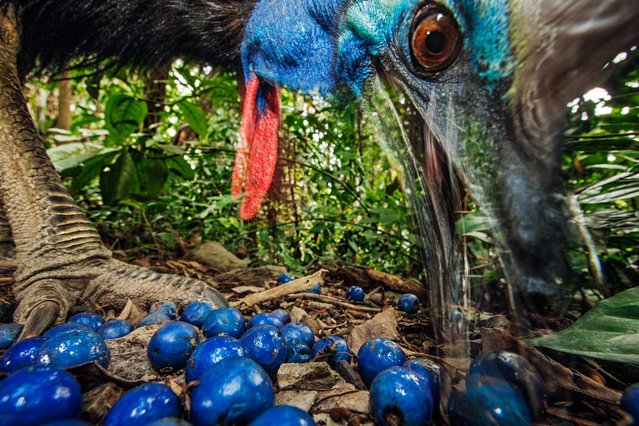
“Cassowaries are large, flightless birds related to emus and (more distantly) to ostriches, rheas, and kiwis”, writes Olivia Judson in the September issue of National Geographic magazine. (Photo by Christian Ziegler/National Geographic)

“Cassowaries are large, flightless birds related to emus and (more distantly) to ostriches, rheas, and kiwis”, writes Olivia Judson in the September issue of National Geographic magazine. How large? People-size: Adult males stand well over five foot five and top 110 pounds. Females are even taller, and can weigh more than 160 pounds. Dangerous when roused, they’re shy and peaceable when left alone. But even birds this big and tough are prey to habitat loss. The dense New Guinea and Australia rain forests where they live have dwindled. Today cassowaries might number 1,500 to 2,000. And because they help shape those same forests – by moving seeds from one place to another – “if they vanish”, Judson writes, “the structure of the forest would gradually change” too. (Photo by Christian Ziegler/National Geographic)

Details
06 Jan 2014 12:21:00