Loading...
Done
Plagued by Doubt By Thomas Wightman

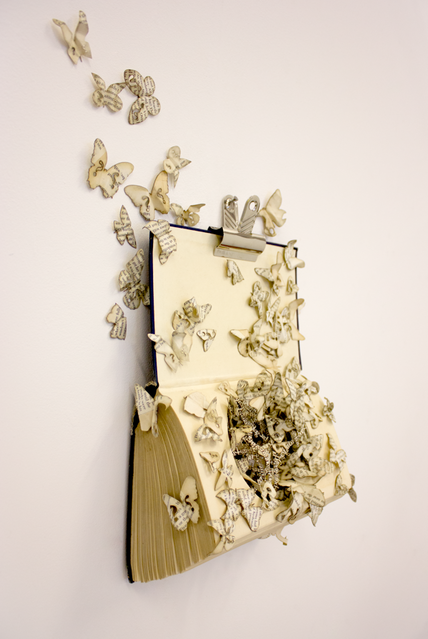
Thoughts. They fly through the broad expenses of our mind, floating gracefully in midair, going into the clouds, and then reemerging once again. Some are quick and furtive, others are grand and majestic. We reflect upon them as they enter our minds, and once they leave, they are usually gone for good. However, some thoughts are different. These thoughts resemble a flock of angry birds or a swarm of hungry moths that invade your mind, slowly eating away at your sanity, strength, and desire to live. Such thoughts often plague that minds of people with Obsessive Compulsive disorder. They completely occupy their time; constantly there; ever-present. With his book sculpture, Thomas Wightman was able to accurately convey the way these thoughts consume the mind, slowly building a nest within it, resisting all attempts to drive them away.

Thomas Wightman


See Also: Derailing My Train of Thought
Details
19 Mar 2015 09:11:00
Taylor's sister, who works in an animal rescue center, found this baby jackdaw who was in need of a little extra love and attention before being released into the wild

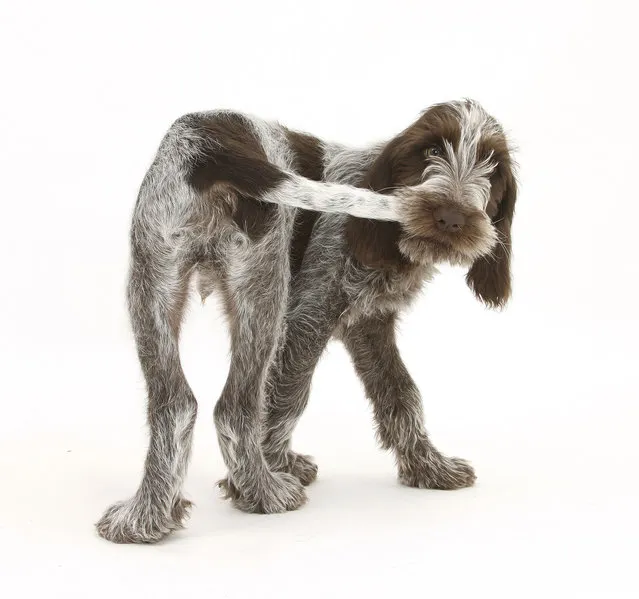
Mark Taylor may not have any training as a photographer, but that doesn’t stop him from taking amazing animal photos. From his studio in Southeast England, Taylor has made a big business out of photographing man’s best friends, following in the footsteps of his late mother, Jane Burton. Most of the animals he works with are babies, who are more comfortable in front of the camera than older animals.

Photo: Taylor often uses animals that belonged to friends of his late mother, including this Italian Spinone puppy chewing his tail. Baby animals make ideal subjects, as the older dogs and cats get, the warier they are of spending time in a studio. And his trick for getting this small subject to pose? Dog treats, of course. (Photo by Mark Taylor/Rex Features)
Details
27 Apr 2012 13:45:00
Aliia Nasyrova laying her hair on the couch to show her hair's length on March 5, 2017 in Riga, Latvia. (Photo by  Eduard Kolik/Barcroft Media)

Aliia Nasyrova laying her hair on the couch to show her hair's length on March 5, 2017 in Riga, Latvia. Real-life Rapunzel Aliia Nasyrova has hair so long that her husband admits he thinks of it as another member of the family. Aliia, 27, who lives in Riga, Latvia, took 20 years to grow out her hair, which measures 90 inches to the floor – and even has its own space in the marital bed. And while her massive mane attracts stares when out in public, her husband Ivan Balaban says he loves it and is proud of her for not cutting it. Weighing in at 4.5lbs (2kg), Aliia says her lengthy locks weigh as much as the family cat. (Photo by Eduard Kolik/Barcroft Media)
Details
18 Mar 2017 10:46:00
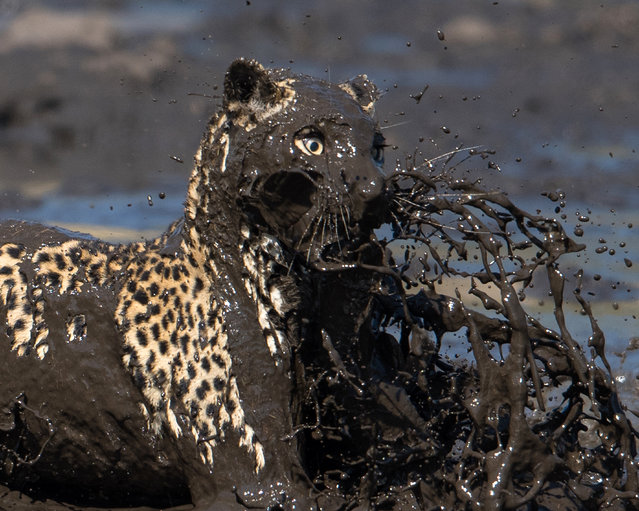
A leopard leaps into a muddy waterhole to catch a fish on August 13, 2015, in the Savuti Channel in Botswana. A leopard leaps into a muddy waterhole to catch a fish in the Savuti Channel in Botswana. The spotted predator stood poised waiting for a fish to appear – before leaping in ferociously with lightening reflexes. (Photo by Greatstock/Barcroft Media)

A leopard leaps into a muddy waterhole to catch a fish on August 13, 2015, in the Savuti Channel in Botswana. A leopard leaps into a muddy waterhole to catch a fish in the Savuti Channel in Botswana. The spotted predator stood poised waiting for a fish to appear – before leaping in ferociously with lightening reflexes. Coated in a layer of thick dark mud the big cat emerged from the water clutching the fish in its jaws. The fishing leopards of Savuti are known for their unique skills in catching fish – but have rarely been photographed. (Photo by Greatstock/Barcroft Media)
Details
06 Sep 2015 13:00:00
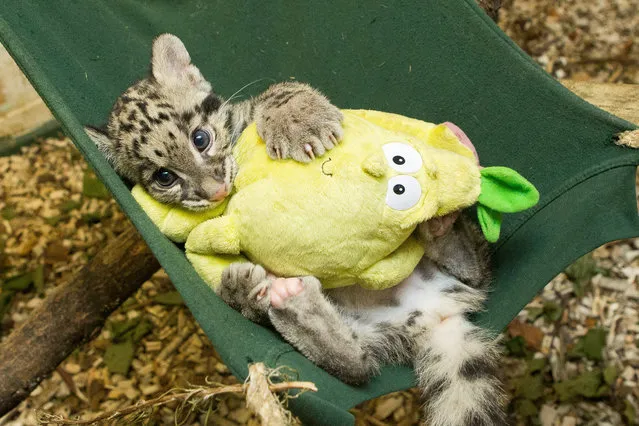
Nimbus, the 2 month old clouded leopard cub, who was hand reared at the home of curator Jamie Craig. Photographed sitting in her hammock at Cotswold Wildlife Park, Burford, Oxfordshire, UK on September 2014. (Photo by SWNS/ABACAPress)

Nimbus, the 2 month old clouded leopard cub, who was hand reared at the home of curator Jamie Craig. Photographed sitting in her hammock at Cotswold Wildlife Park, Burford, Oxfordshire, UK on September 2014. Jamie Craig the curator of the Cotswold Wildlife park has hand reared the baby clouded leopard in his family bathroom after he was rejected by his mother. Now two months old Nimbus is been fed a cat milk replacement diet by bottle and is given soft toys to play with. It is hoped that the leopard will re-join others at the park and eventually join their breeding program. (Photo by SWNS/ABACAPress)
Details
03 Oct 2014 11:43:00
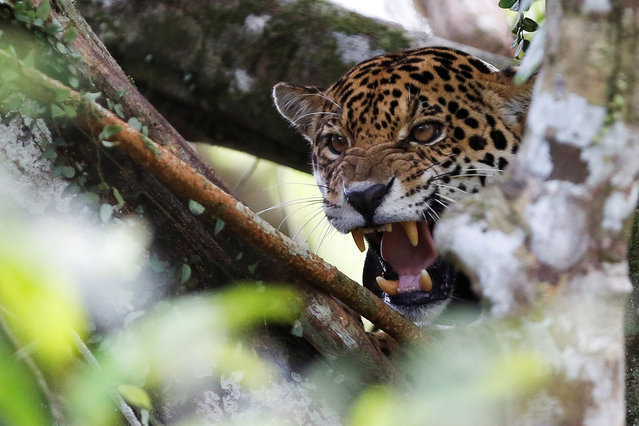
A female adult jaguar, which has a cub, growls at the Mamiraua Sustainable Development Reserve in Uarini, Amazonas state, Brazil, June 5, 2017. (Photo by Bruno Kelly/Reuters)

Brazilian jaguars, imperilled by hunters, ranchers and destruction of their habitat, have learned to survive at least one menace – flooding in the Amazon. They take to the trees. Although they can be six feet long and 200 pounds, the largest South American cats nimbly navigate treetops where they stay from April to July when the rainforest floor is under meters-deep water. Here: A female adult jaguar, which has a cub, growls at the Mamiraua Sustainable Development Reserve in Uarini, Amazonas state, Brazil, June 5, 2017. (Photo by Bruno Kelly/Reuters)
Details
07 Apr 2018 00:03:00
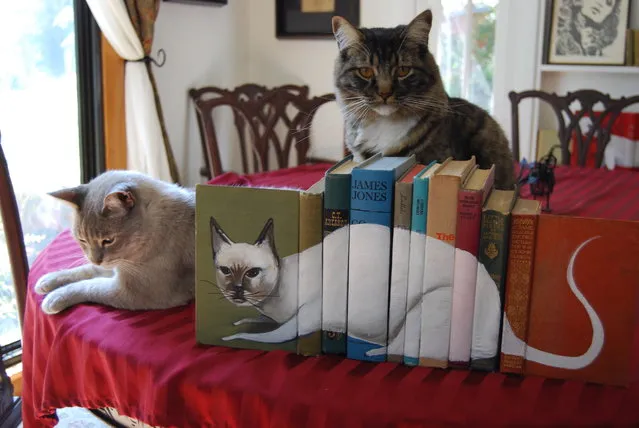
“Cats”. I really love animals and I think they are often overlooked or underestimated.  Sometimes I can see the feelings and emotions in animals when I can’t see them in humans, so it’s easier for me to express the feelings in a lot of my animal characters. (Photo and caption by Mike Stilkey)

Los Angeles native Mike Stilkey has always been attracted to painting and drawing not only on vintage paper, record covers and book pages, but on the books themselves. Using a mix of ink, colored pencil, paint and lacquer, Stilkey depicts a melancholic and at times a whimsical cast of characters inhabiting ambiguous spaces and narratives of fantasy and fairy tales. A lingering sense of loss and longing hints at emotional depth and draws the viewer into their introspective thrall with a mixture of capricious poetry, wit, and mystery. (Photo by Mike Stilkey)
Details
31 Jul 2014 10:17:00
Spectacular images offering insight into the lives of the Huaorani people in the Ecuadorian Amazon have been revealed showing how they use traditional methods to hunt monkeys for food. The stunning pictures were taken by conservation photographer Pete Oxford from Torquay, Devon in the Ecuadorian Amazon. “The Huaorani Indians are a forest people highly in tune with their environment. Many are now totally acculturated since the 1950s by missionaries”, said Pete. “Today they face radical change to their culture to the proximity of oil exploration within their territory and the Yasuni National Park and Biosphere Reserve, they are vastly changed. Some still live very traditionally and for this shoot, through my Huaorani friend, a direct relative of those photographed he wanted to depict them as close to their original culture as possible. They still largely hunt with blow pipes and spears eating a lot of monkeys and peccaries”. The Huaorani are also known as the Waorani, Waodani or the Waos and are native Amerindians. Their lands are located between the Curaray and Napo rivers and speak the Huaorani language. Pete says that during his visit he was welcomed into the group and hopes that ancient cultures can be saved. Here: The tribe were seen celebrating after a hunter returned to camp with a wild pig. (Photo by Pete Oxford/Mediadrumworld.com)

Spectacular images offering insight into the lives of the Huaorani people in the Ecuadorian Amazon have been revealed showing how they use traditional methods to hunt monkeys for food. The stunning pictures were taken by conservation photographer Pete Oxford from Torquay, Devon in the Ecuadorian Amazon. Here: The tribe were seen celebrating after a hunter returned to camp with a wild pig. (Photo by Pete Oxford/Mediadrumworld.com)
Details
20 Jan 2017 07:58:00