Loading...
Done
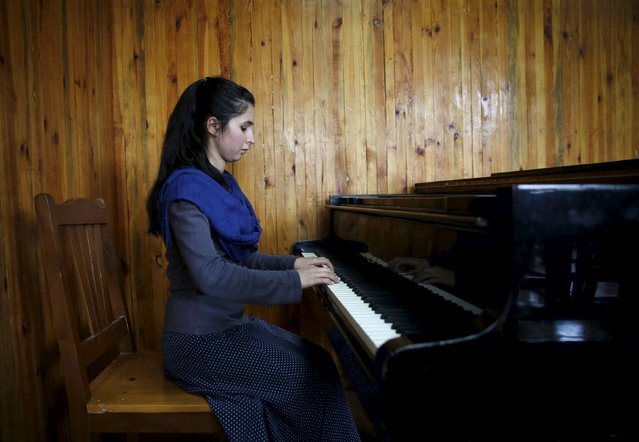
Negin Ekhpulwak, leader of the Zohra orchestra, an ensemble of 35 women, practises on a piano at Afghanistan's National Institute of Music, in Kabul, Afghanistan April 9, 2016. (Photo by Ahmad Masood/Reuters)

Negin Ekhpulwak, leader of the Zohra orchestra, an ensemble of 35 women, practises on a piano at Afghanistan's National Institute of Music, in Kabul, Afghanistan April 9, 2016. Playing instruments was banned under Taliban rule in Afghanistan, and even today, many conservative Muslims frown on most forms of music. Living in an orphanage in the capital, Kabul, 19-year-old Negin Ikhpolwak leads an ensemble of 35 women that plays both Western and Afghan musical instruments. In a country notorious internationally for harsh restrictions on women in most areas of life, Negin's story highlights a double challenge. (Photo by Ahmad Masood/Reuters)
Details
19 Apr 2016 13:47:00
Burlesque dancer and Lucha VaVoom co-founder Rita D'Albert gets dressed before the Lucha VaVoom “Night of the Vampire” performance in Los Angeles, California October 29, 2014. (Photo by Patrick T. Fallon/Reuters)

Burlesque dancer and Lucha VaVoom co-founder Rita D'Albert gets dressed before the Lucha VaVoom “Night of the Vampire” performance in Los Angeles, California October 29, 2014. (Photo by Patrick T. Fallon/Reuters)
Details
01 Nov 2014 14:36:00
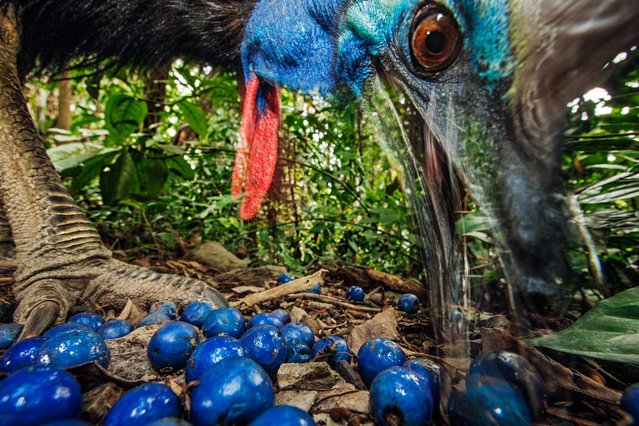
“Cassowaries are large, flightless birds related to emus and (more distantly) to ostriches, rheas, and kiwis”, writes Olivia Judson in the September issue of National Geographic magazine. (Photo by Christian Ziegler/National Geographic)

“Cassowaries are large, flightless birds related to emus and (more distantly) to ostriches, rheas, and kiwis”, writes Olivia Judson in the September issue of National Geographic magazine. How large? People-size: Adult males stand well over five foot five and top 110 pounds. Females are even taller, and can weigh more than 160 pounds. Dangerous when roused, they’re shy and peaceable when left alone. But even birds this big and tough are prey to habitat loss. The dense New Guinea and Australia rain forests where they live have dwindled. Today cassowaries might number 1,500 to 2,000. And because they help shape those same forests – by moving seeds from one place to another – “if they vanish”, Judson writes, “the structure of the forest would gradually change” too. (Photo by Christian Ziegler/National Geographic)
Details
06 Jan 2014 12:21:00
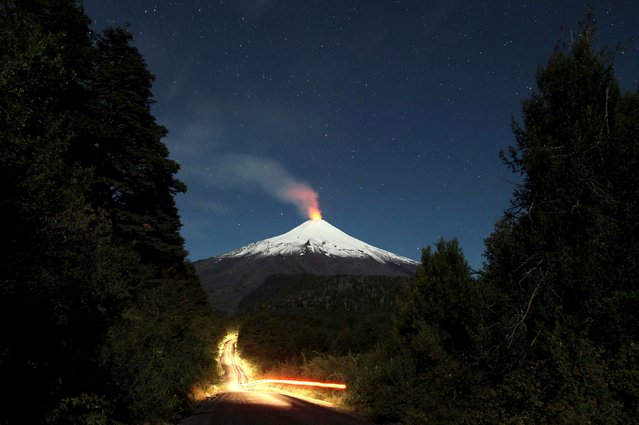
The Villarrica Volcano is seen at night in Chile, April 16, 2016. Villarrica is one of Chile's most active volcanoes. Picture taken with long exposure. Picture taken April 16, 2016. (Photo by Cristobal Saavedra/Reuters)

The Villarrica Volcano is seen at night in Chile, April 16, 2016. Villarrica is one of Chile's most active volcanoes. Picture taken with long exposure. (Photo by Cristobal Saavedra/Reuters)
Details
18 Apr 2016 10:23:00
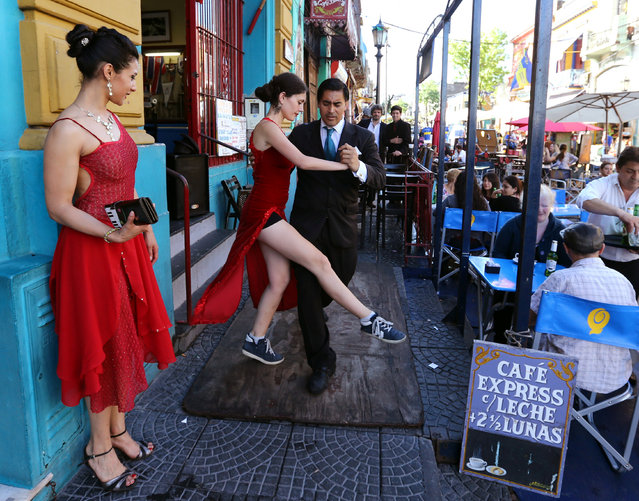
A couple dance tango for tourists at Caminito, a touristic hotspot of La Boca neighborhood in Buenos Aires, Argentina, October 15, 2016. (Photo by Enrique Marcarian/Reuters)

A couple dance tango for tourists at Caminito, a touristic hotspot of La Boca neighborhood in Buenos Aires, Argentina, October 15, 2016. (Photo by Enrique Marcarian/Reuters)
Details
17 Oct 2016 10:39:00
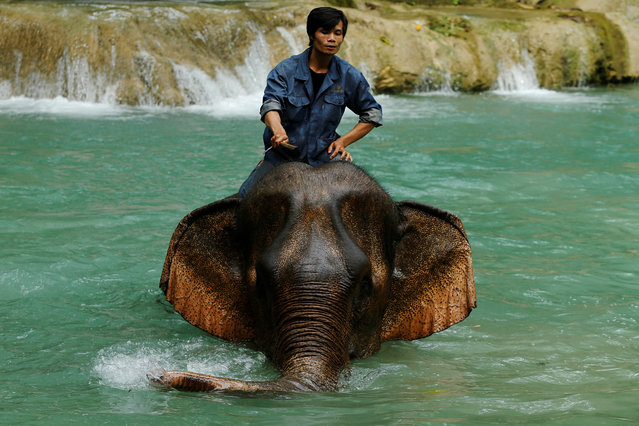
A mahout rides an elephant at Tad Sae Waterfall outside Luang Prabang, Laos July 31, 2016. (Photo by Jorge Silva/Reuters)

A mahout rides an elephant at Tad Sae Waterfall outside Luang Prabang, Laos July 31, 2016. Protected by the United Nations cultural heritage agency UNESCO, Luang Prabang is one of the most alluring places in the region – a city that evokes old-world romance that has gained a reputation as a travellers' Shangri La. (Photo by Jorge Silva/Reuters)
Details
04 Sep 2016 09:05:00
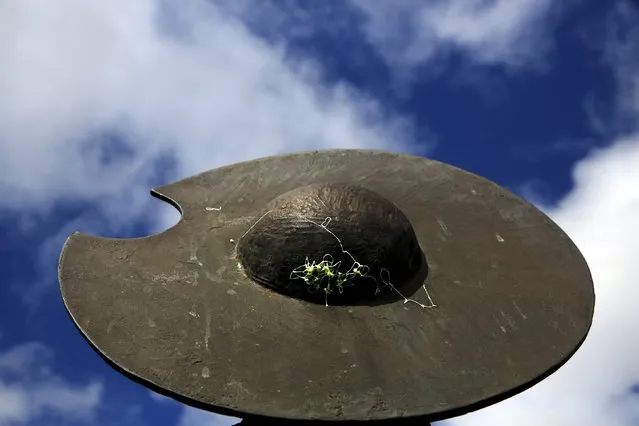
A sculpture of Don Quixote shows him wearing the basin he mistook for the enchanted helmet of the fictional Moorish king Mambrino in Alcazar de San Juan, Spain, April 5, 2016. (Photo by Susana Vera/Reuters)

A sculpture of Don Quixote shows him wearing the basin he mistook for the enchanted helmet of the fictional Moorish king Mambrino in Alcazar de San Juan, Spain, April 5, 2016. The arid central Spanish region of La Mancha is the setting for “Don Quixote”, the seventeenth-century novel by Miguel de Cervantes. Four hundred years after his death, references to the characters of Don Quixote, his loyal squire Sancho Panza and his beautiful lady Dulcinea abound in the surrounding villages from sweet treats to theatre productions involving livestock. Cervantes did not give away the name of the birthplace of Don Quixote, a middle-aged gentleman who becomes obsessed with chivalrous ideals. But many identify the village of Argamasilla de Alba as his hometown. The anniversary of Cervantes’ death is marked on the 23 April. (Photo by Susana Vera/Reuters)
Details
21 Apr 2016 12:32:00
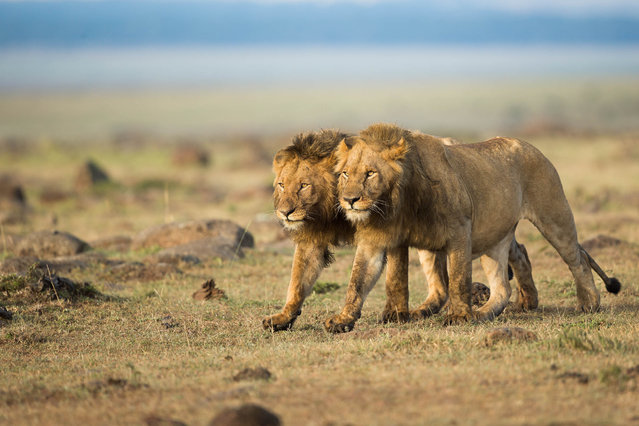
“Two Brothers”. We found about 20 lions eating a buffalo. When the male leaved the group we anticipated him to take photos. It is 8AM, light is perfect and the position too. The lion stops and looks down from the hill, another lion is coming up, it stiffens, I think that will be a fight, i'm tense, the camera is OK, the shots previously made perfect. Photo location: Masai Mara, Kenya. (Photo and caption by Massimo Mei/National Geographic Photo Contest)

“Two Brothers”. We found about 20 lions eating a buffalo. When the male leaved the group we anticipated him to take photos. It is 8AM, light is perfect and the position too. The lion stops and looks down from the hill, another lion is coming up, it stiffens, I think that will be a fight, i'm tense, the camera is OK, the shots previously made perfect. The two meet, looking directly into their eyes, they sniff, rub against their heads, the tension drops, they start walking with the same step as when they were puppies, they are two brothers. Photo location: Masai Mara, Kenya. (Photo and caption by Massimo Mei/National Geographic Photo Contest)
Details
02 Jul 2014 09:45:00