Loading...
Done
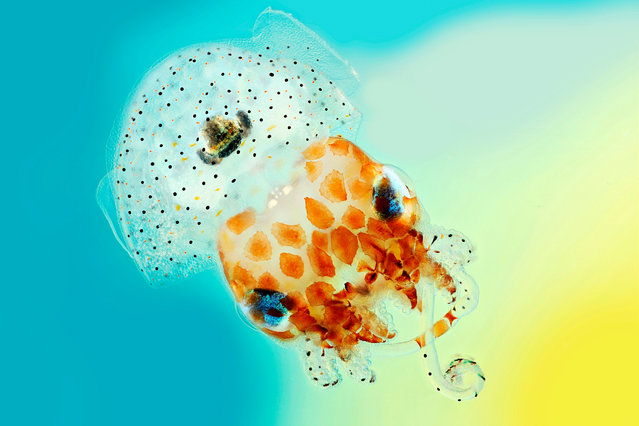
With its huge eyes, comical name and diminutive size, Mark R. Smith’s image of a baby Hawaiian bobtail squid can’t help but raise a smile. A curiously endearing creature, the cephalopod is just 1.5cm across, its mantle cavity bearing more than a passing resemblance to a rather natty shower cap. But it is also a beautiful example of symbiosis – nature’s version of “I’ll scratch your back if you scratch mine” – for on the underside of the squid is a light organ which houses bioluminescent bacteria. The squid offers the bacteria protection and food, while the bacteria emit a glow – a handy trait that the squid uses to offset its silhouette, helping it to evade predators in the depths below. Mark R. Smith’s entry combines several images of a Hawaiian bobtail squid with different focus lengths to create a final picture with greater depth of field than normal. (Photo by Mark R. Smith/Wellcome Images/Macroscopic Solutions)

With its huge eyes, comical name and diminutive size, Mark R. Smith’s image of a baby Hawaiian bobtail squid can’t help but raise a smile. A curiously endearing creature, the cephalopod is just 1.5cm across, its mantle cavity bearing more than a passing resemblance to a rather natty shower cap. But it is also a beautiful example of symbiosis – nature’s version of “I’ll scratch your back if you scratch mine” – for on the underside of the squid is a light organ which houses bioluminescent bacteria. The squid offers the bacteria protection and food, while the bacteria emit a glow – a handy trait that the squid uses to offset its silhouette, helping it to evade predators in the depths below. Mark R. Smith’s entry combines several images of a Hawaiian bobtail squid with different focus lengths to create a final picture with greater depth of field than normal. (Photo by Mark R. Smith/Wellcome Images/Macroscopic Solutions)
Details
08 Mar 2017 00:05:00
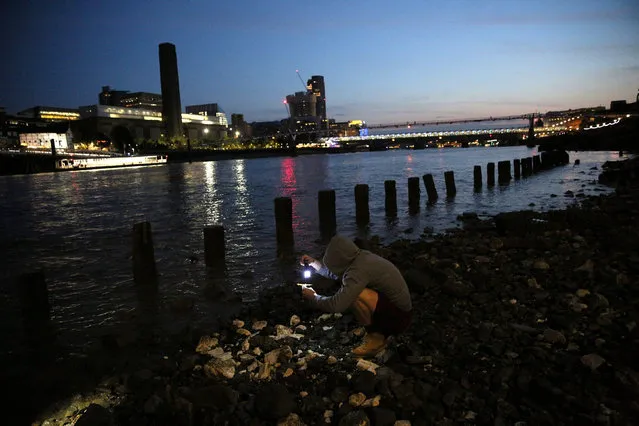
A mudlark uses a torch to look for items on the bank of the River Thames in London, Britain June 06, 2016. Mudlarking is believed to trace its origins to the 18th and 19th century, when scavengers searched the Thames' shores for items to sell. These days, history and archaeology fans are the ones hoping to find old relics such as coins, ceramics, artifacts or everyday items from across centuries. They wait for the low tide and then scour specific areas of exposed shores. "If you're in a field you could be out all day long, with the river you're restricted to about two or three hours," mudlark Nick Stevens said. While many just use the naked eye for their searches, others rely on metal detectors for which a permit from the Port of London Authority is needed. Digging also requires consent. (Photo by Neil Hall/Reuters)

A mudlark uses a torch to look for items on the bank of the River Thames in London, Britain June 06, 2016. Mudlarking is believed to trace its origins to the 18th and 19th century, when scavengers searched the Thames' shores for items to sell. These days, history and archaeology fans are the ones hoping to find old relics such as coins, ceramics, artifacts or everyday items from across centuries. their finds with the Portable Antiquities Scheme. Any item over 300 years old must be recorded. (Photo by Neil Hall/Reuters)
Details
27 Aug 2016 10:43:00
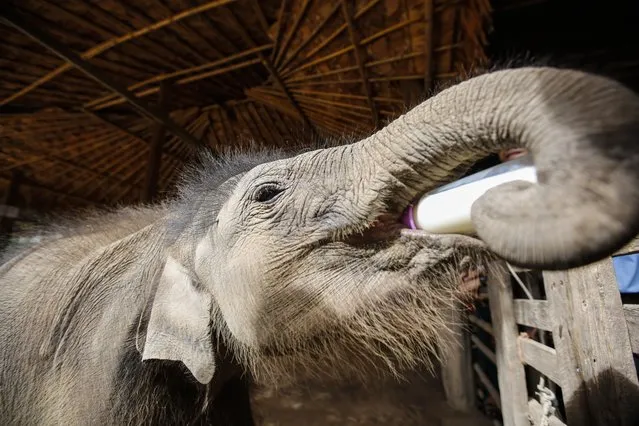
Mary, 8-months-old female orphan elephant, drinks milk at Winga Baw Elephant Conservation Camp during the ceremony to mark World Elephant Day at Bago Region, Myanmar, 12 August 2017. (Photo by Lynn Bo Bo/EPA/EFE)

Mary, 8-months-old female orphan elephant, drinks milk at Winga Baw Elephant Conservation Camp during the ceremony to mark World Elephant Day at Bago Region, Myanmar, 12 August 2017. Winga Baw Elephant Conservation Camp, 34-hectare former timber camp for logs located in Bago Region, currently has 14 elephants and was opened for recreation for locals as well as for tourists. World Elephant Day is marked annually on 12 August. (Photo by Lynn Bo Bo/EPA/EFE)
Details
15 Aug 2017 07:47:00
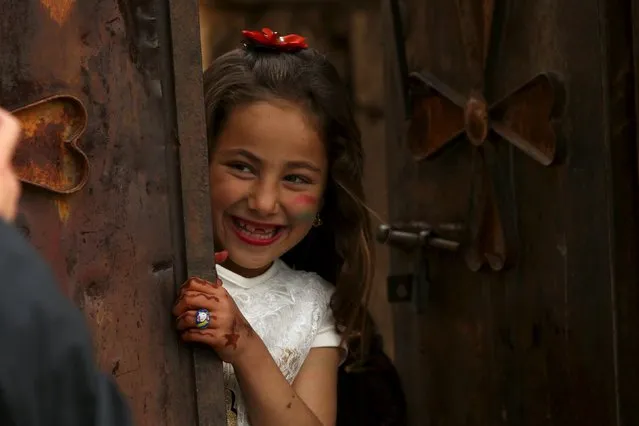
A Kurdish girl celebrates Newroz Day, a festival marking spring and the new year, in Akra, Iraq March 20, 2016. (Photo by Ari Jalal/Reuters)

A Kurdish girl celebrates Newroz Day, a festival marking spring and the new year, in Akra, Iraq March 20, 2016. Nowruz is the name of the Iranian New Year also referred to as Persian New Year which is celebrated worldwide by Iranian peoples, along with some other ethno-linguistic groups. Nowruz is the day of the vernal equinox, and marks the beginning of spring in the Northern Hemisphere. It usually occurs on March 21 or the previous/following day, depending on where it is observed. Although having Persian and religious Zoroastrian origins, Nowruz has been celebrated by people from diverse ethno-linguistic communities for thousands of years. (Photo by Ari Jalal/Reuters)
Details
21 Mar 2016 12:47:00
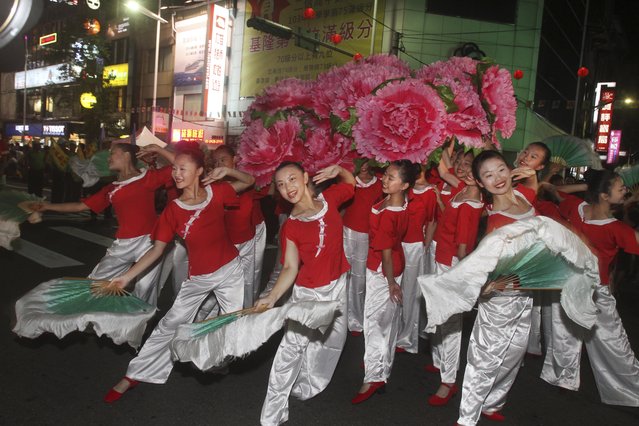
In this photo made late Saturday, August 9, 2014, in Keelung, Taiwan, a traditional Chinese dance troupe performs during a parade marking the beginning of the Chinese folklore's mid-summer's Ghost Month Festival. (Photo by Chiang Ying-ying/AP Photo)

In this photo made late Saturday, August 9, 2014, in Keelung, Taiwan, a traditional Chinese dance troupe performs during a parade marking the beginning of the Chinese folklore's mid-summer's Ghost Month Festival. Fourteen days into the seventh month of the lunar calendar, August 9, in 2014, marks the traditional Chinese Ghost Month where the gates of the underworld are opened and spirits of the deceased are set free to roam the world of the living. The month long festivities are aimed to please the roaming spirits. (Photo by Chiang Ying-ying/AP Photo)
Details
12 Aug 2014 11:57:00
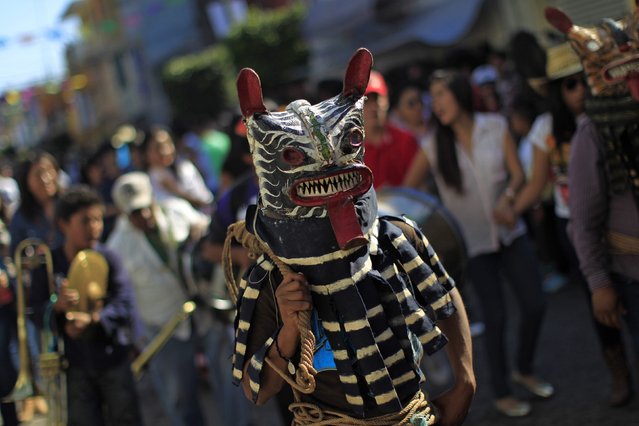
A participant wearing a tiger mask performs during the “Paseo del Pendon”, a traditional artistic march in Chilpancingo,  December 21, 2014. The “Paseo del Pendon”  (walk banner)  is a traditional celebration in the streets of Chilpancingo to mark the begin of the the year-end festivities in the city. (Photo by Jorge Dan Lopez/Reuters)

A participant wearing a tiger mask performs during the “Paseo del Pendon”, a traditional artistic march in Chilpancingo, December 21, 2014. The “Paseo del Pendon” (walk banner) is a traditional celebration in the streets of Chilpancingo to mark the begin of the the year-end festivities in the city. (Photo by Jorge Dan Lopez/Reuters)
Details
23 Dec 2014 13:22:00
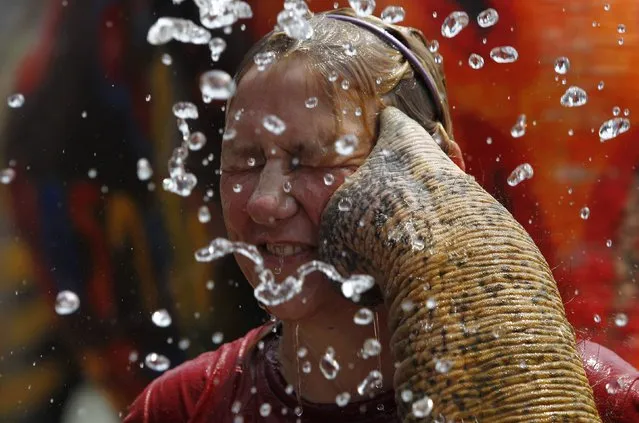
A tourist reacts as an elephant sprays her with water in celebration of the Songkran water festival in Thailand's Ayutthaya province, April 9, 2014. Songkran, the most celebrated festival of the year, marks the start of Thailand's traditional New Year. (Photo by Chaiwat Subprasom/Reuters)

A tourist reacts as an elephant sprays her with water in celebration of the Songkran water festival in Thailand's Ayutthaya province, April 9, 2014. Songkran, the most celebrated festival of the year, marks the start of Thailand's traditional New Year. (Photo by Chaiwat Subprasom/Reuters)
Details
11 Apr 2014 05:45:00
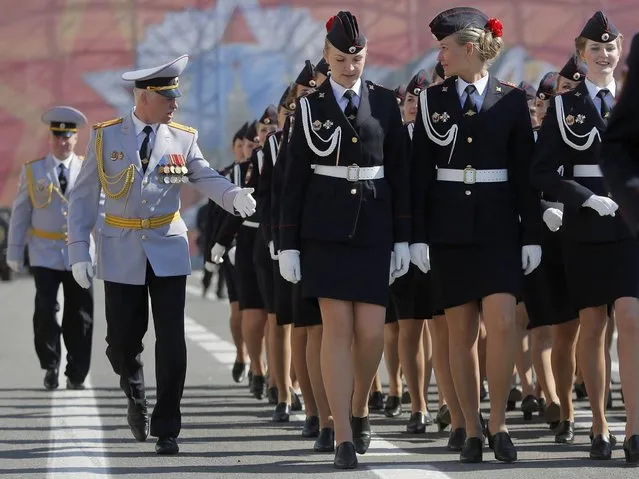
Russian Police academy female cadets march during a rehearsal for the Victory Day military parade at Dvortsovaya (Palace) Square in St Petersburg, Russia, Wednesday, May 7, 2014. Victory Day, marking the defeat of Nazi Germany, is Russia's most important secular holiday celebrated on May 9. (Photo by Dmitry Lovetsky/AP Photo)

Russian Police academy female cadets march during a rehearsal for the Victory Day military parade at Dvortsovaya (Palace) Square in St Petersburg, Russia, Wednesday, May 7, 2014. Victory Day, marking the defeat of Nazi Germany, is Russia's most important secular holiday celebrated on May 9. (Photo by Dmitry Lovetsky/AP Photo)
Details
10 May 2014 14:49:00