Loading...
Done
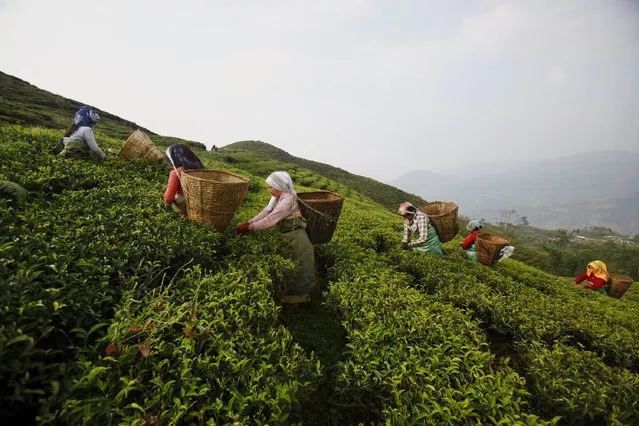
In this Sunday, November 16, 2014 photo, Nepalese women pick tea at a tea garden of Kanyam in Illam district, around 500 kilometers (310 miles) from Katmandu, Nepal. Illam is a hilly district of tea gardens and estates in eastern Nepal's Himalayan region with one of its largest and most productive tea estate being Kanyam estates. (Photo by Niranjan Shrestha/AP Photo)

In this Sunday, November 16, 2014 photo, Nepalese women pick tea at a tea garden of Kanyam in Illam district, around 500 kilometers (310 miles) from Katmandu, Nepal. Illam is a hilly district of tea gardens and estates in eastern Nepal's Himalayan region with one of its largest and most productive tea estate being Kanyam estates. The district produces orthodox tea, hand-processed or machine rolled, which is generally exported to international markets, specially Europe and the United States. Most of the tea pickers here are paid 186 Nepalese Rupees (US $ 2) for 8 hours of work everyday. (Photo by Niranjan Shrestha/AP Photo)
Details
19 Nov 2014 14:28:00
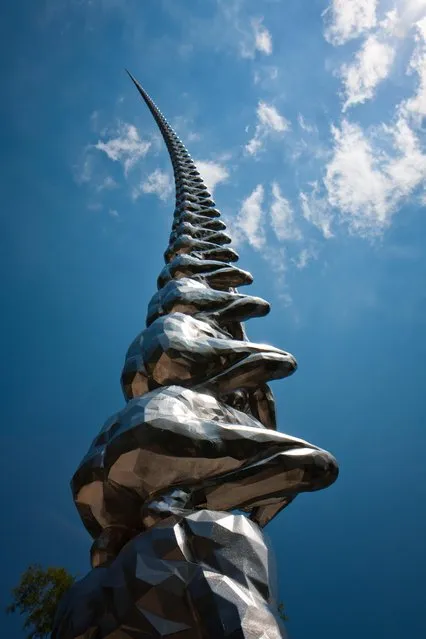
“Karma” by Do-Ho Suh. Sydney and Walda Besthoff Sculpture Garden, New Orleans Museum of Art, New Orleans, LA. (Photo by Alan Teo)

“Do-Ho Suh addresses issues of identity, memory, and relationships. Son of the famous Korean ink-painter Suh Se-Ok, Do-Ho Suh is a leading figure in the transnational avant-garde generation of Korean artists who came of age in the late 1990s, and his work eloquently represents a dual consciousness between East and West”.

Photo: “Karma” by Do-Ho Suh. Sydney and Walda Besthoff Sculpture Garden, New Orleans Museum of Art, New Orleans, LA. (Photo by Alan Teo)


Details
05 Mar 2013 09:37:00
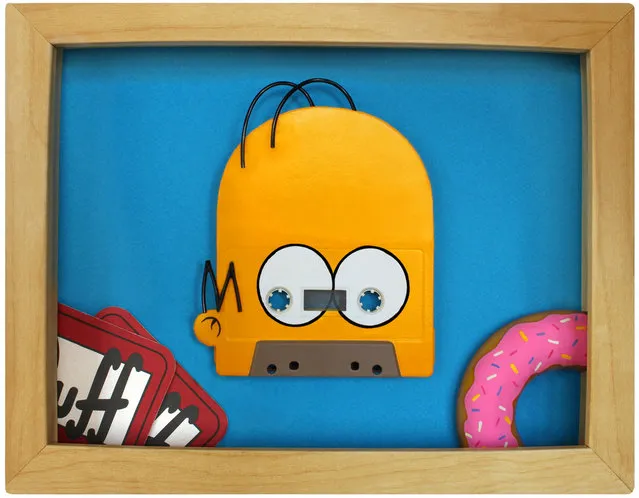
Cassette Tape Art By Benoit Jammes

So I'm a 33 year old graphic designer, and I live in Paris, France
This work on cassette tapes is entirely handmade, with a bit of work but so nostalgia... It so happened that I found a bunch of old cassettes at home; seeing them brought me back, in thought, to an earlier time, the 80s, and to me as a kid. In any case, I could not play them any more so resurrecting them sounded like a good idea...it was sound, it became visual! And I am pretty sure they are more happy now than in a shoebox :-)
I think people from my generation relate to this work because many enjoy the funny side of it, the references. They are happy to see that these old cassette tapes managed to start a new life!

Signed and numbered prints are available for sale.

Benoit Jammes

Details
11 Apr 2013 11:06:00
Afghan Dog Fighting

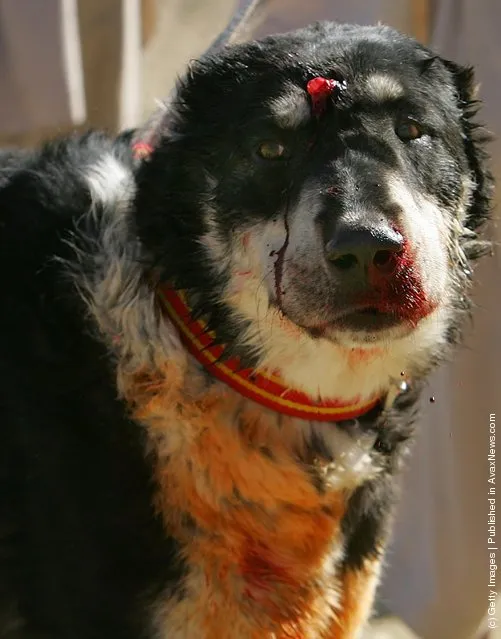
“Dog fighting is a form of blood sport in which game dogs are made to fight, sometimes to the death. It is illegal in most developed countries. Dog fighting is used for entertainment and may also generate revenue from stud fees, admission fees and gambling”. – Wikipedia

Photo: A bloody Afghan dog is bleeding with many wounds after he lost a dog fight November 24, 2006 in Kabul, Afghanistan. While the Afghan government is trying to ban the violent use of dogs for fighting, the unofficial sport remains a regular weekly event. Afghan dog fighting is popular among Afghan men who gamble on the dogs making upwards of 15,000 Afghanie (300 USD). (Photo by Paula Bronstein/Getty Images)
Details
07 Aug 2011 11:47:00
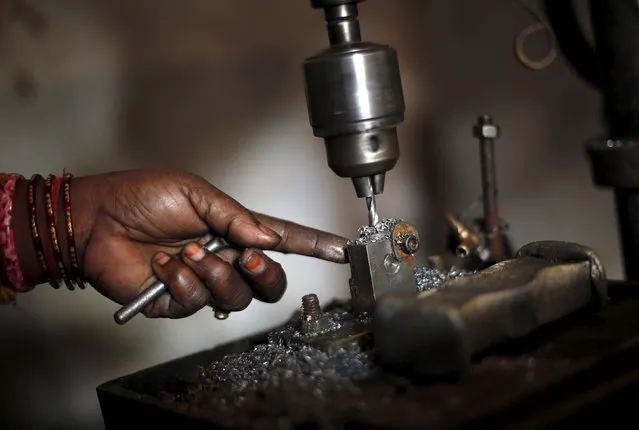
A worker makes auto parts on a machine inside a workshop in Faridabad, India, December 24, 2015. (Photo by Adnan Abidi/Reuters)

A worker makes auto parts on a machine inside a workshop in Faridabad, India, December 24, 2015. Car makers such as Maruti Suzuki India and Hyundai Motor see huge growth in India, set to become the world's third-largest auto market by 2020 as millions buy their first new car. Price tags can be as low as $3,000 for a new Tata Motors Nano mini-car. India is also becoming a low-cost export hub for global car makers such as General Motors and Ford Motor. As the sector expands, some of the work is sub-contracted out to small factories operating on paper-thin margins, where poor contract workers often have little or no access to safety equipment or health benefits. (Photo by Adnan Abidi/Reuters)
Details
23 Jan 2016 13:31:00
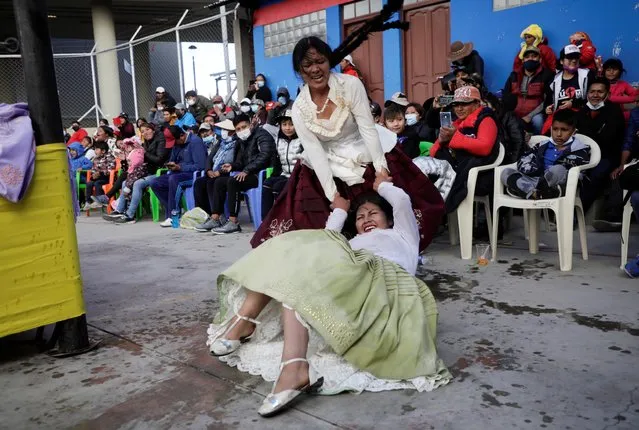
Barbara Quisbert and Susana La Bonita, cholitas wrestlers, fight during their return to the ring after the coronavirus disease (COVID-19) restrictions, in El Alto outskirts of La Paz, November 29, 2020. (Photo by David Mercado/Reuters)

The Fighting Cholitas are a group of female wrestlers who perform in El Alto, Bolivia. Tickets to the exhibitions cost $1. Like the general population of El Alto, which consists almost entirely of Aymara and Quechua residents, the Cholitas are indigenous. They wear braided hair, bowler hats and multilayered skirts in the ring. Here: Barbara Quisbert and Susana La Bonita, cholitas wrestlers, fight during their return to the ring after the coronavirus disease (COVID-19) restrictions, in El Alto outskirts of La Paz, November 29, 2020. (Photo by David Mercado/Reuters)
Details
12 Dec 2020 00:03:00
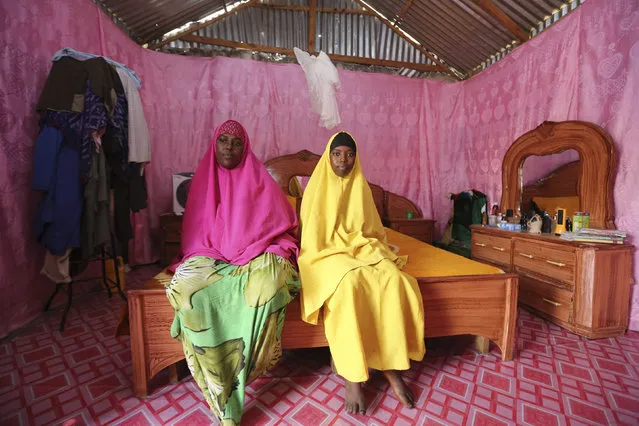
Saciido Sheik Yacquub, 34, poses for a picture with her daughter Faadumo Subeer Mohamed, 13, at their home in Hodan district IDP camp in Mogadishu February 11, 2014. Saciido, who runs a small business, wanted to be a business woman when she was a child. She studied until she was 20. She hopes that Faadumo will become a doctor. Faadumo will finish school in 2017 and hopes to be a doctor when she grows up. (Photo by Feisal Omar/Reuters)

“On March 8th activists celebrate International Women’s Day, which dates back to the early 20th century and has been observed by the United Nations since 1975. In the run-up to the event, Reuters photographers in countries around the globe took a series of portraits of women and their daughters. They asked each mother what her profession was, at what age she had finished education, and what she wanted her daughter to become when she grew up. They also asked each daughter at what age she would finish education and what she wanted to do in the future. The series of images offers an insight into the lives of women and girls around the world”. – Reuters. (Photo by Feisal Omar/Reuters)
Details
09 Mar 2014 04:33:00
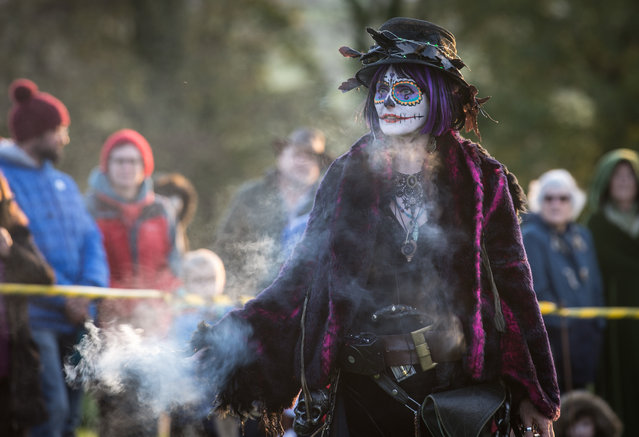
People take part in a sunset ceremony on the lower slopes of Glastonbury Tor as they celebrate Samhain at the Glastonbury Dragons Samhain Wild Hunt 2017 in Glastonbury on November 4, 2017 in Somerset, England. To celebrate Samhain, the Glastonbury Dragons, alongside Gwythyr Ap Greidal, the Summer King and the Winter King, Gwyn Ap Nudd, were paraded through the town to the lower slopes of Glastonbury Tor where the event was marked with ritual theatre, dancing and a fire to honour the dead. The Celtic festival of Samhain, which was later adopted by Christians and became Halloween, is a very important date in the Pagan calendar as it marks the division of the year between the lighter half (summer) and the darker half (winter). Pagans believe at Samhain, the division between this world and the otherworld was at its thinnest, allowing spirits to pass through. Many of the traditions of this ancient Celtic feast of the dead were later incorporated into the Christian calendar and Irish immigrants to America in the 19th century carried their customs, such as the wearing of costumes and masks to ward of harmful spirits and the harvest tradition of carving pumpkins, which have now blended into modern day Hallowee. (Photo by Matt Cardy/Getty Images)

People take part in a sunset ceremony on the lower slopes of Glastonbury Tor as they celebrate Samhain at the Glastonbury Dragons Samhain Wild Hunt 2017 in Glastonbury on November 4, 2017 in Somerset, England. To celebrate Samhain, the Glastonbury Dragons, alongside Gwythyr Ap Greidal, the Summer King and the Winter King, (Photo by Matt Cardy/Getty Images)
Details
07 Nov 2017 07:50:00