Loading...
Done
Ocean voyage

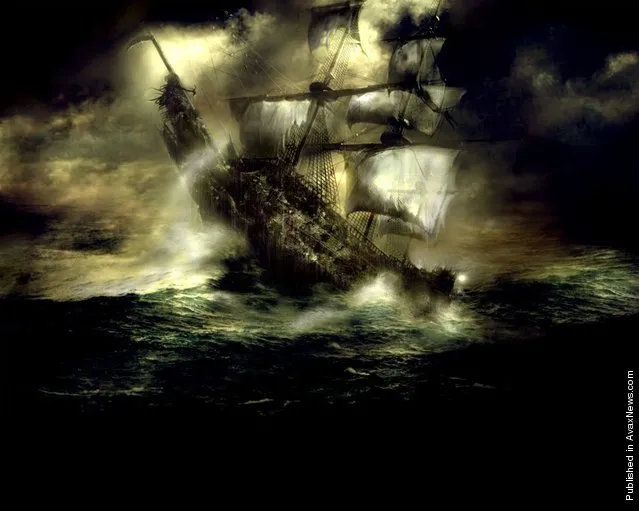
Do you think that history is a science? Well, not exactly. First, and foremost, history is the state's “legend of wars”, it’s official regalia. Of course, public historians are not interested in scientific truth – quite the opposite. In this respect, any attempt to present a state’s history as altruistic and benevolent as possible is welcomed and encouraged – as opposed to any revisionism attempts that may be more accurate. In this matter, Chinese have surpassed us all – they revised in highly creative manner (but rather shamelessly) the technology already invented by Europeans, a process that resulted in oldest state on the planet. Here is an interesting paradox: ask any sinologist about the Middle Kingdom during second century B.C., and he will describe it to you in such a vivid manner as if he has been living there all his life – but as soon as you will ask him to describe Chinese history in the 19-20th centuries… let's say, his eagerness will be greatly diminished. However, we will discuss China in a different article, and in the meantime we will try to understand how exactly historic “legend of wars” is formed and functions – based on a specific and well-known example. A great example is Ferdinand Magellan's first voyage around the world.
Details
14 Nov 2011 09:11:00
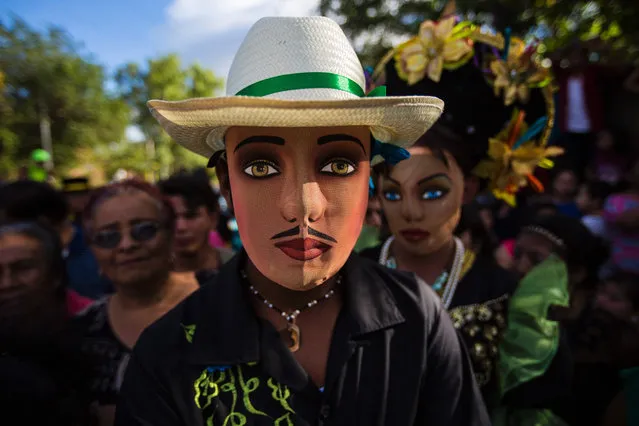
A man dressed as a traditional character in the “Baile de Negras” dance poses for a picture on the feast day of the Virgin of the Candelaria (Candlemas) in the town of Diriomo, some 45 km from Managua, Nicaragua on February 2, 2017 Candlemas falls forty days after Christmas and is celebrated by Catholics as the presentation of Christ at the Temple. (Photo by Inti Ocon/AFP Photo)

A man dressed as a traditional character in the “Baile de Negras” dance poses for a picture on the feast day of the Virgin of the Candelaria (Candlemas) in the town of Diriomo, some 45 km from Managua, Nicaragua on February 2, 2017 Candlemas falls forty days after Christmas and is celebrated by Catholics as the presentation of Christ at the Temple. (Photo by Inti Ocon/AFP Photo)
Details
05 Feb 2017 01:03:00
In this April 18, 2019 photo, tattoo artist Lalo Calva inks a tattoo on client Adrian Alonso Rodriguez, a journalist, announcer and dubbing artist, at the Corona Tattoo parlor in Mexico City. Not only inks and techniques have changed in Mexico over the years, but tattoos themselves have evolved from stigmatized symbols of gangs, violence and poverty to an art form. (Photo by Marco Ugarte/AP Photo)

In this April 18, 2019 photo, tattoo artist Lalo Calva inks a tattoo on client Adrian Alonso Rodriguez, a journalist, announcer and dubbing artist, at the Corona Tattoo parlor in Mexico City. Not only inks and techniques have changed in Mexico over the years, but tattoos themselves have evolved from stigmatized symbols of gangs, violence and poverty to an art form. (Photo by Marco Ugarte/AP Photo)
Details
14 Jul 2019 00:01:00
Katie Loynes of the Blues attempts to mark the ball during the AFLW Preliminary Final match between the Carlton Blues and the Fremantle Dockers at Ikon Park on March 23, 2019 in Melbourne, Australia. (Photo by Mike Owen/Getty Images)

Katie Loynes of the Blues attempts to mark the ball during the AFLW Preliminary Final match between the Carlton Blues and the Fremantle Dockers at Ikon Park on March 23, 2019 in Melbourne, Australia. (Photo by Mike Owen/Getty Images)
Details
27 Dec 2019 00:03:00
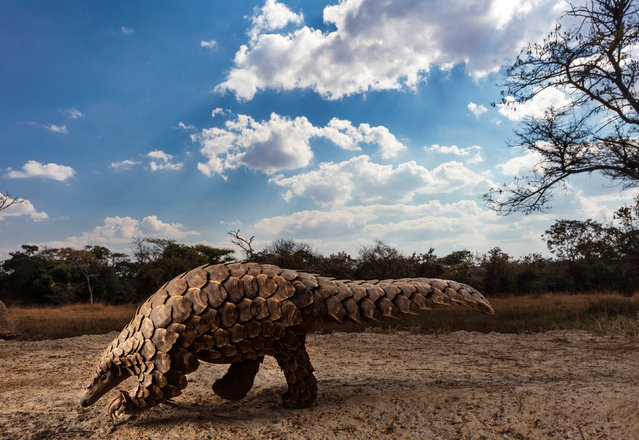
Pangolins in Crisis: Brent Stirton, South Africa; 1st place, Natural world and wildlife. “Pangolins are the world’s most illegally trafficked mammals, with an estimated one million trafficked to Asia in the last 10 years. Their scales are used in traditional Chinese and Vietnamese medicine, and their meat is sold as a high-priced delicacy. As a result, pangolins are listed as critically endangered and anyone who trades or consumes them is breaking the law. This body of work exposes the trade, while exploring aspects of illegality and celebrating the people who are trying to save these animals”. (Photo by Brent Stirton/Sony World Photography Awards 2020)

Pangolins in Crisis: Brent Stirton, South Africa; 1st place, Natural world and wildlife. “Pangolins are the world’s most illegally trafficked mammals, with an estimated one million trafficked to Asia in the last 10 years. Their scales are used in traditional Chinese and Vietnamese medicine, and their meat is sold as a high-priced delicacy. As a result, pangolins are listed as critically endangered and anyone who trades or consumes them is breaking the law. This body of work exposes the trade, while exploring aspects of illegality and celebrating the people who are trying to save these animals”. (Photo by Brent Stirton/Sony World Photography Awards 2020)
Details
11 Jun 2020 00:05:00
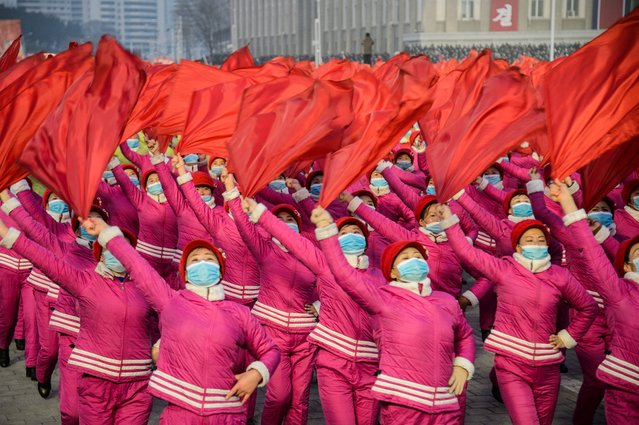
In this picture taken on January 5, 2022, people take part in a demonstration march after the Pyongyang City rally to carry out the decision of the 4th Plenary Meeting of the 8th Central Committee of the Workers' Party of Korea, at Kim Il Sung Square in Pyongyang. (Photo by Kim Won Jin/AFP Photo)

In this picture taken on January 5, 2022, people take part in a demonstration march after the Pyongyang City rally to carry out the decision of the 4th Plenary Meeting of the 8th Central Committee of the Workers' Party of Korea, at Kim Il Sung Square in Pyongyang. (Photo by Kim Won Jin/AFP Photo)
Details
03 Feb 2022 07:29:00
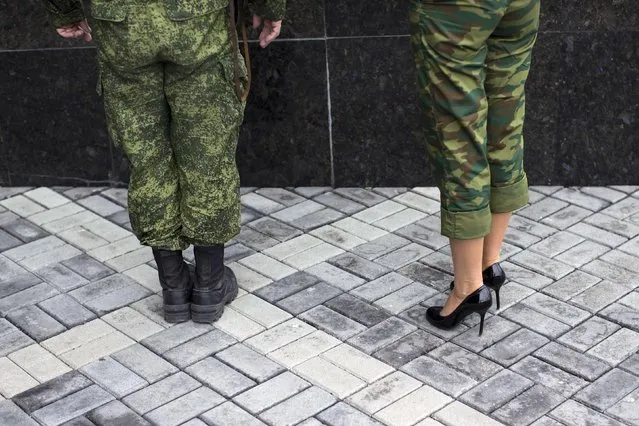
Pro-Russian rebels stand near a monument during a ceremony to honour the World War Two defenders of Donetsk from Nazi forces, in Donetsk, in this September 8, 2014 file photo. (Photo by Marko Djurica/Reuters)

Pro-Russian rebels stand near a monument during a ceremony to honour the World War Two defenders of Donetsk from Nazi forces, in Donetsk, in this September 8, 2014 file photo. (Photo by Marko Djurica/Reuters)
Details
06 Dec 2014 12:36:00
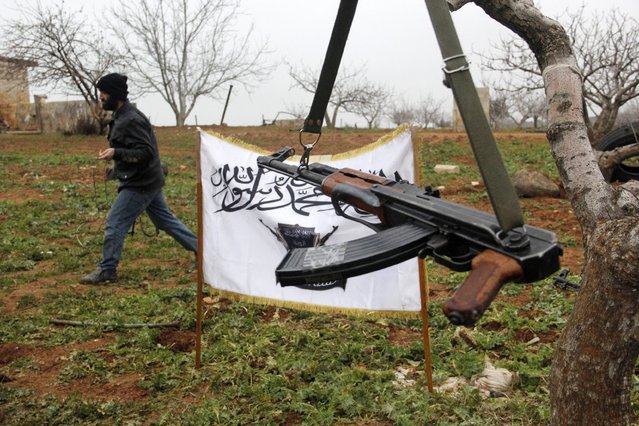
A Free Syrian Army fighter walks past a flag of al-Furqan brigade as a rifle hangs from a branch in the orchards of Kafar Zita in Hama countryside January 22, 2015. (Photo by Mohamad Bayoush/Reuters)

A Free Syrian Army fighter walks past a flag of al-Furqan brigade as a rifle hangs from a branch in the orchards of Kafar Zita in Hama countryside January 22, 2015. (Photo by Mohamad Bayoush/Reuters)
Details
07 Feb 2016 06:43:00