Aerial view of Taxodium Distichum in full blossom at a maze area of a wetland park on January 6, 2023 in Xiamen, Fujian Province of China. (Photo by Wu Wei/VCG via Getty Images)
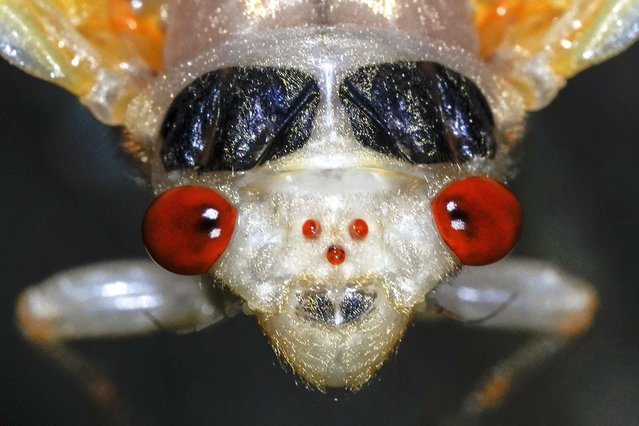
An adult periodical cicada, in the process of shedding its nymphal skin, is visible on Saturday, May 11, 2024, in Cincinnati. There are two large compound eyes, which are used to visually perceive the world around them, and three small, jewel-like, simple eyes called ocelli at center. (Photo by Carolyn Kaster/AP Photo)
The strength of a weaver ant carrying fruit in Indonesia in the last decade of August 2024 is equivalent to the average man or woman picking up a minibus. (Photo by Ridho Arifuddin/Solent News)
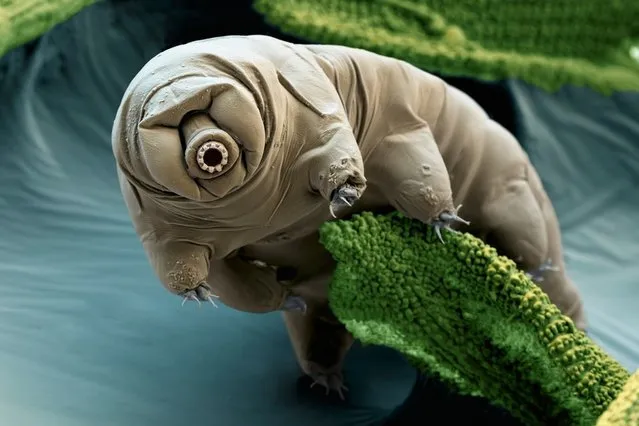
“Tardigrades (commonly known as waterbears or moss piglets) are small, water-dwelling, segmented animals with eight legs. Tardigrades were first discovered in 1773 by Johann August Ephraim Goeze, who called them kleiner Wasserbär, meaning “little water bear” in German. The name Tardigrada means “slow walker” and was given by Lazzaro Spallanzani in 1777. The name water bear comes from the way they walk, reminiscent of a bear's gait. The biggest adults may reach a body length of 1.5 millimetres (0.059 in), the smallest below 0.1 mm. Freshly hatched tardigrades may be smaller than 0.05 mm”. – Wikipedia. Photo: Tardigrades. (Photo by SPL/East News)
Emma the Maltese's fur blows in the wind as she rides in her owner's purse on 5th Avenue at Central Park in New York December 2, 2014. (Photo by Carlo Allegri/Reuters)
A Hindu devotee performs a stunt with fire during a rehearsal for the annual Rath Yatra, or chariot procession, which commemorates a journey by Hindu god Jagannath, his brother Balabhadra and sister Subhadra, in specially made chariots, in Ahmedabad, India, June 26, 2016. (Photo by Amit Dave/Reuters)