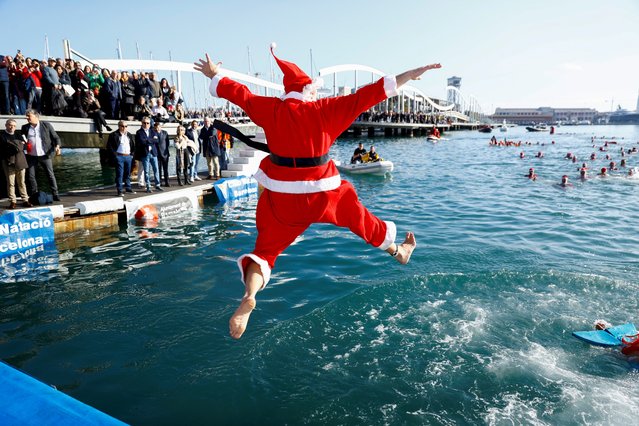
A person dressed as Santa Claus jumps into the sea during the Copa Nadal (Christmas Cup) swimming race in Barcelona, Spain on December 25, 2024. (Photo by Bruna Casas/Reuters)
American socialite and actress Karrueche Tran at Revolve Festival: The Eighth Annual Fashion, Music and Lifestyle Event on April 12, 2025 in Thermal, California. (Photo by Chad Salvador/Rex Features/Shutterstock)
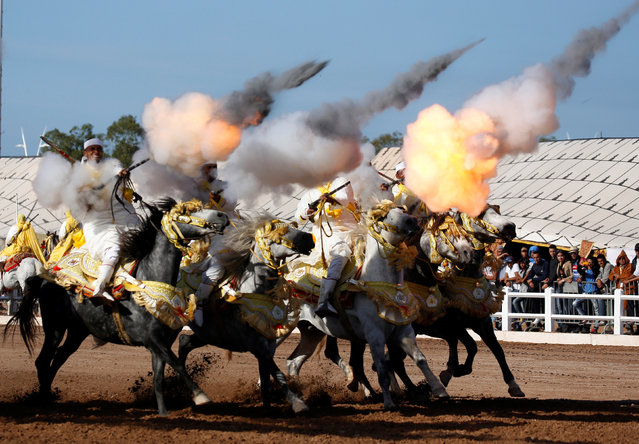
Horse riders perform with guns during the El-Jadida International Horse Show in El-Jadida, south of Casablanca, Morocco, October 15, 2016. (Photo by Youssef Boudlal/Reuters)
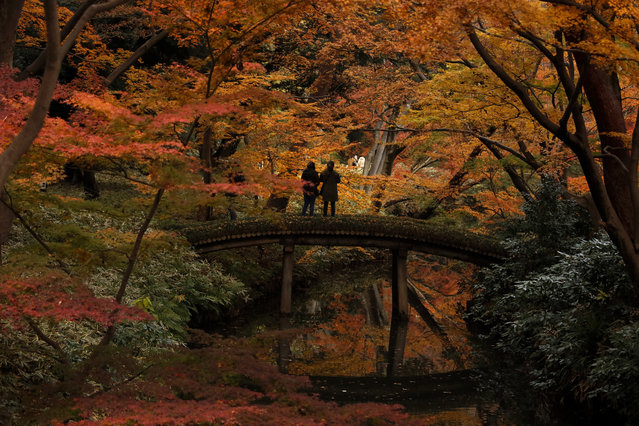
Two visitors take pictures of autumn leaves at Rikugien Garden Tuesday, December 10, 2019, in the Bunkyo district of Tokyo. (Photo by Jae C. Hong/AP Photo)
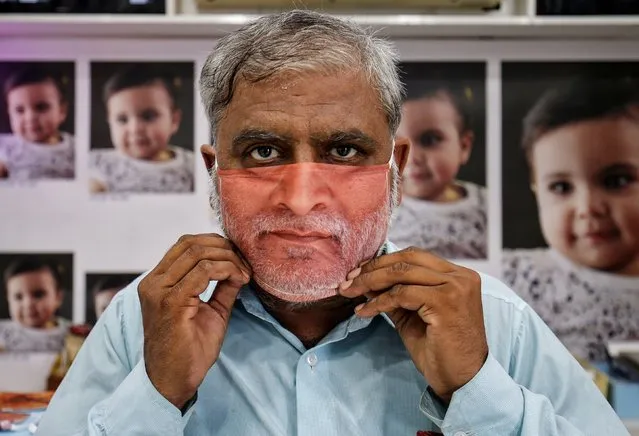
A man tries on a face mask with his portrait printed on it, amid the spread of the coronavirus disease (COVID-19), at a photo studio in Gandhinagar, India, May 27, 2020. (Photo by Amit Dave/Reuters)
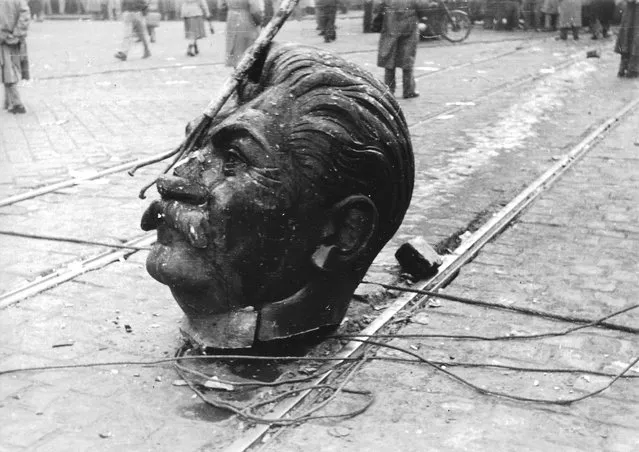
Josef Stalin's head is left in a Budapest street after a statue to the communist dictator was torn from its plinth during the Hungarian Revolution in 1956. (Photo by Robert Hofbauer/Radio Free Europe/Radio Liberty)
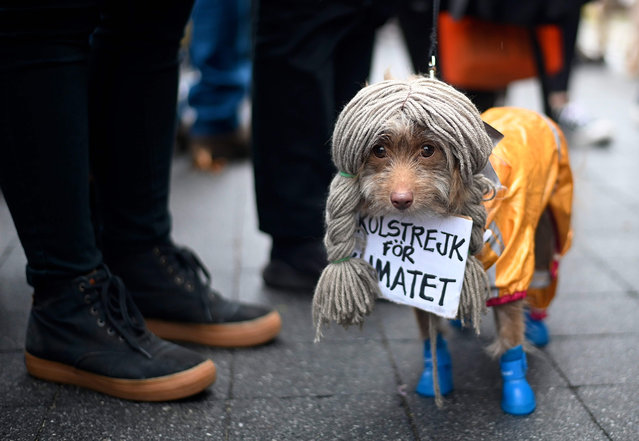
A dog dressed in a costume as Greta Thunberg attends the Tompkins Square Halloween Dog Parade in Manhattan in New York City on October 20, 2019. (Photo by Johannes Eisele/AFP Photo)
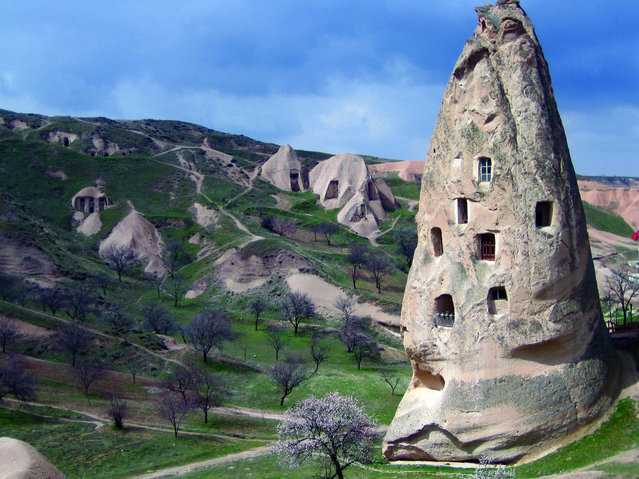
Cappadocia is a historical region in Central Anatolia, largely in Nevşehir Province, in Turkey.
In the time of Herodotus, the Cappadocians were reported as occupying the whole region from Mount Taurus to the vicinity of the Euxine (Black Sea). Cappadocia, in this sense, was bounded in the south by the chain of the Taurus Mountains that separate it from Cilicia, to the east by the upper Euphrates and the Armenian Highland, to the north by Pontus, and to the west by Lycaonia and eastern Galatia.