Loading...
Done
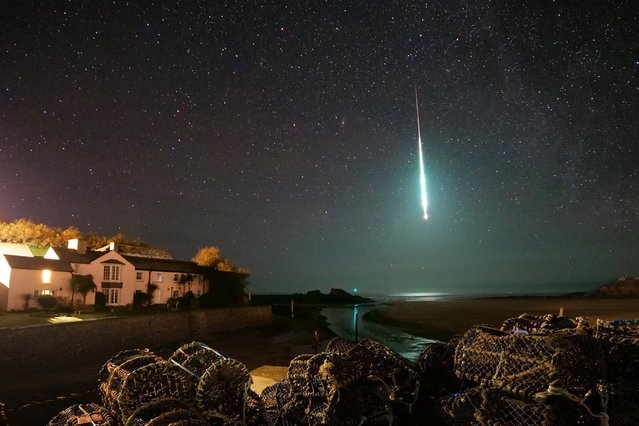
A brightly burning magnesium-rich meteor known as a bolide was captured near Bude, Cornwall on January 24, 2020. (Photo by Chris Small/Apex News)

A brightly burning magnesium-rich meteor known as a bolide was captured near Bude, Cornwall on January 24, 2020. (Photo by Chris Small/Apex News)
Details
14 Jul 2020 00:03:00
Revellers descended onto Broad Street in Birmingham on Thursday, March 28, 2024 evening into the early hours of Good Friday. The partygoers took advantage of the Easter Bank Holiday on Friday to let their hair down despite Storm Nelson still bringing strong winds and cold temperatures to the region. (Photo by Stop Press Media/Splash News and Pictures)

Revellers descended onto Broad Street in Birmingham on Thursday, March 28, 2024 evening into the early hours of Good Friday. The partygoers took advantage of the Easter Bank Holiday on Friday to let their hair down despite Storm Nelson still bringing strong winds and cold temperatures to the region. (Photo by Stop Press Media/Splash News and Pictures)
Details
07 Apr 2024 03:15:00
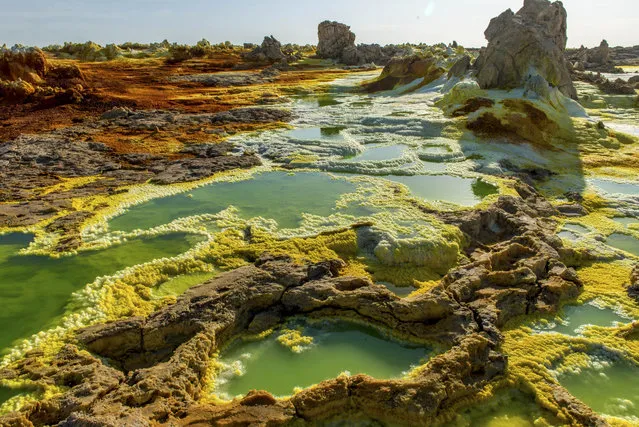
Despite the amazing sight, Netal said that seeing the pools came with a downside. “The smell was horrible, and it was difficult to breath”. (Photo by Neta Dekel/Caters News Agency)

These stunning images show the beauty and drama of Mother Nature at work. Captured deep in heart of the Danakil Desert in East Africa, the images show the acid pools near the Erta Ale volcano. Pools of brightly colored acid can be seen amid the dramatic blast of volcanic ash. The photos were taken by Neta Dekel, an Israeli photographer. He the acid pools were one of the most extraordinary sights he had ever seen. (Photo by Neta Dekel/Caters News Agency)
Details
27 Jun 2018 00:03:00
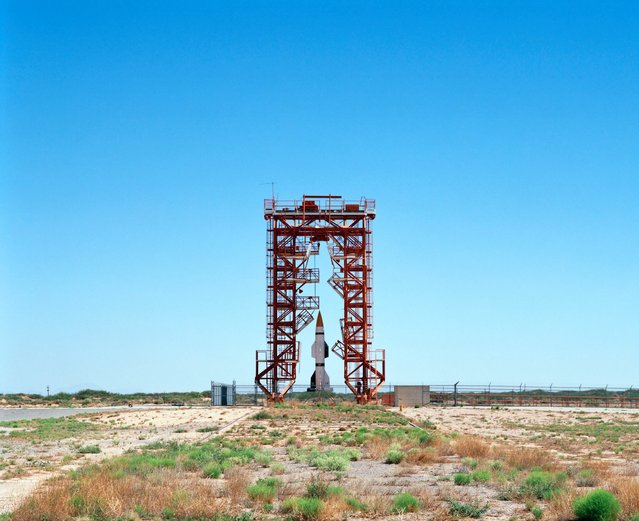
Launch Pad and Gantry with Hermes A-1 Rocket – V2 Launch Complex 33, White Sands missile range, New Mexico in 2006. (Photo by Roland Miller)

Roland Miller is on a mission to document the deserted sites of America’s space race. He has photographed launch pads, bunkhouses and research facilities across the country, some of which no longer exist or are closed to the public on secure military bases. His book, “Abandoned in Place”, is published by the University of New Mexico Press in March. Here: Launch Pad and Gantry with Hermes A-1 Rocket – V2 Launch Complex 33, White Sands missile range, New Mexico in 2006. (Photo by Roland Miller)

Details
25 Feb 2016 11:38:00
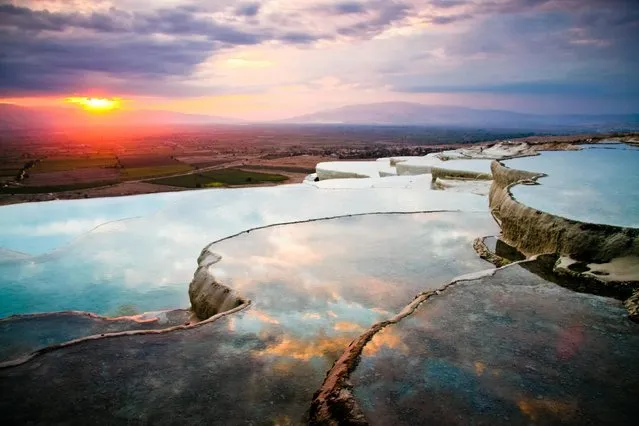
Pamukkale, Turkey, is home to these terrace pools, formed by the build-up of carbonate mineral from the warm water flowing from the thermal springs above. (Photo by Image Courtesy of Jennifer Hayes/Getty Images)

Pamukkale, Turkey, is home to these terrace pools, formed by the build-up of carbonate mineral from the warm water flowing from the thermal springs above. (Photo by Image Courtesy of Jennifer Hayes/Getty Images)
Details
17 Jul 2017 07:59:00
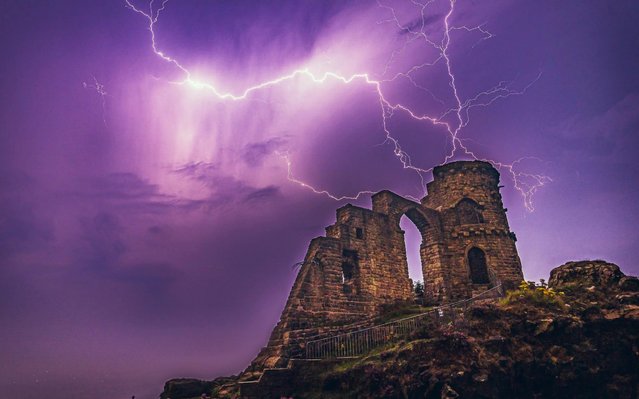
Lightning over Mow Cop Castle which is a folly at Mow Cop in the civil parish of Odd Rode, Cheshire, UK on August 13, 2020, as thunderstorms continue during the current heatwave. (Photo by Lee Scally/Bav Media)

Lightning over Mow Cop Castle which is a folly at Mow Cop in the civil parish of Odd Rode, Cheshire, UK on August 13, 2020, as thunderstorms continue during the current heatwave. (Photo by Lee Scally/Bav Media)
Details
14 Nov 2020 00:03:00
A woman takes a picture of a sculpture depicting servant Puck from Shakespeare's comedy “A Midsummer Night's Dream” during a flower festival in Pakruojis, Lithuania on August 14, 2021. (Photo by Ints Kalnins/Reuters)

A woman takes a picture of a sculpture depicting servant Puck from Shakespeare's comedy “A Midsummer Night's Dream” during a flower festival in Pakruojis, Lithuania on August 14, 2021. (Photo by Ints Kalnins/Reuters)
Details
15 Apr 2022 06:13:00
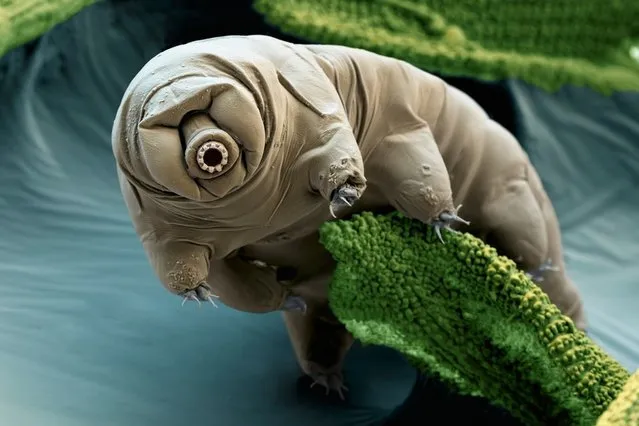
Tardigrades (commonly known as waterbears or moss piglets). (Photo by SPL/East News)

“Tardigrades (commonly known as waterbears or moss piglets) are small, water-dwelling, segmented animals with eight legs. Tardigrades were first discovered in 1773 by Johann August Ephraim Goeze, who called them kleiner Wasserbär, meaning “little water bear” in German. The name Tardigrada means “slow walker” and was given by Lazzaro Spallanzani in 1777. The name water bear comes from the way they walk, reminiscent of a bear's gait. The biggest adults may reach a body length of 1.5 millimetres (0.059 in), the smallest below 0.1 mm. Freshly hatched tardigrades may be smaller than 0.05 mm”. – Wikipedia. Photo: Tardigrades. (Photo by SPL/East News)
Details
26 Sep 2012 09:55:00