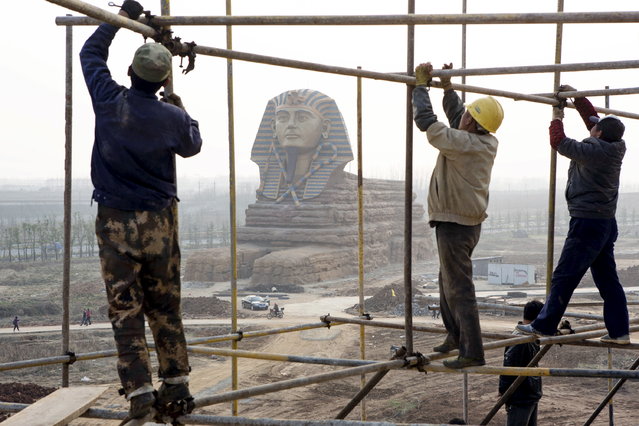
Laborers work on scaffolding near a full-scale replica of the Sphinx at an unfinished movie and animation tourism theme park, in Chuzhou, Anhui province, March 27, 2015. (Photo by Reuters/China Daily)
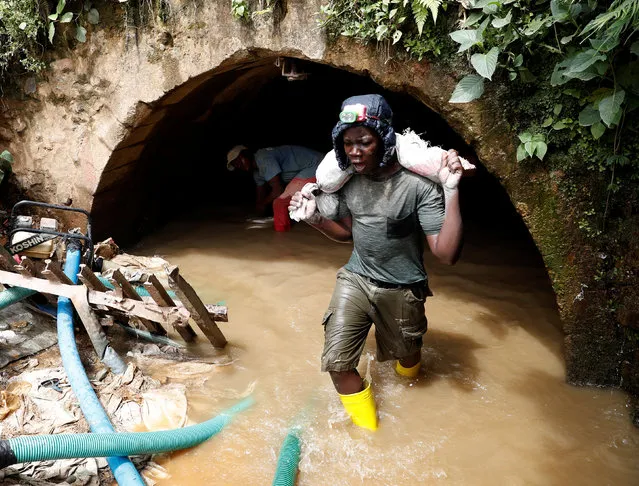
Men work at Makala gold mine camp near the town of Mongbwalu in Ituri province, eastern Democratic Republic of Congo on April 7, 2018. (Photo by Goran Tomasevic/Reuters)
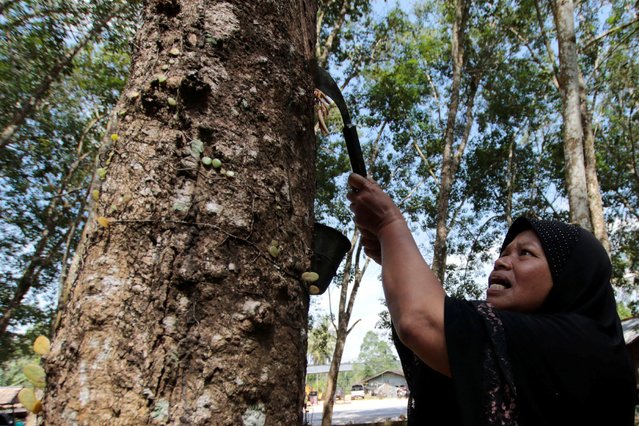
A woman works in a rubber plantation in Yala province, southern Thailand, January 30, 2017. Thai rubber exporters say they have enough of the commodity in stockpiles to ensure only minimal disruption to scheduled shipments in the wake of deadly floods in key growing regions. (Photo by Surapan Boonthanom/Reuters)
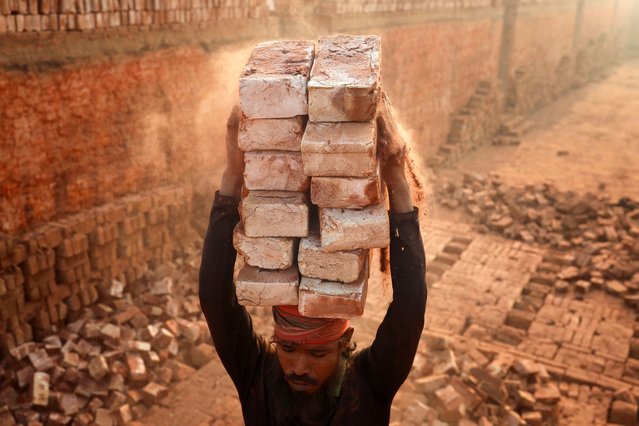
A man stacks more bricks on his head while working at in brickfields Narayanganj near Dhaka, Bangladesh on January 02, 2021. (Photo by Kazi Salahuddin Razu/NurPhoto via Getty Images)
Emergency personnel work at the site where a small plane crashed on a residential street in Waunakee, Wisconsin, U.S., June 21, 2023 in this picture obtained from social media. (Photo by Matthew Cash via Reuters)
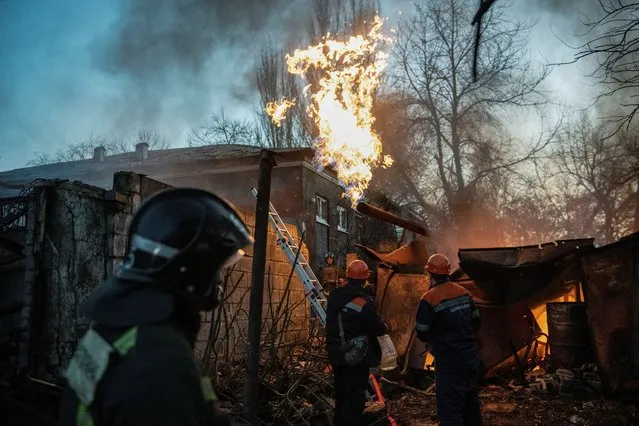
Rescuers work to put out fire outside a damaged residential building hit by recent shelling in the course of Russia-Ukraine conflict in Donetsk, Russian-controlled Ukraine on November 7, 2023. (Photo by Reuters/Stringer)
Surrender by Jenkin Van Zyl, a surreal installation at Fact Liverpool on November 16, 2023 featuring film and sculptural works inside a large inflatable silver rat. (Photo by James Glossop/The Times)
Tim Laman is a field biologist and wildlife photojournalist. His pioneering research in the rain forest canopy in Borneo led to a PhD from Harvard and his first National Geographic article in 1997. Since then, he has pursued his passion for exploring wild places and documenting little-known and endangered wildlife by becoming a regular contributor to National Geographic. He has eighteen articles to his credit to date, all of which have had a conservation message. Some have focused on endangered species such as Orangutans or Hornbills, while others, such as a series of articles on Conservation International’s Biodiversity Hotspots, have highlighted regions under intense pressure.