Loading...
Done
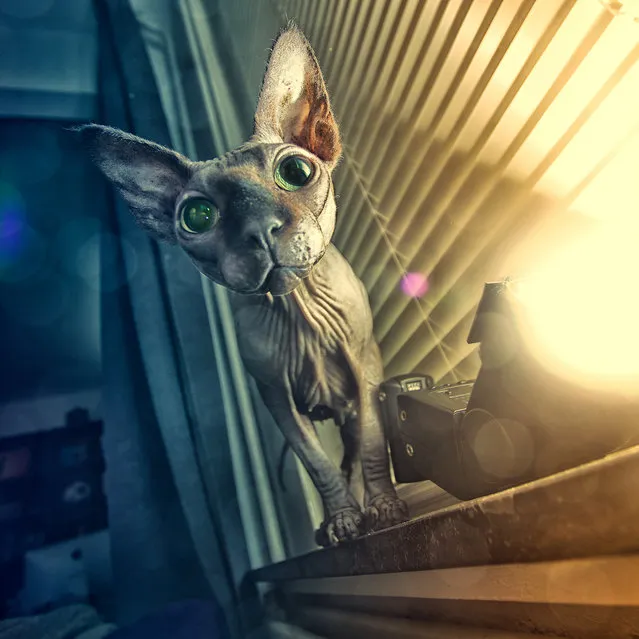
“Flashy Lady”. (Photo and caption by Roderique Arisiaman)

Some artists want to convey some deep message through their art, while some are simply satisfied with shocking the audience. Roderique Arisiaman is the latter kind. Though his works do not play on the strings of our emotion, they can pique the interest with their flashy and sometimes humorous appearance. Many of his works have a zombie theme, and are surprisingly well done, especially the one where a man pushes his fingers through his cheek and into his eye. If given the chance, Roderique Arisiaman would probably do a great job of designing a poster for some zombie apocalypse movie. (Photo and caption by Roderique Arisiaman)
Details
18 Mar 2015 09:27:00
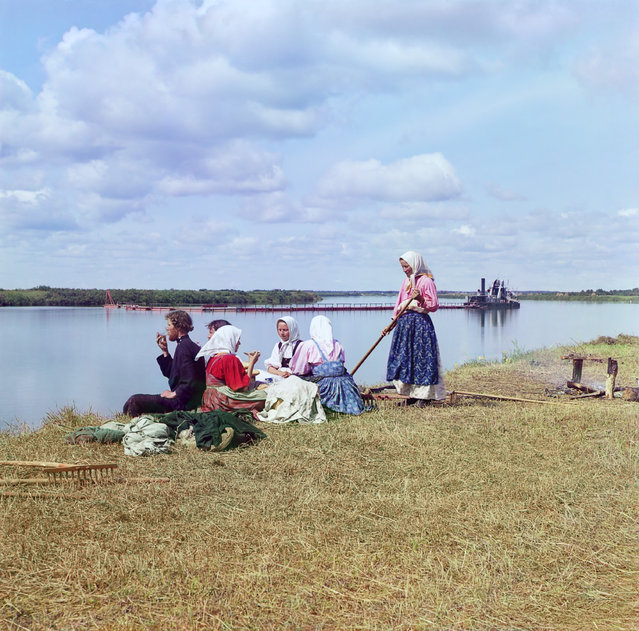
Photos by Sergey Prokudin-Gorsky. Dinner during haying. Russian Empire, Novgorod province, county Cherepovets, 1909

“Sergey Mikhaylovich Prokudin-Gorsky (August 30 1863 Russian Empire – September 27, 1944 Paris, France) was a Russian chemist and photographer. He is best known for his pioneering work in color photography of early 20th-century Russia”. – Wikipedia

Photo: Dinner during haying. Russian Empire, Novgorod province, county Cherepovets, 1909. (Photos by Sergey Prokudin-Gorsky via US Library of Congress and Prokudin-Gorsky.org)

P.S. All pictures are presented in high resolution. To see Hi-Res images – just TWICE click on any picture. In other words, click small picture – opens the BIG picture. Click BIG picture – opens VERY BIG picture (if available; this principle works anywhere on the site AvaxNews). Enjoy.
Details
24 Jul 2012 12:03:00
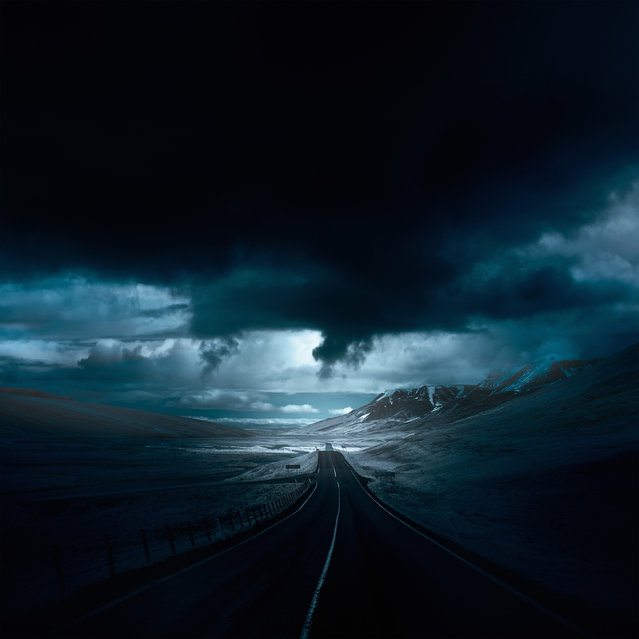
A globe-trotting photographer has captured some of the worlds most beautiful roads. Andy Lee's roads series features picturesque routes running through the likes of Iceland, Wales, England and Scotland. Here: moon sky over Hvammstangi, Iceland. (Photo by Andy Lee/Caters News)

A globe-trotting photographer has captured some of the worlds most beautiful roads. Andy Lee's roads series features picturesque routes running through the likes of Iceland, Wales, England and Scotland. The photographer, 46, began taking pictures for this series in 2013. And since then Andy, from Stackpole, Pembrokeshire, has been travelling the world for the most stunning drives. In searching for the ideal road he often drives miles upon miles in order to find a suitable, remote area. Here: moon sky over Hvammstangi, Iceland. (Photo by Andy Lee/Caters News)
Details
24 Jan 2015 14:19:00
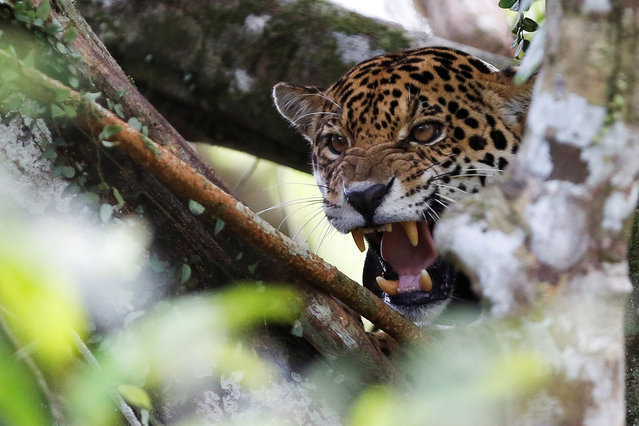
A female adult jaguar, which has a cub, growls at the Mamiraua Sustainable Development Reserve in Uarini, Amazonas state, Brazil, June 5, 2017. (Photo by Bruno Kelly/Reuters)

Brazilian jaguars, imperilled by hunters, ranchers and destruction of their habitat, have learned to survive at least one menace – flooding in the Amazon. They take to the trees. Although they can be six feet long and 200 pounds, the largest South American cats nimbly navigate treetops where they stay from April to July when the rainforest floor is under meters-deep water. Here: A female adult jaguar, which has a cub, growls at the Mamiraua Sustainable Development Reserve in Uarini, Amazonas state, Brazil, June 5, 2017. (Photo by Bruno Kelly/Reuters)
Details
07 Apr 2018 00:03:00
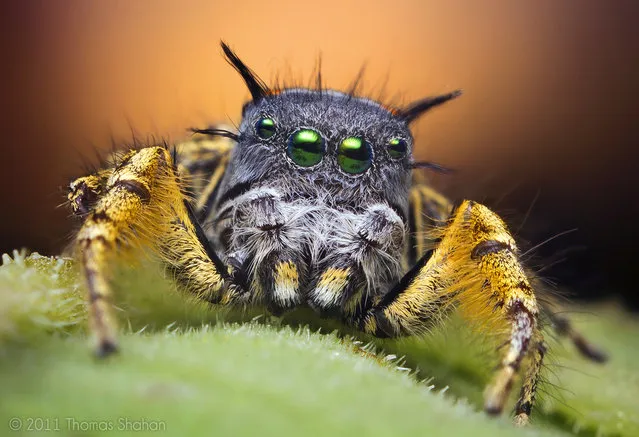
Adult Male Jumping Spider at Sunset – Phidippus mystaceus

“Hey! I'm Thomas Shahan, an artist and macrophotographer from Oklahoma. In my spare time over the past few years, I've been shooting portraiture of local arthropods. Why would I devote countless hours to tramping through forests, fields and the like searching for insects and spiders? Well, despite some common beliefs, arthropods (members of the phylum Arthropoda – insects, spiders, crustaceans...) represent an endlessly varied, wildly beautiful and fascinating bunch of animals with surprisingly personable faces and behavior. Often, all it takes is simply inspecting their lives on a closer level to turn repulsion to reverence”. – Thomas Shahan

Photo: Adult Male Jumping Spider at Sunset – Phidippus mystaceus. (Photo by Thomas Shahan; Source: Flickr)
Details
23 Apr 2012 14:07:00
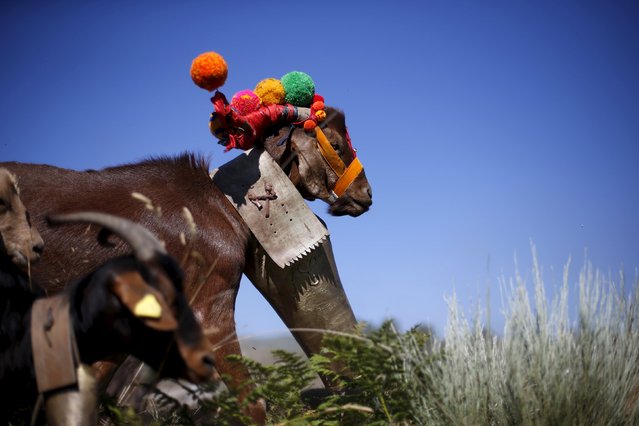
Sheep walk as they are herded to summer pastures in Serra da Estrela, near Seia, Portugal June 27, 2015. (Photo by Rafael Marchante/Reuters)

Sheep walk as they are herded to summer pastures in Serra da Estrela, near Seia, Portugal June 27, 2015. In late June, shepherds young and old in the Seia region of central Portugal start guiding sheep, goats and cattle to the Serra da Estrela, the country’s highest mountains, in search of better pastures. There they stay until the end of September. Modern-day shepherds may have mobile phones to keep in touch with family and friends, but their lifestyle has changed little for centuries. The sound of cowbells and the bark of longhaired mastiffs starts early in the morning as the animals – often decorated with traditional woollen balls on their horns – are herded up steep, narrow paths. (Photo by Rafael Marchante/Reuters)
Details
14 Jul 2015 13:48:00
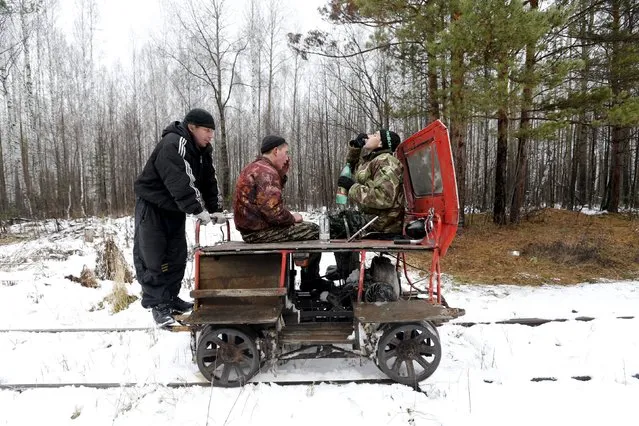
(L-R) A man nicknamed "Barcelona", Alexey Bolotov and Alexey Jakushin drink vodka as they travel by a pioneer motorised railcar on their way to Kalach, Sverdlovsk region, Russia October 18, 2015. The "pioneer," a light auxiliary rail vehicle, is a popular form of transport among people who live along the Alapayevsk railway. (Photo by Maxim Zmeyev/Reuters)

(L-R) A man nicknamed "Barcelona", Alexey Bolotov and Alexey Jakushin drink vodka as they travel by a pioneer motorised railcar on their way to Kalach, Sverdlovsk region, Russia October 18, 2015. The "pioneer," a light auxiliary rail vehicle, is a popular form of transport among people who live along the Alapayevsk railway. In a remote corner of the Urals region at the end of a narrow-gauge railway is Kalach, population about a dozen. Three decades ago 600 people called the village home, but the local forestry industry suffered as the former Soviet Union imploded and people moved away in search of work. In Kalach today there are no telephones, no mobile reception and only a few hours of electricity a day. (Photo by Maxim Zmeyev/Reuters)
Details
15 Nov 2015 08:06:00
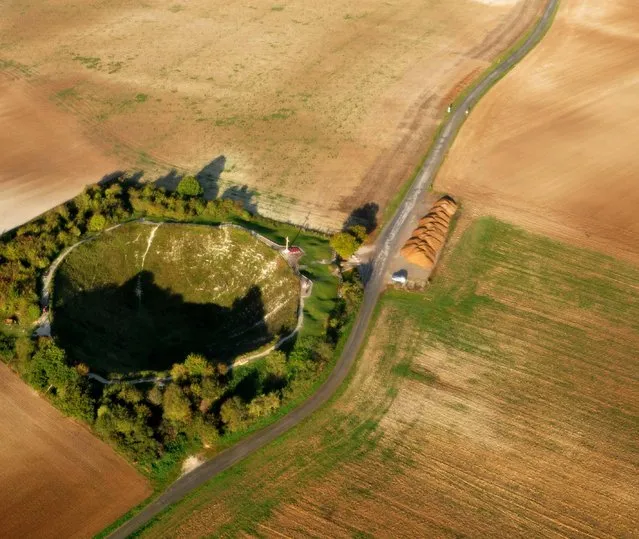
Lochnagar Crater Somme In France

It is amazing how much the humanity can change the face of the earth. Not only can it create huge craters, which look a lot like craters from meteors, they leave a big enough impact that it can be seen from space. Though this crater, caused by a massive explosion on 1 July 1916, looks large, being 90 feet deep and 300 feet across; it is nowhere big enough to be viewed for space. A common misconception is that the Great Wall of China can be seen from space. In reality, however, it is impossible. Not only is it of the same color as the earth near it, it is also not that wide. Deforestation, on the other hand, can be clearly seen from space. Also, at night, all the lights that the large cities produce are also very visible.
Details
17 Nov 2014 12:48:00