Loading...
Done
Crime Tatoo  Part 2

Tattoos are commonly used among criminals to show gang membership and record the wearer's personal history—such as his or her skills, specialties, accomplishments and convictions. They are also used as a means of personal expression. Certain designs have developed recognized coded meanings. The code systems can be quite complex and because of the nature of what they encode, the tattoo designs are not widely recognized.
Details
24 Apr 2013 09:49:00


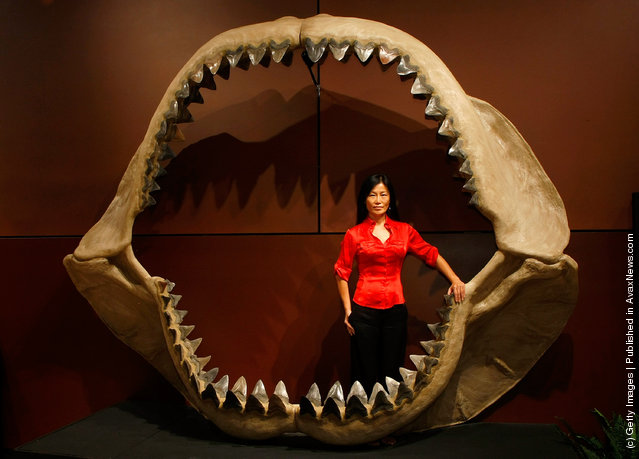
Enya Kim from the Natural History department at auctioneers Bonhams & Butterfields stands in front of one of the world's largest set of shark jaws comprised of about 180 fossil teeth from the prehistoric species, Carcharocles megalodon, which grew to the size of a school bus, at the Venetian Resort Hotel Casino September 30, 2009 in Las Vegas, Nevada. (Photo by Ethan Miller/Getty Images)
Details
19 Apr 2011 10:05:00
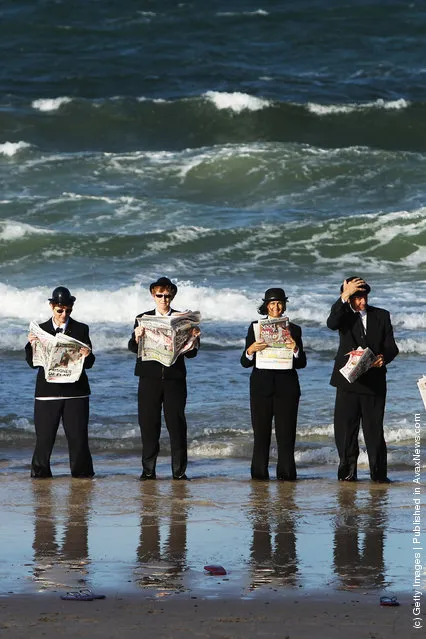
Human Sculpture Created At Henley Beach by Andrew Baines

Volunteers stand and read the morning newspaper while “waiting for the bus” at Henley Beach on January 8, 2012 in Adelaide, Australia. Surrealist artist, Andrew Baines recruited 100 volunteers for this human installation, meant to illustrate corporate workers enjoying nature rather than waiting in a long queue for a trip to work. (Photo by Morne de Klerk/Getty Images)
Details
08 Jan 2012 11:15:00
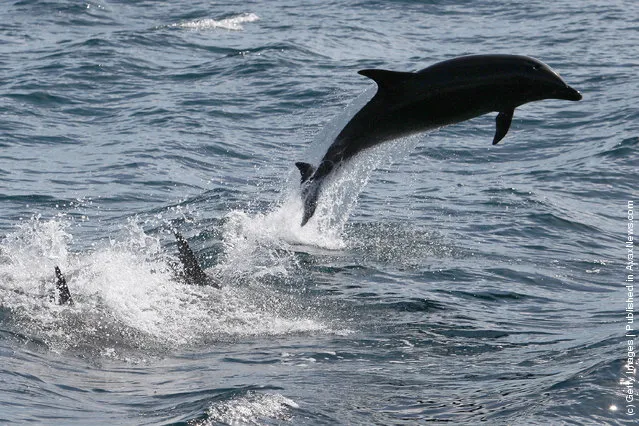
Bottlenose dolphins

Bottlenose dolphins leap off the Southern California coast on January 30, 2012 near Dana Point, California. A coalition that includes Native American tribes, Earthjustice and the Natural Resources Defense Council is on the National Marine Fisheries Service for more protection for dolphins, whales, and other migrating marine animals from the use of sonar in training by the US Navy on the West Coast. (Photo by David McNew/Getty Images)
Details
31 Jan 2012 10:23:00
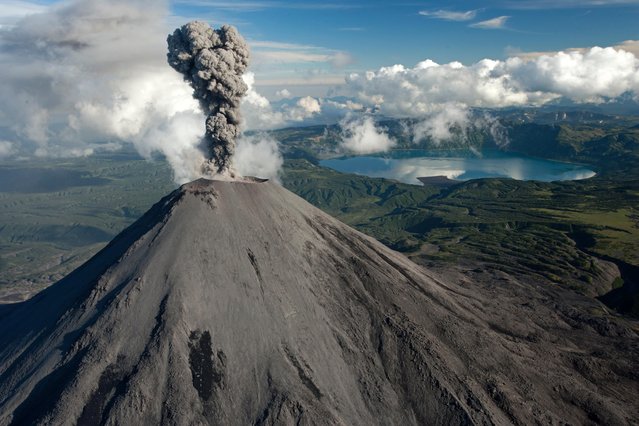
Russia From Above: “An Explosive Scene”. The 1,486-meter-high Karymskii Volcano in Kamchatka. (Photo by Sergey Fomin)

Since 2003, photographer Sergey Fomin has been shooting Russia’s most attractive natural, historical, and architectural objects from different aircrafts. Photo: “An Explosive Scene”. The 1,486-meter-high Karymskii Volcano in Kamchatka. (Photo by Sergey Fomin)
Details
28 Sep 2014 11:39:00
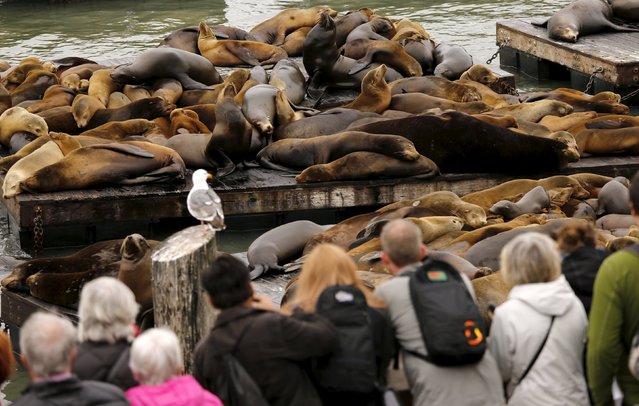
People gather as a crowd of sea lions lay on floating docks at Pier 39 in San Francisco, California May 4, 2015. (Photo by Robert Galbraith/Reuters)

People gather as a crowd of sea lions lay on floating docks at Pier 39 in San Francisco, California May 4, 2015. Hundreds of sea lions began hauling out on the docks following the Loma Prieta earthquake of 1989, and face no natural predators at the pier. (Photo by Robert Galbraith/Reuters)
Details
05 May 2015 10:59:00
Glass House By Harumi Yukutake

This project features a house covered (inside and out) with thousands of round mirrors that makes it nearly camouflaged. The round mirrors have different shapes and size because each one was handcut by the artist. Visitors are in for a unique experience when the mirrors interactive with nature, glistening as it reflects sunlight while gently flickers when the wind blows.
Details
25 Jan 2014 17:05:00
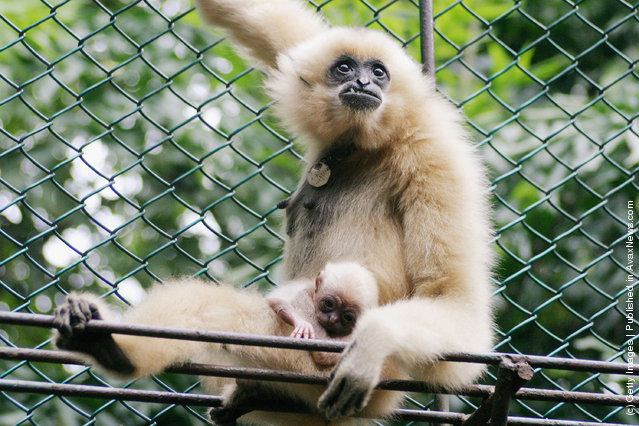
Newborn White-Cheeked Gibbon Nomascus

“Nomascus is the second most speciose genus of gibbons (family Hylobatidae). Originally this genus was a subgenus of Hylobates, and all individuals were considered one species, Hylobates concolor. Species within Nomascus are characterized by 52 chromosomes. Some species are all black, some light with a distinct black tuft of crown fur, and some by distinct, light-colored cheek patches. Nomascus is found from southern China (Yunnan) to southern Vietnam, and also on Hainan Island. One of the genus' species, Nomascus nasutus, has been deemed “the most critically endangered ape species in the world”. All of the species in this genus are endangered or critically endangered”. – Wikipedia

Photo: A newborn White-Cheeked Gibbon clings to its mother in the Nanning Zoo on April 12, 2004 in Nanning, Guangxi province, China. The White-Cheeked Gibbon's natural habitat is Southern China as well as Vietnam and Laos. They are classified as highly endangered and are on the brink of extinction due to poaching and reduction of natural rainforests. (Photo by Getty Images)

Details
12 Aug 2011 11:51:00