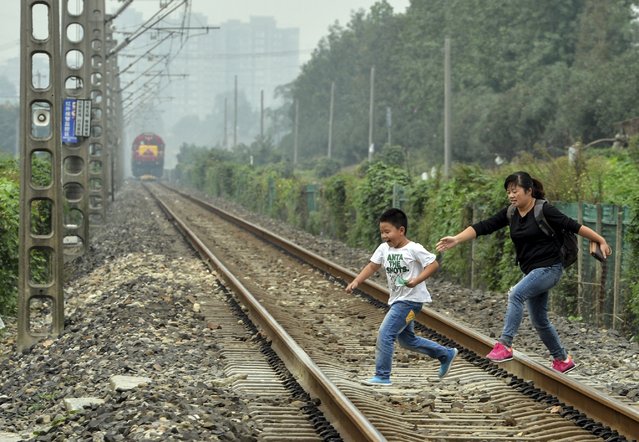
A boy and a woman run across a railway track as a train approaches in Chengdu, Sichuan province, China, October 8, 2015. Many residents disregard sign prohibiting this kind of illegal crossing and choose to do so to save time, local media reported. (Photo by Hao Fei/Reuters/Western China Metropolis Daily)
In this Thursday, June 14, 2018, file photo, students wear virtual reality goggles during a science class at Pyongyang Teachers' University, a teacher training college, in Pyongyang, North Korea. (Photo by Dita Alangkara/AP Photo)
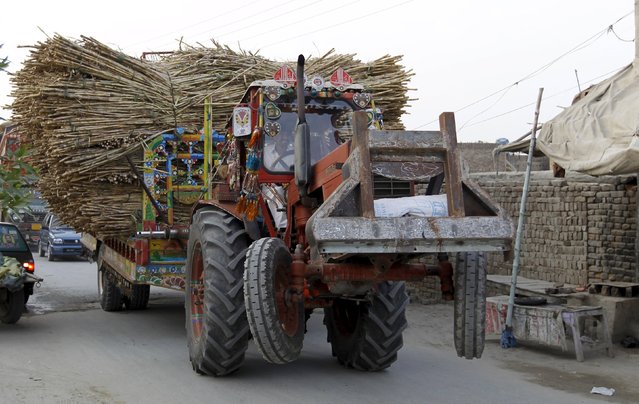
The front wheels of a tractor, pulling a trailer overloaded with sugarcane, are seen lifted off the ground as it passes through the streets of Karor Lan Esan, Pakistan December 6, 2015. (Photo by Caren Firouz/Reuters)
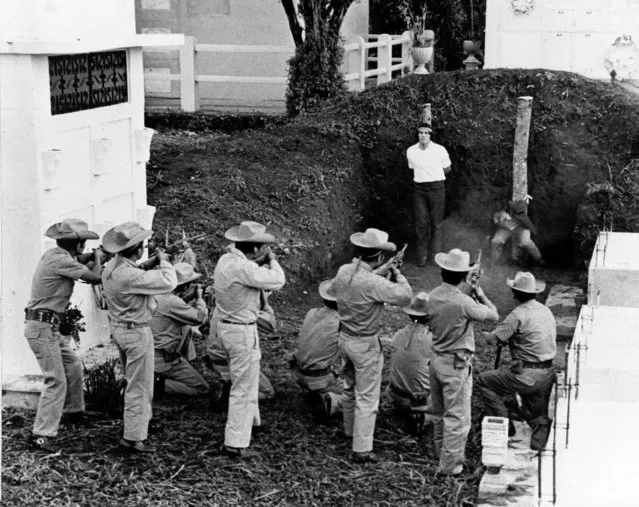
Convicted murderer Hector Alvarado Mazariegos, right, drops to the ground as he is hit by bullets of a Guatemala firing squad in the public cemetery at Mazatenango, June 28, 1975. His companion, Rocael Ortiz, met the same fate a few seconds later. Both were convicted of murder. (Photo by AP Photo/Anzueto)
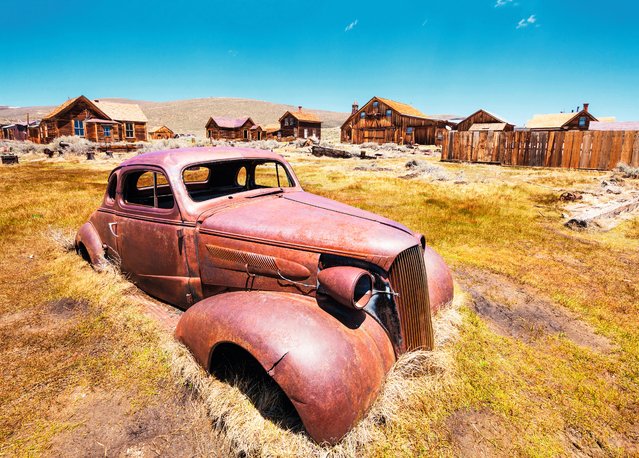
Kieron Connolly’s new book of photographs of more than 100 once-busy and often elegant buildings gives an idea of how the world might look if humankind disappeared. Here: Bodie, Mono County, California. Gold was discovered at Bodie in 1859 (just after the initial California gold rush) and it went from mining camp to boomtown. Its decline began in 1880, when word spread of new boomtowns elsewhere. The Standard Consolidated Mine closed in 1913, and four years later the Bodie Railway was abandoned. By 1940 the population was down to 40. Today, Bodie is maintained in a state of arrested decay as a visitor attraction. (Photo by Alamy Stock Photo)