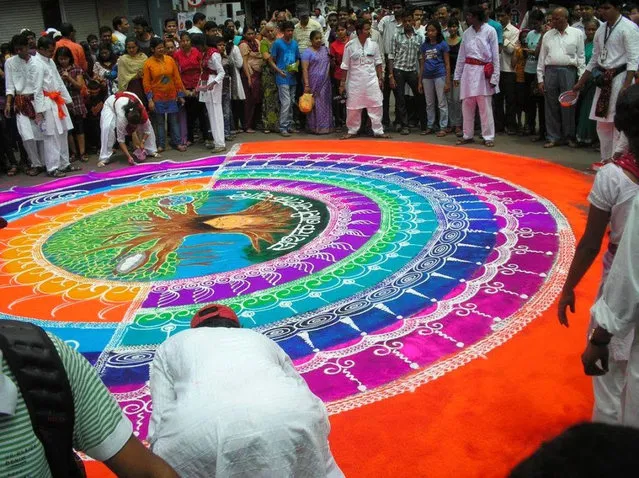
Rangoli, also known as kolam or Muggu, is a folk art from India in which patterns are created on the floor in living rooms or courtyards using materials such as colored rice, dry flour, colored sand or flower petals. It is usually made during Diwali, Onam, Pongal and other Indian festivals. They are meant to be sacred welcoming areas for the Hindu deities. The ancient symbols have been passed down through the ages, from each generation to the next, keeping both the art form and the tradition alive. Similar practices are followed in different Indian states: in Tamil Nadu, there is Kolam in Tamil Nadu; Mandana in Rajasthan; Chaookpurna in Chhattisgarh; Alpana in West Bengal; Aripana in Bihar; Chowk pujan in Uttar Pradesh; Muggu in Andhra Pradesh and others.
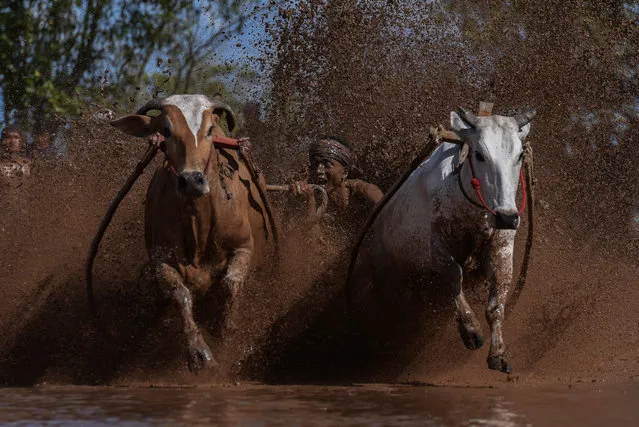
A jockey takes part in a traditional cattle race or “Pacu Jawi”, to mark the end of the rice harvest in Tanah Datar, West Sumatra, Indonesia, August 13, 2016 in this photo taken by Antara Foto. (Photo by Hafiz Mubarak A./Reuters/Antara Foto)
An exile Tibetan monk gestures as he makes a point in a dialectics debate with another monk, sitting right, at the Kirti monastery in Dharmsala, India, Monday, January 18, 2016. The debate is an essential part of their training as Buddhist monks. (Photo by Ashwini Bhatia/AP Photo)
French firemen wearing chemical protective suits take part in a mock chemical attack exercise at the Geoffroy Guichard stadium in Saint-Etienne, France, April 4, 2016 in preparation of security measures for the UEFA 2016 European Championship. (Photo by Robert Pratta/Reuters)
In this photo taken Tuesday, April 14, 2015, immigrant men armed with machetes make their way onto a Durban, South Africa, street during clashes with police and in search of locals that attacked foreign shop owners in the city center. (Photo by Tebogo Letsie/AP Photo)