Loading...
Done
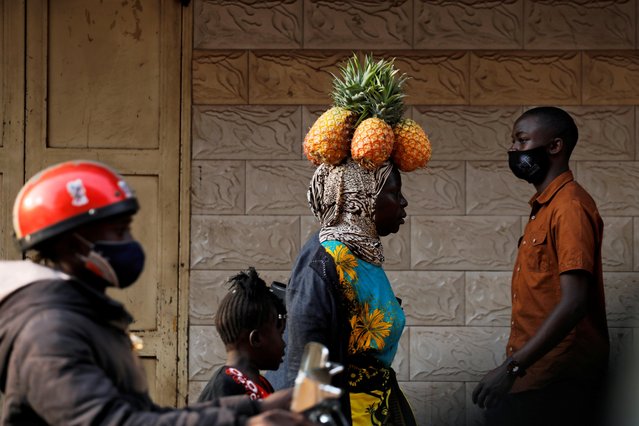
A woman walks while carrying pineapples on her head on a street in Kampala, Uganda on January 12, 2021. (Photo by Baz Ratner/Reuters)

A woman walks while carrying pineapples on her head on a street in Kampala, Uganda on January 12, 2021. (Photo by Baz Ratner/Reuters)
Details
21 Jan 2021 09:31:00
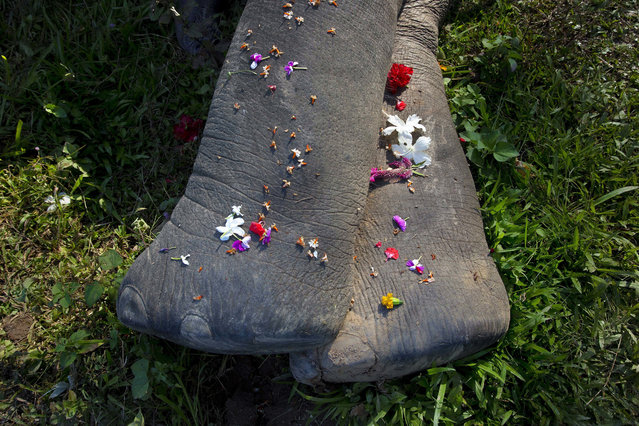
Villagers offer flowers to a wild tusker, laying dead in a field in Panbari villagein Panbari village on the outskirts of Gauhati, India, Thursday, November 2, 2017. According to a veterinarian the tusker died of food poisoning. Scarcity of food and illegal encroachment of forest areas have forced these wild elephant to move to populated areas for food. (Photo by Anupam Nath/AP Photo)

Villagers offer flowers to a wild tusker, laying dead in a field in Panbari villagein Panbari village on the outskirts of Gauhati, India, Thursday, November 2, 2017. According to a veterinarian the tusker died of food poisoning. Scarcity of food and illegal encroachment of forest areas have forced these wild elephant to move to populated areas for food. (Photo by Anupam Nath/AP Photo)
Details
10 Nov 2017 08:43:00
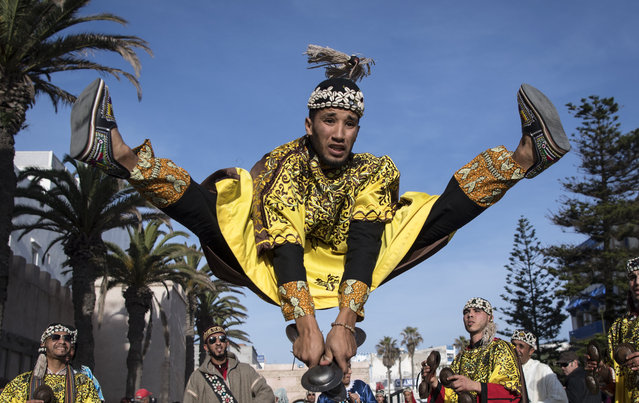
A Gnawa traditional group performs in the city of Essaouira on December 14, 2019, to celebrate the decision of adding the Gnawa culture to UNESCO's list of Intangible Cultural Heritage of Humanity. Gnawa culture, a centuries-old Moroccan practice rooted in music, African rituals and Sufi traditions, was added to UNESCO's list of Intangible Cultural Heritage of Humanity earlier in the week. Gnawa refers to a “set of musical productions, fraternal practices and therapeutic rituals where the secular mixes with the sacred”, according to the nomination submitted by Morocco. Often dressed in colourful outfits, Gnawa musicians play the guenbri, a type of lute with three strings, accompanied by steel castanets called krakebs. (Photo by Fadel Senna/AFP Photo)

A Gnawa traditional group performs in the city of Essaouira on December 14, 2019, to celebrate the decision of adding the Gnawa culture to UNESCO's list of Intangible Cultural Heritage of Humanity. Gnawa culture, a centuries-old Moroccan practice rooted in music, African rituals and Sufi traditions, was added to UNESCO's list of Intangible Cultural Heritage of Humanity earlier in the week. Gnawa refers to a “set of musical productions, fraternal practices and therapeutic rituals where the secular mixes with the sacred”, according to the nomination submitted by Morocco. Often dressed in colourful outfits, Gnawa musicians play the guenbri, a type of lute with three strings, accompanied by steel castanets called krakebs. (Photo by Fadel Senna/AFP Photo)
Details
18 Dec 2019 00:05:00
In this photo taken on Monday, August 5, 2019, a family watches explosions at a military ammunition depot near the city of Achinsk in eastern Siberia's Krasnoyarsk region, in Achinsk, Russia. Russian officials say powerful explosions at a military depot in Siberia left 12 people injured and one missing and forced over 16,500 people to leave their homes. (Photo by Dmitry Dub/AP Photo)

In this photo taken on Monday, August 5, 2019, a family watches explosions at a military ammunition depot near the city of Achinsk in eastern Siberia's Krasnoyarsk region, in Achinsk, Russia. Russian officials say powerful explosions at a military depot in Siberia left 12 people injured and one missing and forced over 16,500 people to leave their homes. (Photo by Dmitry Dub/AP Photo)
Details
14 Jan 2020 00:05:00
A health worker wearing a protective suit is disinfected inside a portable tent outisee the Gat Andres Bonifacio Memorial Medical Center during an enhanced community quarantine to prevent the spread of the new coronavirus in Manila, Philippines, Monday April 27, 2020. (Photo by Aaron Favila/AP Photo)

A health worker wearing a protective suit is disinfected inside a portable tent outisee the Gat Andres Bonifacio Memorial Medical Center during an enhanced community quarantine to prevent the spread of the new coronavirus in Manila, Philippines, Monday April 27, 2020. (Photo by Aaron Favila/AP Photo)
Details
29 Apr 2020 00:07:00
An orphan plays with her new hula hoop during the food and toy distribution, for total about 500 orphans in 11 orphanages, by National Muslim COVID-19 Response Committee to celebrate Eid al-Fitr, the Muslim holiday which marks the end of the fasting month of Ramadan at Good hope markazil Banatil Islamia orphans centre in Nairobi, Kenya, on May 25, 2020. (Photo by Yasuyoshi Chiba/AFP Photo)

An orphan plays with her new hula hoop during the food and toy distribution, for total about 500 orphans in 11 orphanages, by National Muslim COVID-19 Response Committee to celebrate Eid al-Fitr, the Muslim holiday which marks the end of the fasting month of Ramadan at Good hope markazil Banatil Islamia orphans centre in Nairobi, Kenya, on May 25, 2020. (Photo by Yasuyoshi Chiba/AFP Photo)
Details
06 Jun 2020 00:01:00
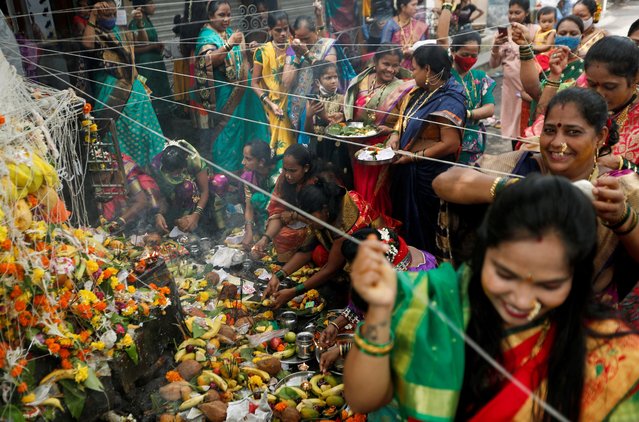
Hindu married women offer prayers and tie a thread around a banyan tree during the festival of Vat Purnima amid the spread of the coronavirus disease (COVID-19), in Mumbai, India, June 24, 2021. (Photo by Francis Mascarenhas/Reuters)

Hindu married women offer prayers and tie a thread around a banyan tree during the festival of Vat Purnima amid the spread of the coronavirus disease (COVID-19), in Mumbai, India, June 24, 2021. (Photo by Francis Mascarenhas/Reuters)
Details
03 Jul 2021 10:23:00
Gemma Sadler models a fabulous Georgian costume, including a wig made from flowers and foliage created by Florist of the Year Helen James, during the staging day for the 2021 Harrogate Autumn Flower Show at Newby Hall, near Ripon, United Kingdom on Thursday, September 16, 2021. (Photo by Danny Lawson/PA Images via Getty Images)

Gemma Sadler models a fabulous Georgian costume, including a wig made from flowers and foliage created by Florist of the Year Helen James, during the staging day for the 2021 Harrogate Autumn Flower Show at Newby Hall, near Ripon, United Kingdom on Thursday, September 16, 2021. (Photo by Danny Lawson/PA Images via Getty Images)
Details
17 Sep 2021 09:22:00