Loading...
Done
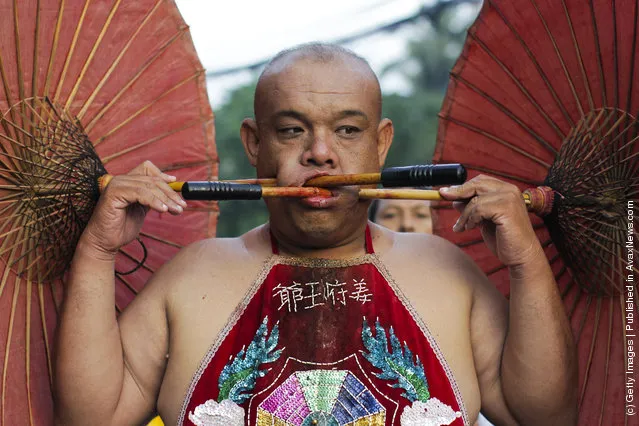
Devotees Practice Self Mutilation At Phuket Vegetarian Festival

A devotee of the Chinese shrine of Kathu Shrine, pierces his cheeks with umbrellas during a procession of Vegetarian Festival on October 4, 2011 in Phuket, Thailand. Ritual Vegetarianism in Phuket Island traces it roots back to the early 1800's. The festival begins on the first evening of the ninth lunar month and lasts for nine days. Participants in the festival perform acts of body piercing as a means of shifting evil spirits from individuals onto themselves and bring the community good luck. (Photo by Athit Perawongmetha/Getty Images)
Details
04 Oct 2011 10:49:00
Singapore Hindus Celebrate Thaipusam Festival

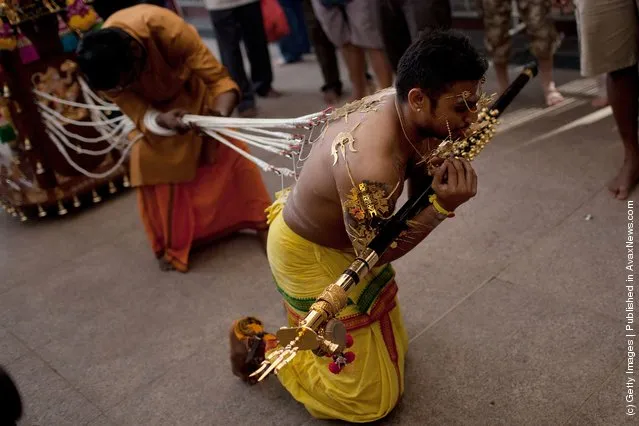
“Kavadi Attam is a dance performed by the devotees during the ceremonial worship of Murugan, the Tamil God of War. It is often performed during the festival of Thaipusam and emphasizes debt bondage. The Kavadi itself is a physical burden through which the devotees implore for help from the God Murugan”. – Wikipedia

Photo: A devotee pulls his procession burden connected by hooks pierced in his back during the Thaipusam procession at Sri Srinivasa Perumal Temple on February 7, 2012 in Singapore. (Photo by Chris McGrath/Getty Images)
Details
07 Feb 2012 10:22:00
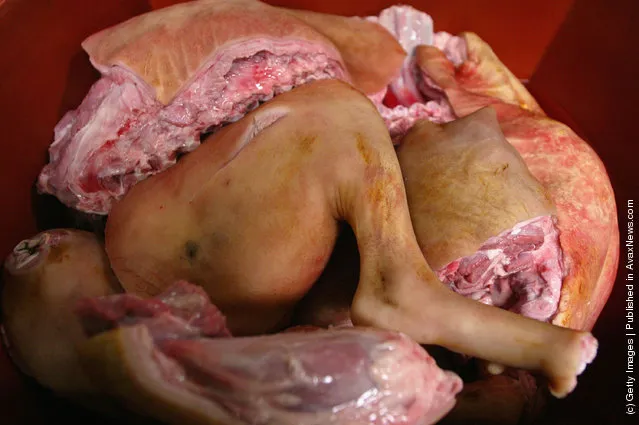
A chef cooks raw dog meat at a restaurant in Gwacheon, South Korea

A chef cooks raw dog meat at a restaurant on July 5, 2005 in Gwacheon, South Korea. Dog meat is a traditional dish in Korea dating back to the Samkuk period (period of the three kingdoms BC 57 – AD 668). Although many recipes existed historically for dog meat, now chefs only make soups, or dishes using boiled or roasted meat. Koreans traditionally eat dog meat on the hottest day of the summer, for it's reputed benefits of virility, invigoration and health. (Photo by Chung Sung-Jun/Getty Images)
Details
21 Feb 2012 12:54:00
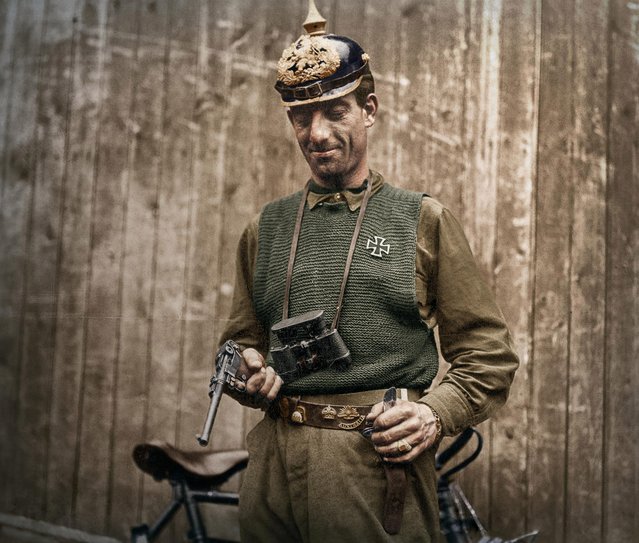
One image shows an unidentified American soldier posing with a pistol, helmet, and Iron Cross medal taken from a German soldier, 1918. (Photo by Mario Unger/Mediadrumworld)

The faces of war have been brought back to life after a series of World War One photographs were expertly colourised. The black and white snaps were painstakingly restored and colourised by photographer Mario Unger (53) from Rotenturm, Austria. Here: One image shows an unidentified American soldier posing with a pistol, helmet, and Iron Cross medal taken from a German soldier, 1918. (Photo by Mario Unger/Mediadrumworld)
Details
04 Dec 2017 07:47:00
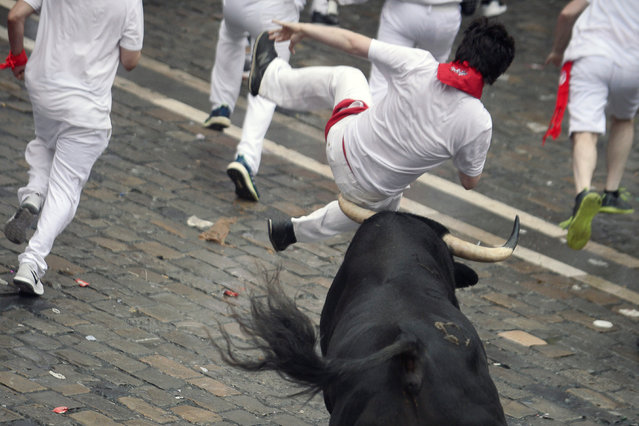
A bull hits a reveller during the first running of the bulls of the San Fermin festival in Pamplona, Spain, July 7, 2018. (Photo by Vincent West/Reuters)

A bull hits a reveller during the first running of the bulls of the San Fermin festival in Pamplona, Spain, July 7, 2018. Each day at 8am hundreds of people race with six bulls, charging along a winding, 848.6-metre (more than half a mile) course through narrow streets to the city's bull ring, where the animals are killed in a bullfight or corrida, during this festival dating back to medieval times and also featuring religious processions, folk dancing, concerts and round-the-clock drinking. (Photo by Vincent West/Reuters)
Details
11 Jul 2018 00:05:00
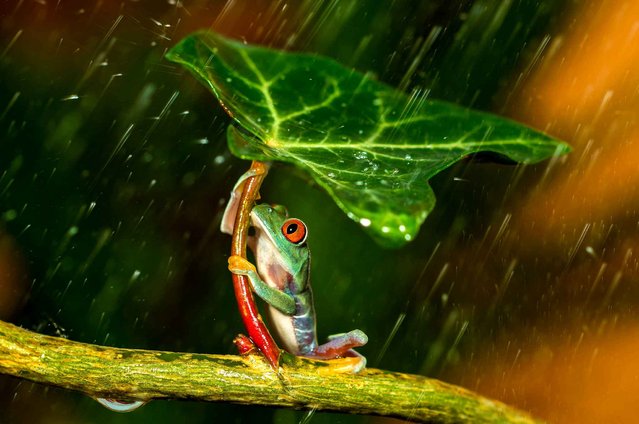
“Ohh no :( Raining”. (Photo by Kutub Uddin)

This photo was caught on camera by amateur photographer Kutub Uddin, 27, and was taken in his back garden in Bognor Regis, West Sussex. The red-eyed tree frogs have been Mr Uddin's pets for four months and he often lets them out to roam around his garden. Photo: “Ohh no :( Raining”. (Photo by Kutub Uddin)
Details
30 Jan 2014 08:42:00
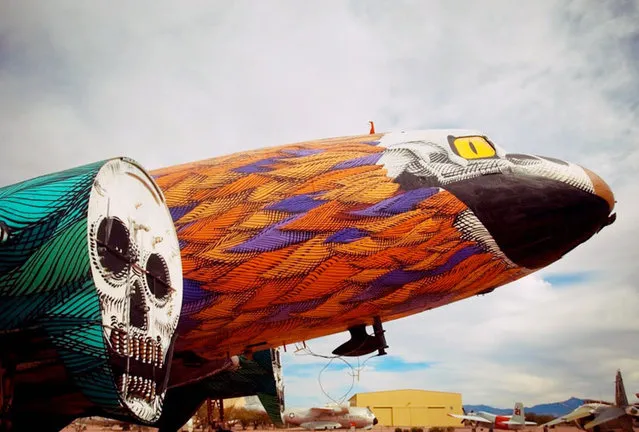
Redesigning Old Military Airplanes

A cemetery of disused war planes in the scorching Arizona desert has been given a new lease of life – as part of an art project.
“The Boneyard Project” resurrects disused warplanes that lie in the famous Boneyard in Arizona by letting graffiti artists paint them.
More than 30 of the world’s best urban artists worked on five ruined US Air Force jets, vividly bringing them back to life with paint and colour.
Details
19 Dec 2012 12:39:00


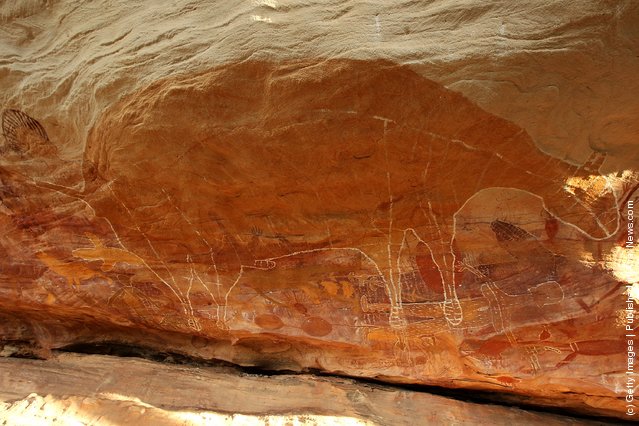
The artwork of Giant Horse Aboriginal rock art galleries in the Quinkan Country is seen on June 19, 2011 in Laura, Australia. The ancient aboriginal rock art in this region is some of the largest and oldest in the world, dating back over 15,000 years. Paintings, stencil art and engravings cover thelands traditionally home to the Kuku, Yalanji, Guugu Yimithirr and Kuku Thaypan people. As a UNESCO-identified top 10 rock art site in the world, international travelers visit the area to learn and understand the aboriginal culture through the artwork. (Photo by Mark Kolbe/Getty Images)
Details
23 Jun 2011 10:12:00