Loading...
Done
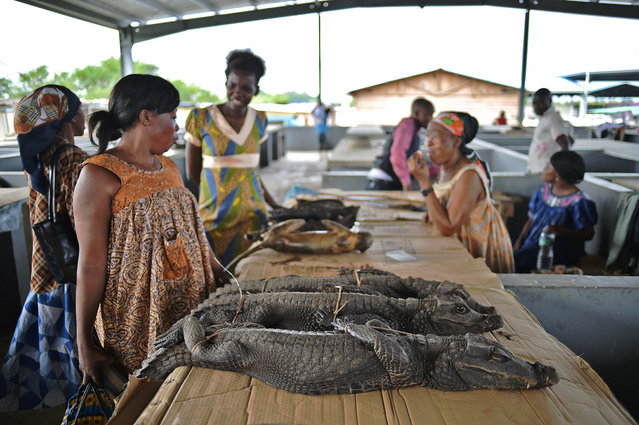
Shoppers walk past crocodiles for sale at a market in Bata on February 3, 2015. Markets in Equatorial Guinea sell a variety of animals including pangolins, monkeys and crocodiles as food. (Photo by Carl de Souza/AFP Photo)

Shoppers walk past crocodiles for sale at a market in Bata on February 3, 2015. Markets in Equatorial Guinea sell a variety of animals including pangolins, monkeys and crocodiles as food. (Photo by Carl de Souza/AFP Photo)
Details
30 Nov 2017 08:33:00
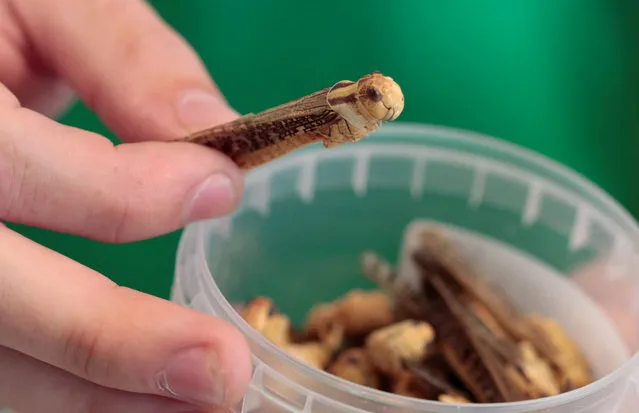
An attendee at the “Eating Insects Detroit: Exploring the Culture of Insects as Food and Feed” conference at Wayne State University shows an edible freeze-dried locust insect in Detroit, Michigan May 26, 2016. (Photo by Rebecca Cook/Reuters)

An attendee at the “Eating Insects Detroit: Exploring the Culture of Insects as Food and Feed” conference at Wayne State University shows an edible freeze-dried locust insect in Detroit, Michigan May 26, 2016. (Photo by Rebecca Cook/Reuters)
Details
29 May 2016 09:41:00
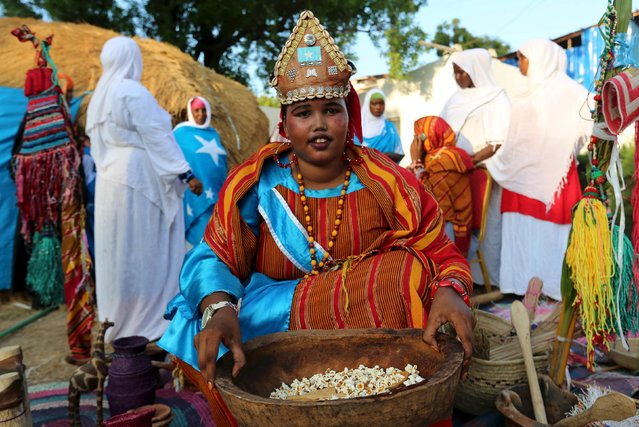
A Somali woman shows traditional items and food during an event to showcase traditional Somali culture in Hamarweyne district in the capital Mogadishu, December 3, 2015. (Photo by Feisal Omar/Reuters)

A Somali woman shows traditional items and food during an event to showcase traditional Somali culture in Hamarweyne district in the capital Mogadishu, December 3, 2015. (Photo by Feisal Omar/Reuters)
Details
05 Dec 2015 08:05:00
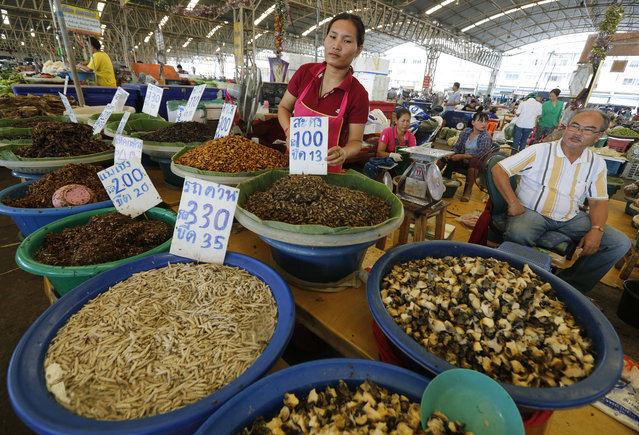
Thai vendors stand next to edible insects for sale at Talad Thai market in Pathum Thani province on the outskirts of Bangkok, Thailand, 15 July 2013. Insects have long been on the menu in Thailand, but academics and the United Nation's Food and Agriculture Organization (FAO) officials are hoping they will become a more common global source of protein and nutrients to meet the need for growing world food requirements in the future. (Photo by Narong Sangnak/EPA)

Thai vendors stand next to edible insects for sale at Talad Thai market in Pathum Thani province on the outskirts of Bangkok, Thailand, 15 July 2013. Insects have long been on the menu in Thailand, but academics and the United Nation's Food and Agriculture Organization (FAO) officials are hoping they will become a more common global source of protein and nutrients to meet the need for growing world food requirements in the future. (Photo by Narong Sangnak/EPA)
Details
22 May 2014 08:51:00
A visitor takes a selfie with “The Breach” by Leandro Erlich, during a photo call for Kew Gardens' forthcoming “Food Forever” exhibition, examining the fragile future of food and the impact of our day-to-day eating habits on the planet, at the Royal Botanic Gardens, in Kew, Richmond, Surrey on Thursday, June 16, 2022. (Photo by Dominic Lipinski/PA Images via Getty Images)

A visitor takes a selfie with “The Breach” by Leandro Erlich, during a photo call for Kew Gardens' forthcoming “Food Forever” exhibition, examining the fragile future of food and the impact of our day-to-day eating habits on the planet, at the Royal Botanic Gardens, in Kew, Richmond, Surrey on Thursday, June 16, 2022. (Photo by Dominic Lipinski/PA Images via Getty Images)
Details
19 Aug 2022 04:53:00
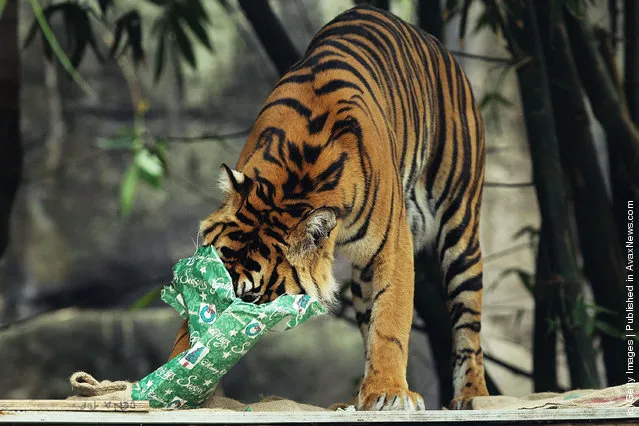
A Sumatran Tiger tears apart a wrapped Christmas present at Taronga Zoo

A Sumatran Tiger tears apart a wrapped Christmas present at Taronga Zoo on December 21, 2011 in Sydney, Australia. Animals received Christmas themed enrichment foods as part of the Zoo's regular program to encourage the animals to forage for food and help improve hunting abilities. (Photo by Brendon Thorne/Getty Images)
Details
21 Dec 2011 14:40:00
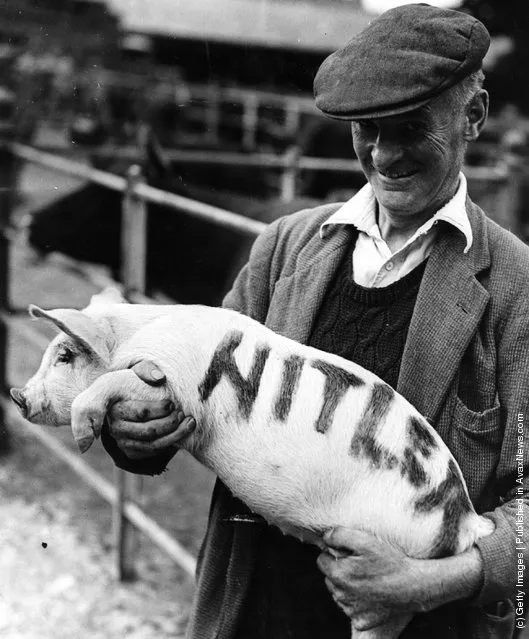
This greedy piglet was isolated from the rest of its litter by the farmer who named it Hitler after it tried to grab all the food at feeding time, 1942

This greedy piglet was isolated from the rest of its litter by the farmer who named it Hitler after it tried to grab all the food at feeding time. (Photo by R J Lewis/Getty Images). 1942
Details
08 Mar 2012 12:02:00
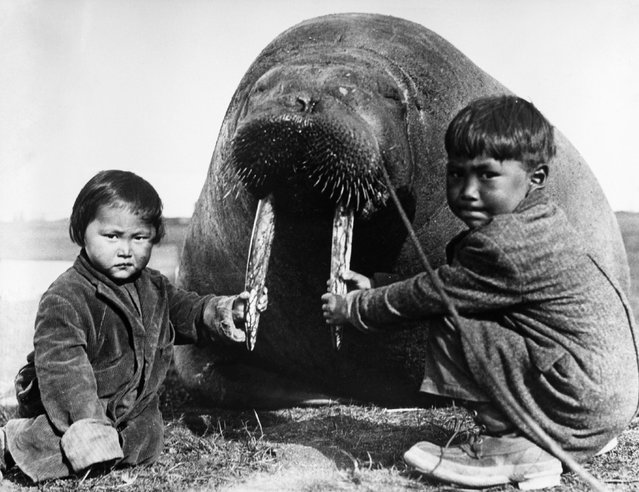
Two Inuit children at Point Barrow, Alaska, holding the tusks of a large walrus, probably killed for food, circa 1930. (Photo by General Photographic Agency/Getty Images)

Two Inuit children at Point Barrow, Alaska, holding the tusks of a large walrus, probably killed for food, circa 1930. (Photo by General Photographic Agency/Getty Images)
Details
04 Feb 2017 01:02:00