Loading...
Done
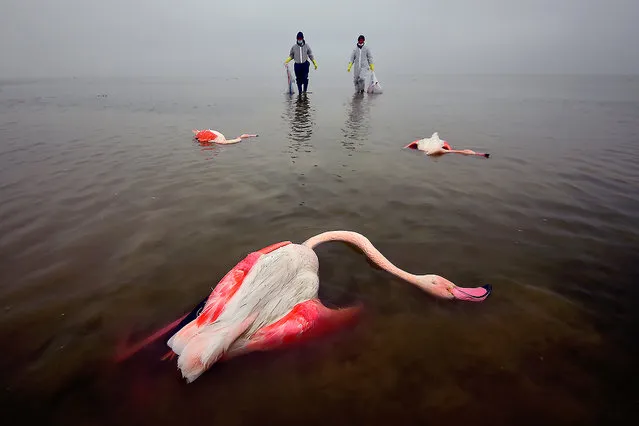
Grand title winner: Environmental photographer of the year. The Bitter Death Of Birds by Mehdi Mohebi Pour. This photo shows the efforts of the environmental forces to collect the bodies and prevent the spread of this disease. The Miankaleh wetland is being destroyed by changes in the climate and it is my duty as a photographer to highlight these problems and create a record for history. I want to prevent the complete destruction of the wetland and the potential environmental disaster by showing the issues and threats to these beautiful natural places. (Photo by Mehdi Mohebi Pour/Environmental Photographer of the Year)

Grand title winner: Environmental photographer of the year. The Bitter Death Of Birds by Mehdi Mohebi Pour. This photo shows the efforts of the environmental forces to collect the bodies and prevent the spread of this disease. The Miankaleh wetland is being destroyed by changes in the climate and it is my duty as a photographer to highlight these problems and create a record for history. I want to prevent the complete destruction of the wetland and the potential environmental disaster by showing the issues and threats to these beautiful natural places. (Photo by Mehdi Mohebi Pour/Environmental Photographer of the Year)
Details
05 Dec 2022 04:27:00


“Kumbh Mela is a mass Hindu pilgrimage in which Hindus gather at the Ganges river. The normal Kumbh Mela is celebrated every 3 years, the Ardh (half) Kumbh Mela is celebrated every six years at Haridwar and Prayag, the Purna (complete) Kumbh takes place every twelve years, at four places (Prayag (Allahabad), Haridwar, Ujjain, and Nashik). The Maha (great) Kumbh Mela which comes after 12 “Purna Kumbh Melas”, or 144 years, is held at Allahabad.

The last Ardh Kumbh Mela was held over a period of 45 days beginning in January 2007, more than 70 million Hindu pilgrims took part in the Ardh Kumbh Mela at Prayag, and on January 15, the most auspicious day of the festival of Makar Sankranti, more than 5 million participated. The previous Maha Kumbh Mela, held in 2001, was attended by around 60 million people, making it at the time the largest gathering anywhere in the world in recorded history”. – Wikipedia

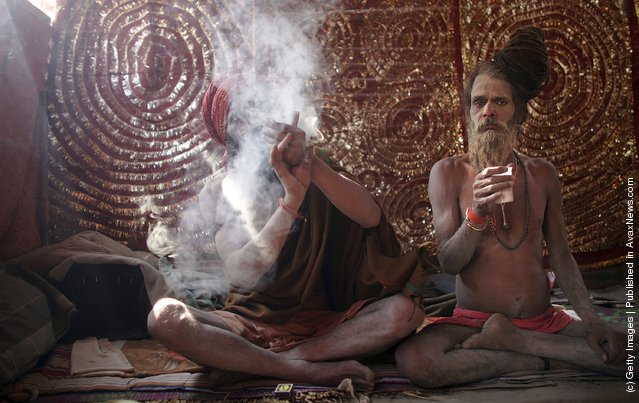
Photo: Sadhus (holy men) smoke at their camp near the ritual site at Sangam, the confluence of the Ganges, Yamuna and mythical Saraswati rivers during the Ardh Kumbh Mela festival (Half Pitcher festival) January 18, 2007 in Allahabad, India. Millions of Hindu pilgrims have flocked to the largest religious gathering in the world which lasts for 45 days in northern India. The festival commemorates the mythical conflict between gods and demons over a pitcher filled with the “nectar of immortality”. Devotees believe that taking a holy dip in the Ganges at this time washes away their sins and paves the path to salvation. (Photo by Mario Tama/Getty Images)

Details
30 Jun 2011 10:27:00
Ocean voyage

Do you think that history is a science? Well, not exactly. First, and foremost, history is the state's “legend of wars”, it’s official regalia. Of course, public historians are not interested in scientific truth – quite the opposite. In this respect, any attempt to present a state’s history as altruistic and benevolent as possible is welcomed and encouraged – as opposed to any revisionism attempts that may be more accurate. In this matter, Chinese have surpassed us all – they revised in highly creative manner (but rather shamelessly) the technology already invented by Europeans, a process that resulted in oldest state on the planet. Here is an interesting paradox: ask any sinologist about the Middle Kingdom during second century B.C., and he will describe it to you in such a vivid manner as if he has been living there all his life – but as soon as you will ask him to describe Chinese history in the 19-20th centuries… let's say, his eagerness will be greatly diminished. However, we will discuss China in a different article, and in the meantime we will try to understand how exactly historic “legend of wars” is formed and functions – based on a specific and well-known example. A great example is Ferdinand Magellan's first voyage around the world.
Details
14 Nov 2011 09:11:00
“Aurora over a glacier lagoon”. A vivid green overheaded aurrora pictured in Iceland's Vatnajokull National Park reflected almost symetrically in Jokulsrlon Glacier lagoon. A complete lack of wind and currrent combin in this sheltred lagoon scene to crete an arresting mirror effect giving the image a sensation of utter stillness. Despite theis there is motion on a suprising scale, as the loops and arcs of the aurora are shaped by the shifting forces of the Earth's magnetic field. (Photo by  James Woodend/The Astronomy Photographer of the Year 2014 Contest)

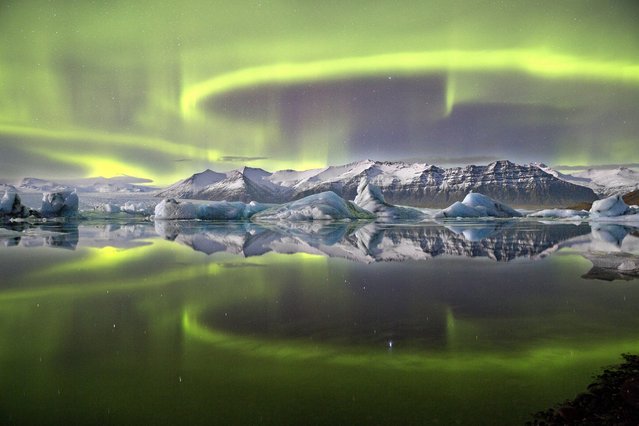
“Aurora over a glacier lagoon”. A vivid green overheaded aurrora pictured in Iceland's Vatnajokull National Park reflected almost symetrically in Jokulsrlon Glacier lagoon. A complete lack of wind and currrent combin in this sheltred lagoon scene to crete an arresting mirror effect giving the image a sensation of utter stillness. Despite theis there is motion on a suprising scale, as the loops and arcs of the aurora are shaped by the shifting forces of the Earth's magnetic field. James Woodend of Great Britain won the grand prize with the image, beating out more than 2,500 other entries. The Astronomy Photographer of the Year 2014 contest is judged by the Royal Observatory Greenwich and BBC Sky at Night magazine. (Photo by James Woodend/The Astronomy Photographer of the Year 2014 Contest)
Details
26 Sep 2014 13:39:00


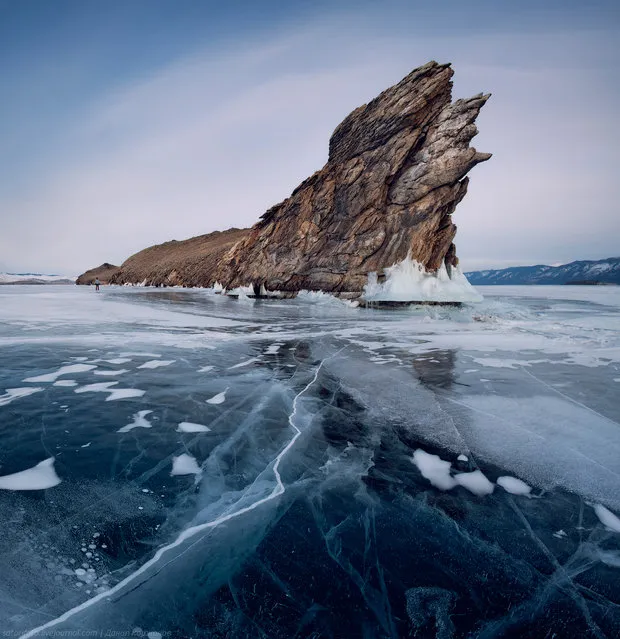
Lake Baikal is the world's oldest lake, at 25 million years (possibly older), and deepest, averaging 744.4 metres (2,442 ft).

Located in the south of the Russian region of Siberia, between Irkutsk Oblast to the northwest and the Buryat Republic to the southeast, it is the most voluminous freshwater lake in the world, containing roughly 20% of the world's unfrozen surface fresh water.
Details
08 May 2012 02:00:00
Kamo Mphela, a South African dancer and singer performs Amapiano, a South African musical export that has crossed borders and cultural barriers, reaching as far as Japan, during a music concert in Pretoria, South Africa, July 22, 2022. (Photo by Shafiek Tassiem/Reuters)

Kamo Mphela, a South African dancer and singer performs Amapiano, a South African musical export that has crossed borders and cultural barriers, reaching as far as Japan, during a music concert in Pretoria, South Africa, July 22, 2022. (Photo by Shafiek Tassiem/Reuters)
Details
10 Aug 2022 05:15:00
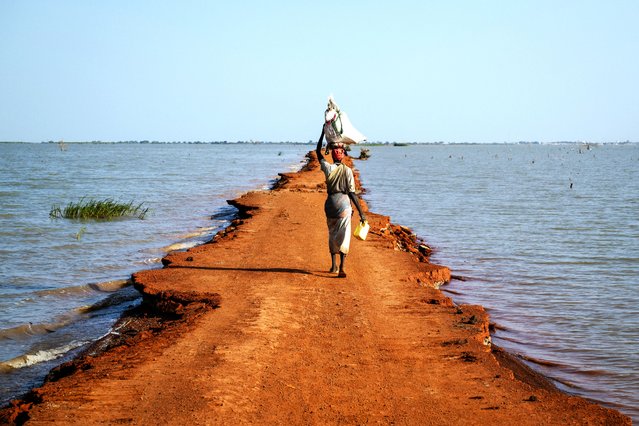
A woman carries a heavy load on her head while walking along the narrow Kilo ZeroKilo 30 road near Bentiu in Unity State, South Sudan, on November 6, 2025. The eroded and flood-affected road compels residents to travel long distances on foot to access supplies in Bentiu and Rubkona. (Photo by Rian Cope/AFP Photo)

A woman carries a heavy load on her head while walking along the narrow Kilo ZeroKilo 30 road near Bentiu in Unity State, South Sudan, on November 6, 2025. The eroded and flood-affected road compels residents to travel long distances on foot to access supplies in Bentiu and Rubkona. (Photo by Rian Cope/AFP Photo)
Details
28 Nov 2025 04:21:00
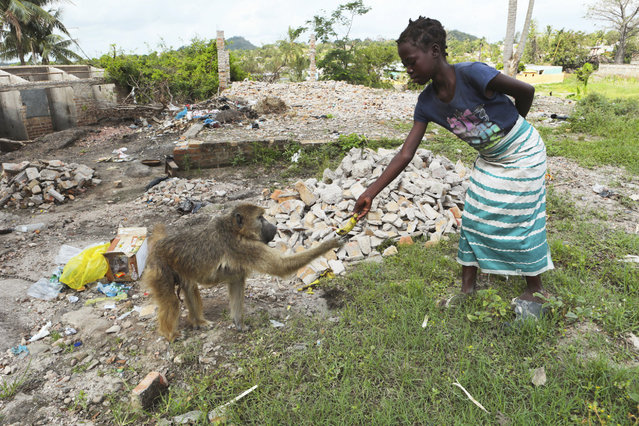
A young girl gives a banana to a tamed baboon on the outskirts of Beira, Mozambique, Sunday, March, 31, 2019. Cholera cases among cyclone survivors in Mozambique have jumped to 271, authorities said. So far no cholera deaths have been confirmed. (Photo by Tsvangirayi Mukwazhi/AP Photo)

A young girl gives a banana to a tamed baboon on the outskirts of Beira, Mozambique, Sunday, March, 31, 2019. Cholera cases among cyclone survivors in Mozambique have jumped to 271, authorities said. So far no cholera deaths have been confirmed. (Photo by Tsvangirayi Mukwazhi/AP Photo)
Details
07 Apr 2019 00:03:00