A woman wearing a sweet girl cosplay mask strikes a pose during a flower watching or Hanami event, in the Japanese Garden of Bucharest, Romania, April 13, 2024. (Photo by Andreea Alexandru/AP Photo)
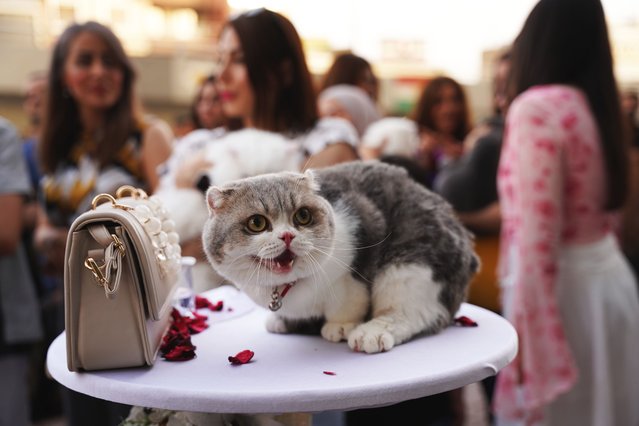
People gather for the second annual “Cat Beauty Festival” organized by Royal Veterinary Hospital in Sulaymaniyah, Iraq on July 2, 2025. Around 200 cats participated in the event, where the first round was determined by social media votes. The winner, a cat named “Gule Rana”, was selected by a jury. The festival aims to promote animal love and raise awareness about feline care. (Photo by Fariq Faraj Mahmood/Anadolu via Getty Images)
A robot using artificial intelligence is displayed at a stand during the International Telecommunication Union (ITU) AI for Good Global Summit in Geneva, on May 30, 2024. Humanity is in a race against time to harness the colossal emerging power of artificial intelligence for the good of all, while averting dire risks, a top UN official said. (Photo by Fabrice Coffrini/AFP Photo)
A Pakistani child, whose family was displaced by 2010 floods from a village in Pakistan's Sindh province, sits on a wooden cart outside her family's makeshift home, in a slum on the outskirts of Islamabad, on February 8, 2013. (Photo by Muhammed Muheisen/AP Photo)
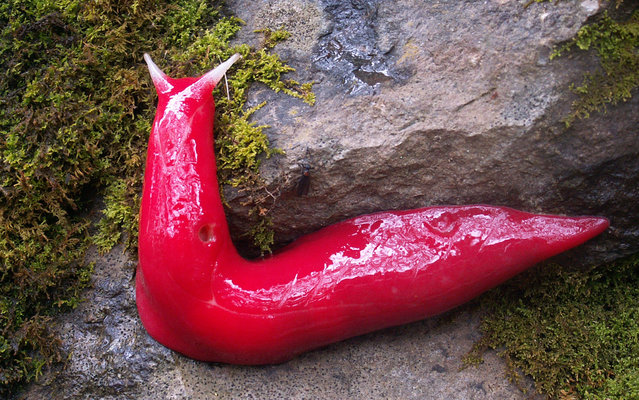
It would seem to be something you'd see only in a cartoon or at a Phish concert, but according to park rangers in New South Wales, Australia, dozens of giant, fluorescent pink slugs have been popping up on a mountaintop there. The eight-inch creatures have been spotted only on Mount Kaputar, a 5,000-foot peak in the Nandewar Range in northern New South Wales. Scientists believe the eye-catching organisms are survivors from an era when Australia was home to rainforests. A series of volcanoes, millions of years of erosion and other geological changes “have carved a dramatic landscape at Mount Kaputar”, the park service wrote on its Facebook page, and unique arid conditions spared the slugs from extinction. (Photo by Michael Murphy/AFP Photo/NSW Environment Office)
“Very small forest-dwelling wallabies are known as pademelons (genus Thylogale) and dorcopsises (genera Dorcopsis and Dorcopsulus). The name wallaby comes from the Eora Aboriginal tribe who were the original inhabitants of the Sydney area. Wallabies are herbivores whose diet consists of a wide range of grasses, vegetables, leaves, and other types of foliage”. – Wikipedia
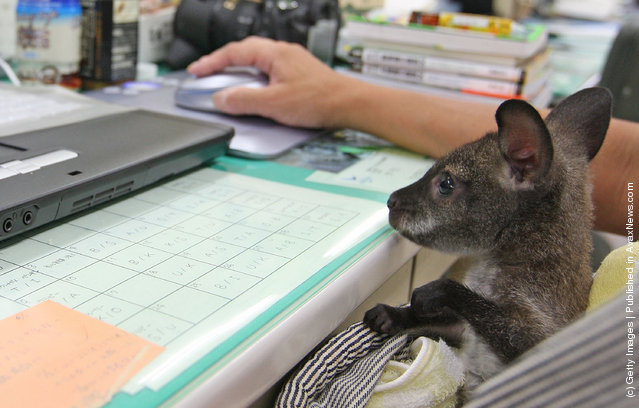
Photo: A baby wallaby sits in a zoo attendant's lap at Edogawa Natural Zoo on August 4, 2009 in Tokyo, Japan. The staff of the zoo have raised the young wallaby after her mother neglected her. (Photo by Junko Kimura/Getty Images)
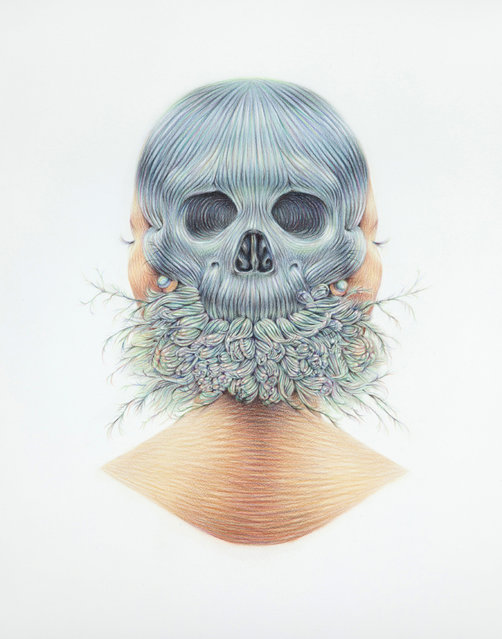
Winnie Truong was born in Toronto, where she still lives, and received her BFA in painting and drawing from Ontario College of Art and Design.
Using pencil, crayon, and chalk pastel on giant sheets of paper, Truong creates portraits with great detail. Her aim is to explore notions of beauty and discomfort and, inspired by science fiction, she portrays hair in all its ‘whiskery, wispy, curly, bristly’ brilliance.