Loading...
Done
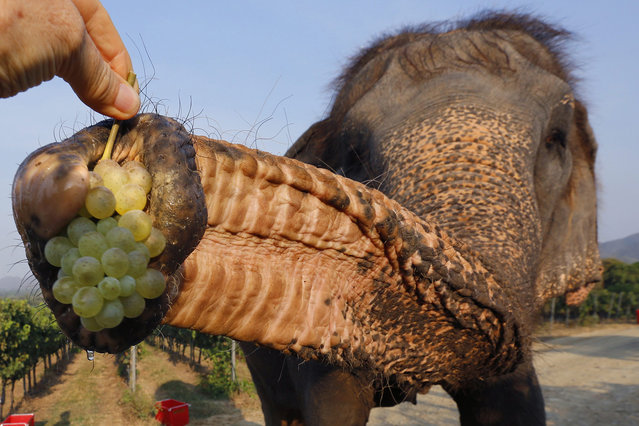
Tourists feed freshly picked grapes to 40-year-old elephant Boonruen, a long-term resident of the Hua Hin Hills vineyard, that used to be an elephant corral in Hua Hin, about 200km southwest of Bangkok, Thailand, 08 March 2016. The winery is among a handful of companies producing new latitude wines in non-traditional wine areas of the world near the equator. Harvest is only once a year in Thailand, this year in March. (Photo by Barbara Walton/EPA)

Tourists feed freshly picked grapes to 40-year-old elephant Boonruen, a long-term resident of the Hua Hin Hills vineyard, that used to be an elephant corral in Hua Hin, about 200km southwest of Bangkok, Thailand, 08 March 2016. The winery is among a handful of companies producing new latitude wines in non-traditional wine areas of the world near the equator. Harvest is only once a year in Thailand, this year in March. (Photo by Barbara Walton/EPA)
Details
20 Mar 2016 11:20:00
An Iraqi Muslim woman walks past Christmas decorations for sale in the Shiite holy city of Najaf on December 17, 2015. (Photo by Haidar Hamdani/AFP Photo)

An Iraqi Muslim woman walks past Christmas decorations for sale in the Shiite holy city of Najaf on December 17, 2015. (Photo by Haidar Hamdani/AFP Photo)
Details
18 Dec 2015 12:59:00
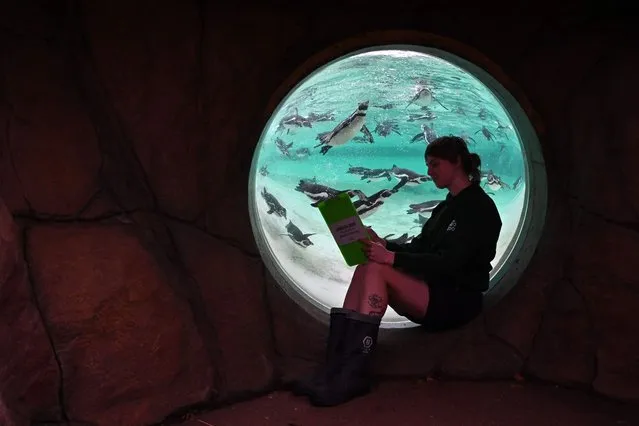
A zookeeper counts penguins through an observation window during the annual stocktake at ZSL London Zoo in central London on January 3, 2023. (Photo by Justin Tallis/AFP Photo)

A zookeeper counts penguins through an observation window during the annual stocktake at ZSL London Zoo in central London on January 3, 2023. (Photo by Justin Tallis/AFP Photo)
Details
05 Jan 2023 00:39:00
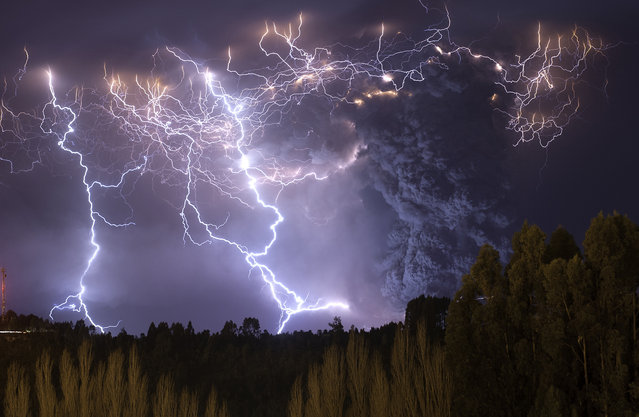
The eruption of Cordon Caulle began on June 4, 2011, located in the Region of Los Rios in Chile. For about 12 months, people and animals became accustomed to living with the daily fall of ash, which also caused problems in the air traffic in South America. The explosions and lightning during first days of the eruption could be seen from hundreds of miles around. This photograph was taken on the second night of eruption from the town of Lago Ranco. (Photo and caption by Francisco Negroni/National Geographic Traveler Photo Contest)

The eruption of Cordon Caulle began on June 4, 2011, located in the Region of Los Rios in Chile. For about 12 months, people and animals became accustomed to living with the daily fall of ash, which also caused problems in the air traffic in South America. The explosions and lightning during first days of the eruption could be seen from hundreds of miles around. This photograph was taken on the second night of eruption from the town of Lago Ranco. (Photo and caption by Francisco Negroni/National Geographic Traveler Photo Contest)

ATTENTION! All pictures are presented in high resolution. To see Hi-Res images – just TWICE click on any picture. In other words, click small picture – opens the BIG picture. Click BIG picture – opens VERY BIG picture.
Details
23 Jun 2013 11:24:00
“The Independence day”. While on storm chasing expeditions in the Tornado Alley in USA I have encountered many photogenic supercell storms. This photograph was taken while we were approaching the storm near Julesburg, Colorado on My 28th, 2013. The storm was tornado warned for more than one hour, but stayed an LP storm through all its cycles and never produced a tornado, just occasional brief funnels, large hail and some rain. Photo location: Julesburg, Colorado, USA. (Photo and caption by Marko Korošec/National Geographic Photo Contest)

“The Independence day”. While on storm chasing expeditions in the Tornado Alley in USA I have encountered many photogenic supercell storms. This photograph was taken while we were approaching the storm near Julesburg, Colorado on My 28th, 2013. The storm was tornado warned for more than one hour, but stayed an LP storm through all its cycles and never produced a tornado, just occasional brief funnels, large hail and some rain. Photo location: Julesburg, Colorado, USA. (Photo and caption by Marko Korošec/National Geographic Photo Contest)
Details
24 Jun 2014 12:29:00
Mud-covered tourists pretend to be trapped inside a mud prison at the Daecheon Beach Mud Plaza in the city of Boryeong on South Korea's west coast, July 17, as they take part in the Boryeong Mud Festival, which opened that day and runs through July 26. Boryeong mud is rich in natural mineral component and is considered to prevent skin aging. (Photo by EPA/Yonhap)

Mud-covered tourists pretend to be trapped inside a mud prison at the Daecheon Beach Mud Plaza in the city of Boryeong on South Korea's west coast, July 17, as they take part in the Boryeong Mud Festival, which opened that day and runs through July 26. Boryeong mud is rich in natural mineral component and is considered to prevent skin aging. (Photo by EPA/Yonhap)
Details
18 Jul 2015 13:33:00
On August 31, 2012, a long filament of solar material that had been hovering in the sun's atmosphere, the corona, erupted out into space at 4:36 p.m. EDT. The coronal mass ejection, or CME, traveled at over 900 miles per second. The CME did not travel directly toward Earth, but did connect with Earth's magnetic environment, or magnetosphere, causing aurora to appear on the night of Monday, September 3. (Photo by NASA/GSFC/SDO)

On August 31, 2012, a long filament of solar material that had been hovering in the sun's atmosphere, the corona, erupted out into space at 4:36 p.m. EDT. The coronal mass ejection, or CME, traveled at over 900 miles per second. The CME did not travel directly toward Earth, but did connect with Earth's magnetic environment, or magnetosphere, causing aurora to appear on the night of Monday, September 3. (Photo by NASA/GSFC/SDO via The Atlantic)
Details
14 Sep 2012 09:01:00
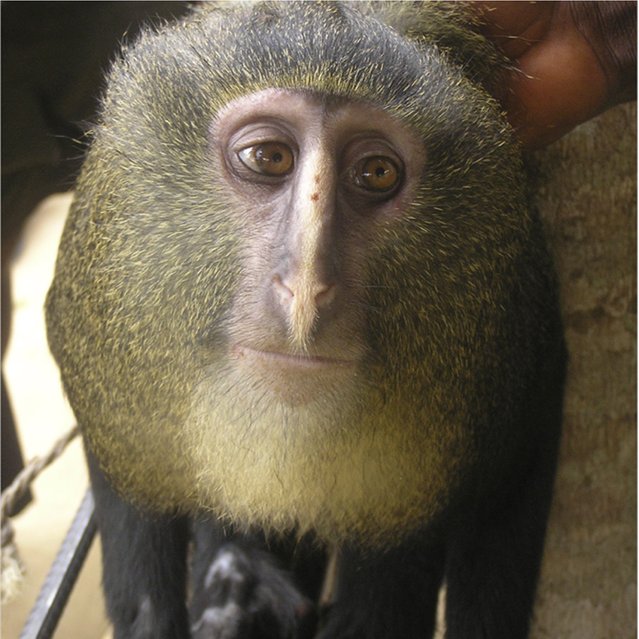
A new species of monkey found in the Democratic Republic of the Congo and identified as Lesula (Cercopithecus lomamiensis) is seen in this undated photograph from an article published September 12, 2012 in the science journal PLOS One. (Photo by Hart J. A., Detwiler K. M., Gilbert C. C./Reuters)

A new species of monkey found in the Democratic Republic of the Congo and identified as Lesula (Cercopithecus lomamiensis) is seen in this undated photograph from an article published September 12, 2012 in the science journal PLOS One. The monkey was first seen in 2007 by researchers John and Terese Hart of the Peabody Museum of Natural History at Yale Research Project. The finding of C. lomamiensis represents only the second new species of African monkey to be discovered in the past 28 years, according to the research article. (Photo by Hart J. A., Detwiler K. M., Gilbert C. C./Reuters)
Details
27 Sep 2012 08:17:00