Loading...
Done
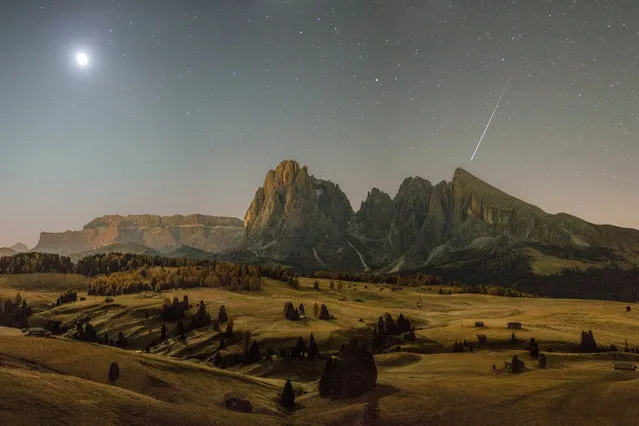
Young category winner. Great autumn morning by Fabian Dalpiaz. (Photo by Fabian Dalpiaz/2018 Astronomy Photographer of the Year)

Young category winner. Great autumn morning by Fabian Dalpiaz. (Photo by Fabian Dalpiaz/2018 Astronomy Photographer of the Year)
Details
26 Oct 2018 00:03:00
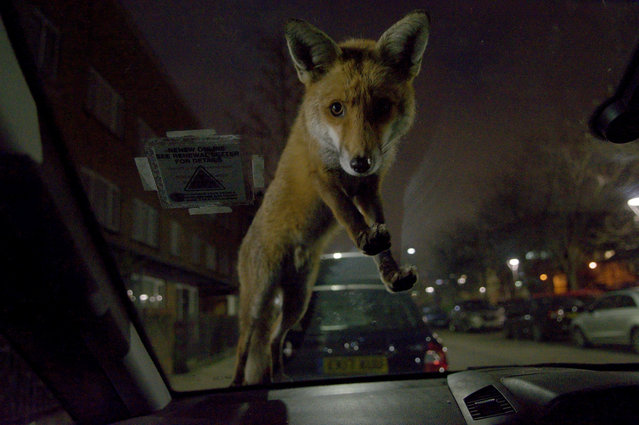
Mammal Photographer of the Year and Mammal Society Member’s prize winner: Foxhall Zafira by Roger Cox. (Photo by Roger Cox/Mammal Photographer of the Year 2020)

Mammal Photographer of the Year and Mammal Society Member’s prize winner: Foxhall Zafira by Roger Cox. (Photo by Roger Cox/Mammal Photographer of the Year 2020)
Details
13 Mar 2020 00:03:00
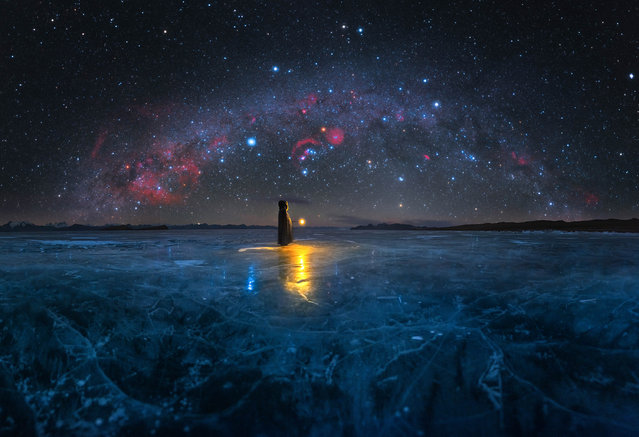
Ice Age – Tibet, China. “This is the Chinese version of the blue ice lake, Pumoungcuo, at an altitude of 5,070 metres (16,600 feet). This lake in Tibet freezes every winter. At night, under the low temperatures of -20C, you can listen to the sound of the ice cracking while capturing the most beautiful winter sky. The blue ice surface and dazzling Orion constellation create a fantasy landscape. I felt so happy to have the stars as my companion on this magical night”. (Photo by Daniel Zafra Portill/Milky Way Photographer of the Year)

Ice Age – Tibet, China. “This is the Chinese version of the blue ice lake, Pumoungcuo, at an altitude of 5,070 metres (16,600 feet). This lake in Tibet freezes every winter. At night, under the low temperatures of -20C, you can listen to the sound of the ice cracking while capturing the most beautiful winter sky. The blue ice surface and dazzling Orion constellation create a fantasy landscape. I felt so happy to have the stars as my companion on this magical night”. (Photo by Daniel Zafra Portill/Milky Way Photographer of the Year)
Details
21 May 2022 05:10:00
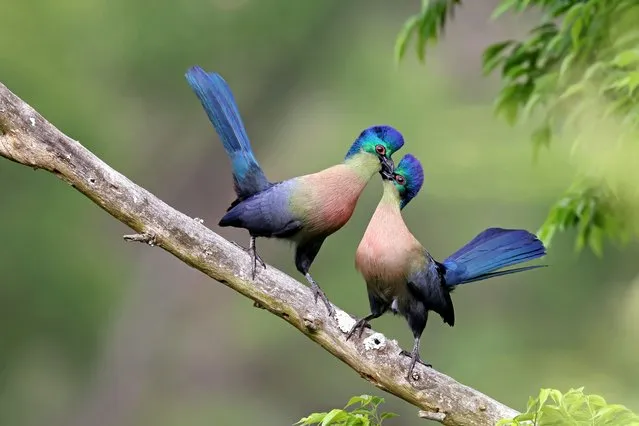
Portrait category, bronze award winner. Purple-crested Turaco Gallirex porphyreolophus. Lower Mpushini, near Pietermaritzburg, KwaZulu-Natal, South Africa. (Photo by Richard Flack/Bird Photographer of the Year 2022)

Portrait category, bronze award winner. Purple-crested Turaco Gallirex porphyreolophus. Lower Mpushini, near Pietermaritzburg, KwaZulu-Natal, South Africa. (Photo by Richard Flack/Bird Photographer of the Year 2022)
Details
12 Sep 2022 03:54:00
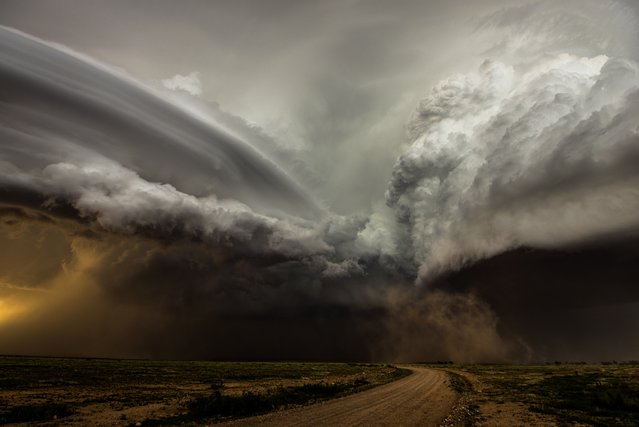
Clash of the storms, New Mexico, US by Camelia Czuchnicki. “A clash between two storm cells in New Mexico, US, each with its own rotating updraft. The curved striations of the oldest noticeable against the new bubbling convection of the newer. It was a fantastic sight to watch and it’s the rarity of such scenes that keep drawing me back to the US Plains each year”. (Photo by Camelia Czuchnicki/Weather Photographer of the Year 2016)

Clash of the storms, New Mexico, US by Camelia Czuchnicki. “A clash between two storm cells in New Mexico, US, each with its own rotating updraft. The curved striations of the oldest noticeable against the new bubbling convection of the newer. It was a fantastic sight to watch and it’s the rarity of such scenes that keep drawing me back to the US Plains each year”. (Photo by Camelia Czuchnicki/Weather Photographer of the Year 2016)
Details
16 Sep 2016 11:11:00
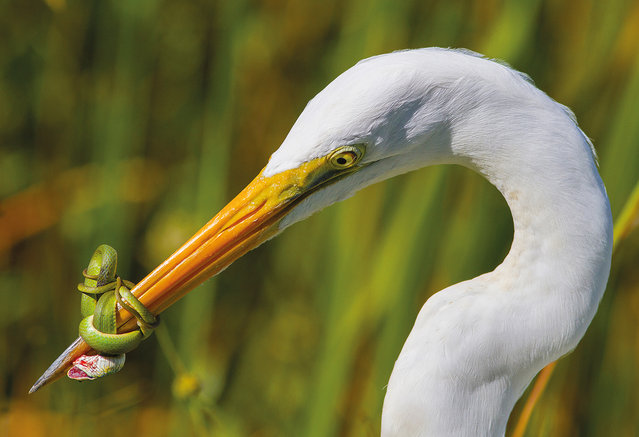
The battle by Jose Garcia, US. Category: bird behaviour. A great white heron (Ardea herodias occidentalis) fighting a green snake in the Florida Everglades. The fight lasted for nearly 20 minutes with the heron having to release its prey. (Photo by Jose Garcia/2017 Bird Photographer of the Year Awards)

The battle by Jose Garcia, US. Category: bird behaviour. A great white heron (Ardea herodias occidentalis) fighting a green snake in the Florida Everglades. The fight lasted for nearly 20 minutes with the heron having to release its prey. (Photo by Jose Garcia/2017 Bird Photographer of the Year Awards)
Details
01 Sep 2017 05:42:00
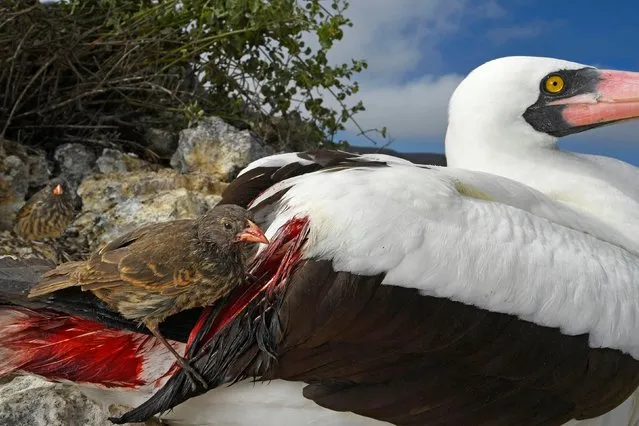
Bloodthirsty by Thomas P Peschak, Germany/South Africa — winner, Behaviour: birds. When rations run short on Wolf Island, in the remote northern Galápagos, the sharp-beaked ground finches become vampires. Their sitting targets are Nazca boobies and other large birds. The finches rely on a scant diet of seeds and insects, which regularly dries up, so they drink blood to survive. ‘I’ve seen more than half a dozen finches drinking from a single Nazca booby,’ says Tom. Rather than leave their nests the boobies tolerate the vampires, and the blood loss doesn’t seem to cause permanent harm. (Photo by Thomas P Peschak/2018 Wildlife Photographer of the Year)

Bloodthirsty by Thomas P. Peschak, Germany/South Africa — winner, Behaviour: birds. When rations run short on Wolf Island, in the remote northern Galápagos, the sharp-beaked ground finches become vampires. Their sitting targets are Nazca boobies and other large birds. The finches rely on a scant diet of seeds and insects, which regularly dries up, so they drink blood to survive. ‘I’ve seen more than half a dozen finches drinking from a single Nazca booby,’ says Tom. Rather than leave their nests the boobies tolerate the vampires, and the blood loss doesn’t seem to cause permanent harm. (Photo by Thomas P. Peschak/2018 Wildlife Photographer of the Year)
Details
19 Oct 2018 00:05:00
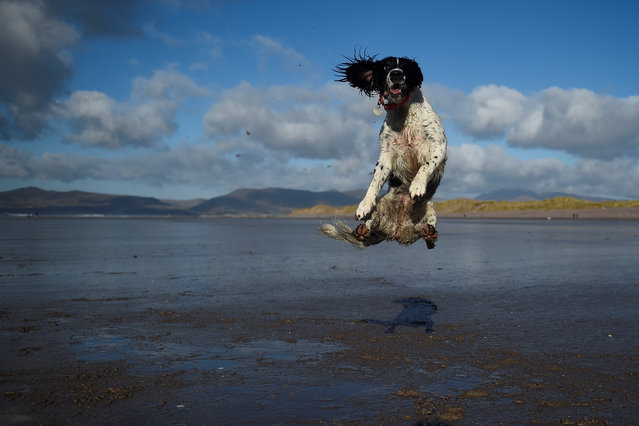
A dog jumps into the air to catch a ball along the beach near the County Kerry village of Rossbeigh, Ireland, February 4, 2018. (Photo by Clodagh Kilcoyne/Reuters)

A dog jumps into the air to catch a ball along the beach near the County Kerry village of Rossbeigh, Ireland, February 4, 2018. (Photo by Clodagh Kilcoyne/Reuters)
Details
25 Dec 2018 00:03:00