Loading...
Done
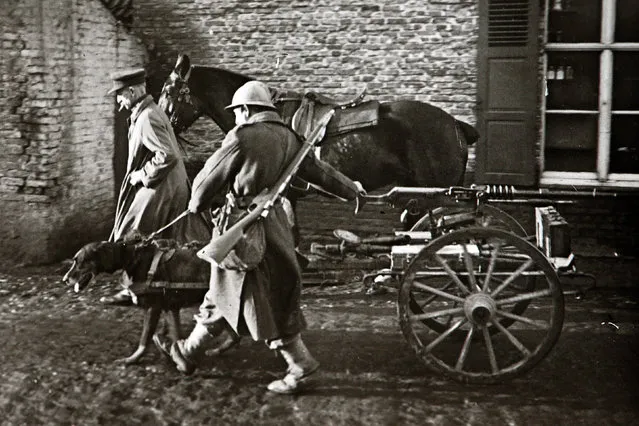
An undated archive picture shows a dog pulling a Belgian machine gun at an unknown location in northern France. (Photo by Collection Odette Carrez/Reuters)

An undated archive picture shows a dog pulling a Belgian machine gun at an unknown location in northern France. A Viscount in the Armoured Cavalry Branch of the French Army left behind a collection of hundreds of glass plates taken during World War One (WWI) that have never before been published. The images, by an unknown photographer, show the daily life of soldiers in the trenches, destruction of towns and military leaders. The year 2014 marks the 100th anniversary of the start of WWI. (Photo by Collection Odette Carrez/Reuters)
Details
23 May 2014 09:11:00
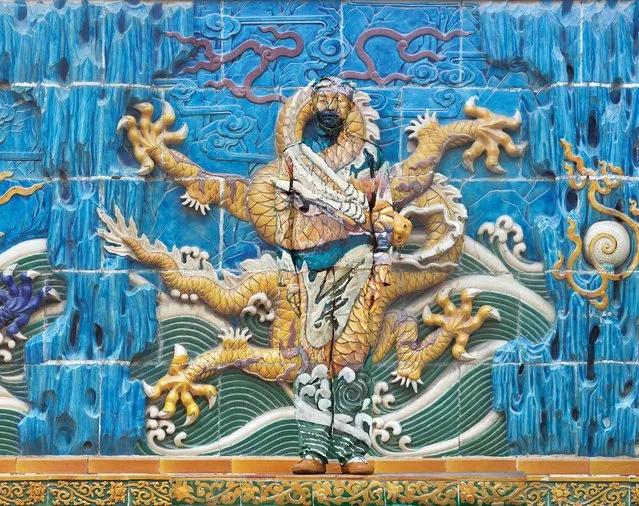
Optical illusions: artist Liu Bolin

“Liu Bolin is an artist born in China’s Shandong province in 1973, and he earned his Bachelor of Fine Arts from the Shandong College of Arts in 1995 and his Master of Fine Arts from the Central Academy of Fine Arts in Beijing in 2001. His work has been exhibited in museums around the world. Also known as “The Invisible Man”, Liu Bolin's most popular works are from his “Hiding in the City” series; photographic works that began as performance art in 2005”. – Wikipedia. (Photo by Reuters/China Daily)
Details
03 Oct 2013 09:29:00
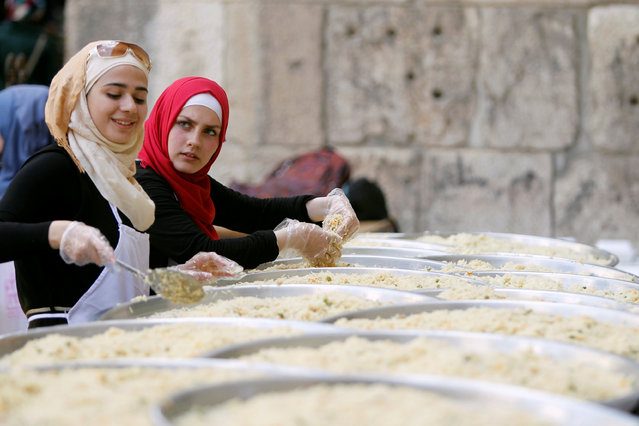
Women, who are members of Saaed group, prepare food to be given out as Iftar meals for the poor and internally displaced Syrians during the month of Ramadan in Damascus, Syria June 18, 2016. (Photo by Omar Sanadiki/Reuters)

Women, who are members of Saaed group, prepare food to be given out as Iftar meals for the poor and internally displaced Syrians during the month of Ramadan in Damascus, Syria June 18, 2016. Iftar (or Fatoor) is the evening meal when Muslims end their daily Ramadan fast at sunset. Muslims break their fast at the time of the call to prayer for the evening prayer. (Photo by Omar Sanadiki/Reuters)
Details
20 Jun 2016 12:12:00
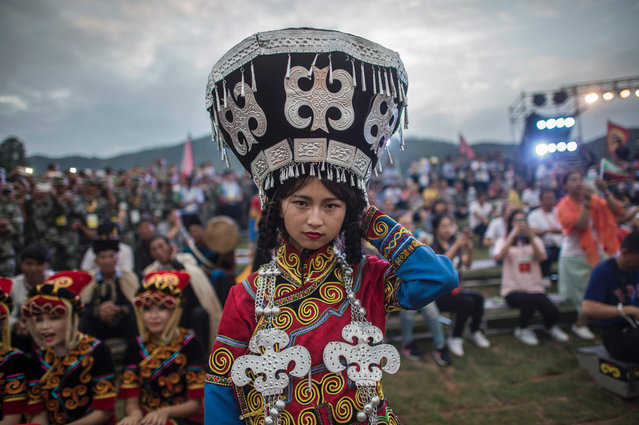
A Dancer, dressed with the traditional Yi costume, waits to perform at the Torch Festival, in Xichang, China's Sichuan province on July 27, 2016. (Photo by Fred Dufour/AFP Photo)

A Dancer, dressed with the traditional Yi costume, waits to perform at the Torch Festival, in Xichang, China's Sichuan province on July 27, 2016. As a result of fast urbanisation in the rural area of China Like Lienchang prefecture, the traditional costume is fading away for the Yi people in daily life. (Photo by Fred Dufour/AFP Photo)
Details
01 Aug 2016 10:04:00
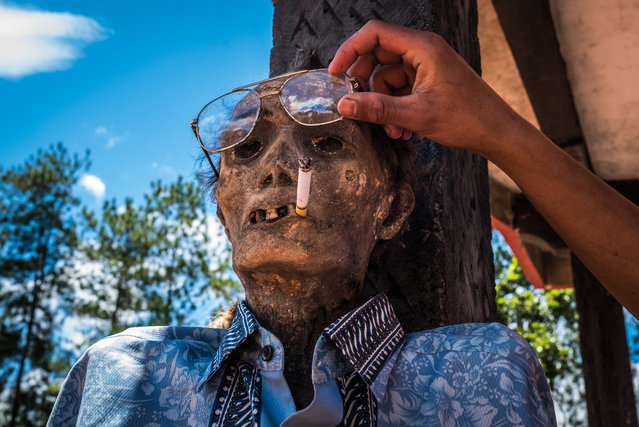
Todeng died in 2009. A young relative of his, Sam, lights him a cigarette and changes his glasses. (Photo by Claudio Sieber Photography/The Guardian)

For the Torajan people of Indonesia, death is part of a spiritual journey: families keep the mummified remains of their deceased relatives in their homes for years – and traditionally invite them to join for lunch on a daily basis – before they are eventually buried. Here: Todeng died in 2009. A young relative of his, Sam, lights him a cigarette and changes his glasses. (Photo by Claudio Sieber Photography/The Guardian)
Details
14 Oct 2017 09:34:00
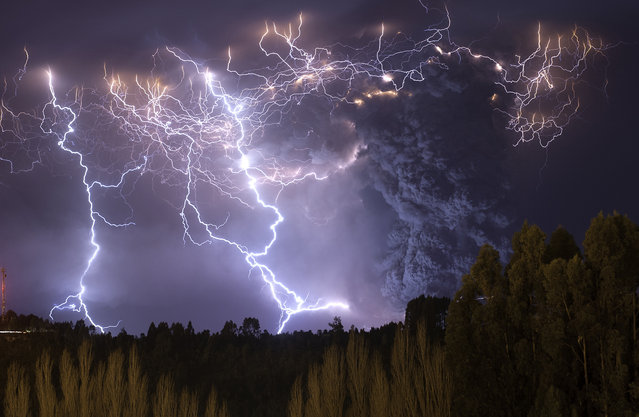
The eruption of Cordon Caulle began on June 4, 2011, located in the Region of Los Rios in Chile. For about 12 months, people and animals became accustomed to living with the daily fall of ash, which also caused problems in the air traffic in South America. The explosions and lightning during first days of the eruption could be seen from hundreds of miles around. This photograph was taken on the second night of eruption from the town of Lago Ranco. (Photo and caption by Francisco Negroni/National Geographic Traveler Photo Contest)

The eruption of Cordon Caulle began on June 4, 2011, located in the Region of Los Rios in Chile. For about 12 months, people and animals became accustomed to living with the daily fall of ash, which also caused problems in the air traffic in South America. The explosions and lightning during first days of the eruption could be seen from hundreds of miles around. This photograph was taken on the second night of eruption from the town of Lago Ranco. (Photo and caption by Francisco Negroni/National Geographic Traveler Photo Contest)

ATTENTION! All pictures are presented in high resolution. To see Hi-Res images – just TWICE click on any picture. In other words, click small picture – opens the BIG picture. Click BIG picture – opens VERY BIG picture.
Details
23 Jun 2013 11:24:00
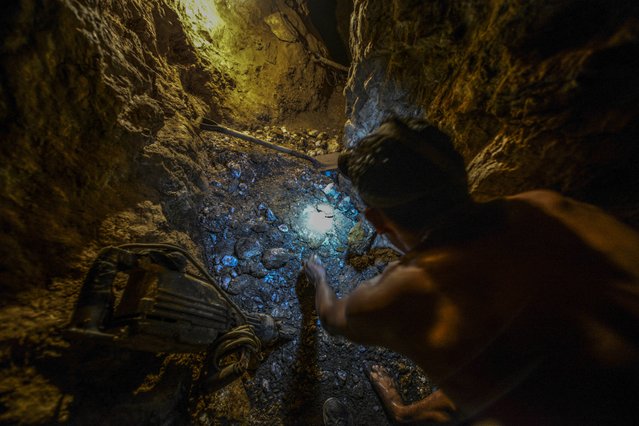
Ender Moreno looks for gold at La Culebra gold mine in El Callao, Bolivar state, southeastern Venezuela on March 1, 2017. (Photo by Juan Barreto/AFP Photo)

Ender Moreno looks for gold at La Culebra gold mine in El Callao, Bolivar state, southeastern Venezuela on March 1, 2017. Although life in the mines of eastern Venezuela is hard and dangerous, tens of thousands from all over the country head for the mines daily in overcrowded trucks, pushed by the rise in gold prices and by the severe economic crisis affecting the country, aggravated recently by the drop in oil prices. (Photo by Juan Barreto/AFP Photo)
Details
28 Mar 2017 09:15:00
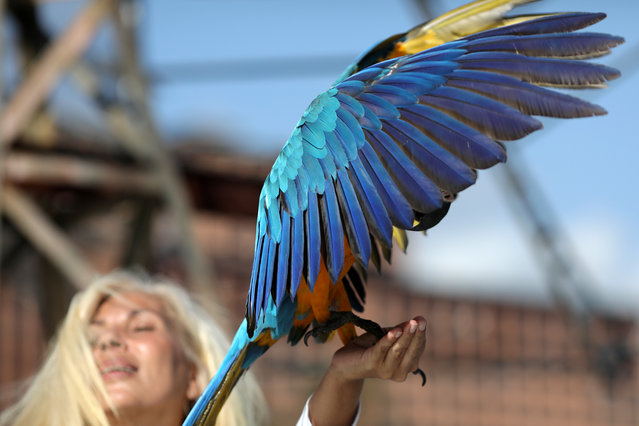
A macaw lands in Carmen Borges' hand while she stays at a rooftop of a building in Caracas, Venezuela, June 12, 2019. (Photo by Manaure Quintero/Reuters)

Looking for an escape from the daily realities of crisis-ridden Venezuela, Carmen Gomez finds solace receiving visitors on the roof of her Caracas apartment building every morning: groups of blue and gold macaws that arrive at daybreak. Here: A macaw lands in Carmen Borges' hand while she stays at a rooftop of a building in Caracas, Venezuela, June 12, 2019. (Photo by Manaure Quintero/Reuters)
Details
24 Jul 2019 00:03:00