A fox cub with some bluebells in some woodland at Wye Valley near Gloucester, United Kingdom on April 29, 2023. (Photo by Thomas Winstone/Picture Exclusive)
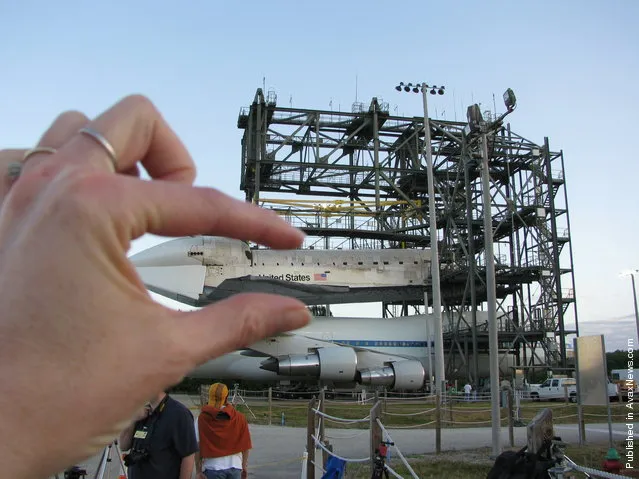
Space shuttle Discovery sits atop NASA's 747 Shuttle Carrier Aircraft (SCA) ready to transport it from Kennedy Space Center to the Washington D.C., on April 17, 2012 in Cape Canaveral, Florida. Following the retirement of the shuttle fleet, Discovery will fly to Washington for display at the Smithsonian's National Air and Space Museum. (Photo by Lofty Ambitions)
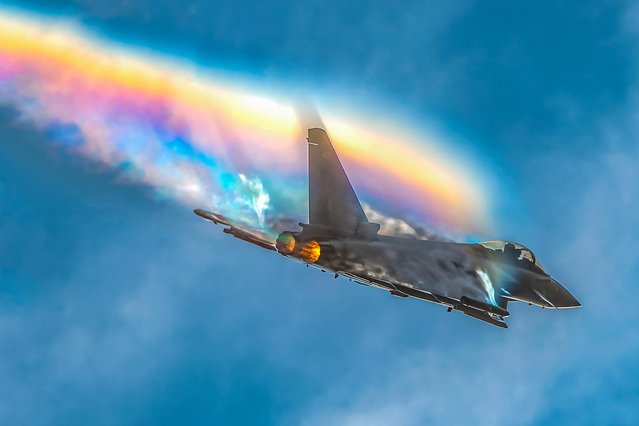
A Typhoon jet flown by Flt Lt Jim Peterson practising over RAF Coningsby in the East Lindsey district of Lincolnshire, England on September 27, 2019 producing a rainbow effect over the plane. The rainbow is made of crystalized or frozen water vapor that reflect and refract sunlight, causing the rainbow effect. (Photo by Claire Hartley/Bav Media)
Womentake a selfie in front Russian military vehicles during a rehearsal for the WWII Victory Parade in Moscow on June 17, 2020. Russia's President Putin on June 24 will preside over a massive military parade to mark Soviet victory in World War II, which was postponed due to the coronavirus pandemic. (Photo by Dimitar Dilkoff/AFP Photo)
Cuban-American singer-songwriter Camila Cabello attends the 65th GRAMMY Awards on February 05, 2023 in Los Angeles, California. (Photo by Kevin Mazur/Getty Images for The Recording Academy)
US rapper Saweetie perform on the catwalk at PrettyLittleThing x Saweetie show Runway, Spring Summer 2020, New York Fashion Week, USA on September 8, 2019. (Photo by Splash News and Pictures)
Midnight at the Palace, at Big Yin at Gilded Balloon Patter House during Edinburgh fringe 2025 in the first decade of August 2025. (Photo by Damian Robertson/The Guardian)
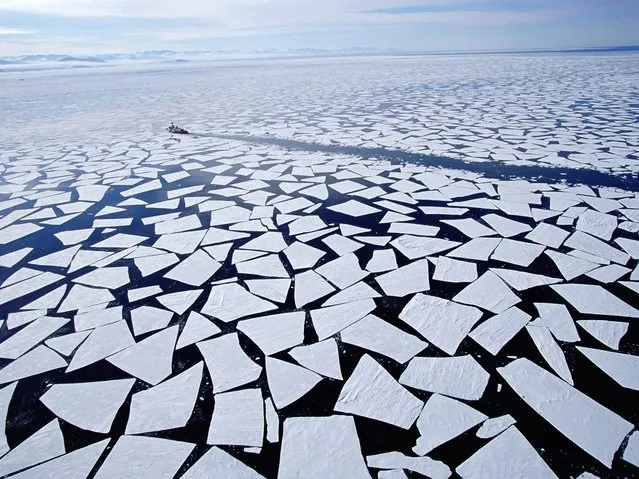
McMurdo Station is a U.S. Antarctic research centre located on the southern tip of Ross Island, which is in the New Zealand-claimed Ross Dependency on the shore of McMurdo Sound in Antarctica. It is operated by the United States through the United States Antarctic Program, a branch of the National Science Foundation. The station is the largest community in Antarctica, capable of supporting up to 1,258 residents, and serves as the United States Antarctic science facility. All personnel and cargo going to or coming from Amundsen–Scott South Pole Station first pass through McMurdo.