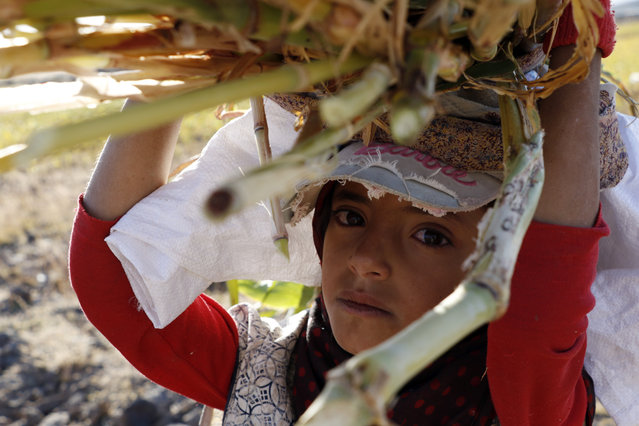
A girl carries sorghum stalks during the sorghum harvest season in Amran province, Yemen, October 24, 2020. (Photo by Xinhua News Agency/Rex Features/Shutterstock)
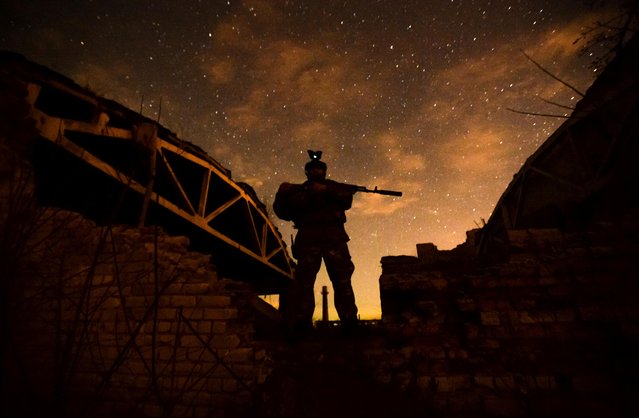
A service member of the Ukrainian armed forces is seen at fighting positions on the line of separation from pro-Russian rebels in Donetsk region, Ukraine on April 10, 2021. (Photo by Oleksandr Klymenko/Reuters)
A Chinese tourist plays with water as she celebrates during the Songkran holiday which marks the Thai New Year in Bangkok, Thailand on April 13, 2023. (Photo by Chalinee Thirasupa/Reuters)
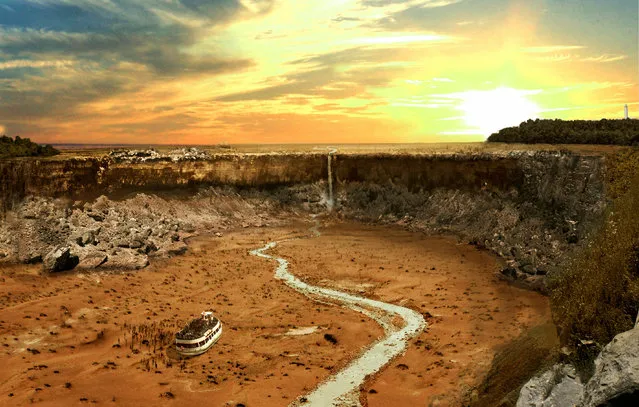
A graphic designer has produced a haunting look at what the world’s most famous landmarks would look like if they were hit by a severe drought. Joel Krebs has intricately dried up hot spots such as the Tower Bridge in London, the Capitol in Washington, D.C., Niagara Falls and Machu Picchu. Here: Niagara Falls, Canada, after severe drought. (Photo by Joel Krebs/Caters News)
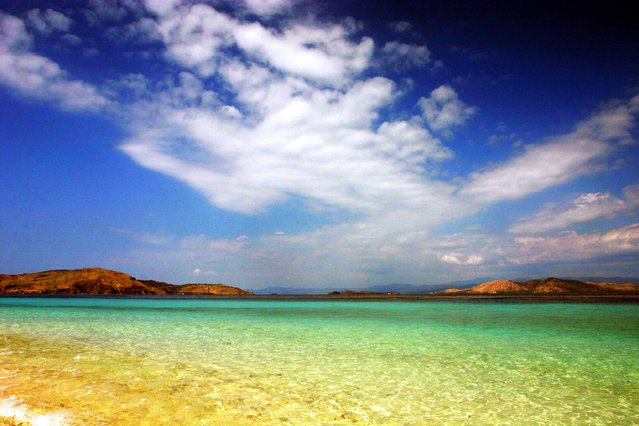
The Komodo National Park is a national park in Indonesia located within the Lesser Sunda Islands in the border region between the provinces of East Nusa Tenggara and West Nusa Tenggara. The park includes the three larger islands Komodo, Padar and Rinca, and 26 smaller ones, with a total area of 1,733 km² (603 km² of it land). The national park was founded in 1980 to protect the Komodo dragon, the world's largest lizard. Later it was dedicated to protecting other species, including marine species. In 1991 the national park was declared a UNESCO World Heritage Site and later as Man and Biosphere Reserve.
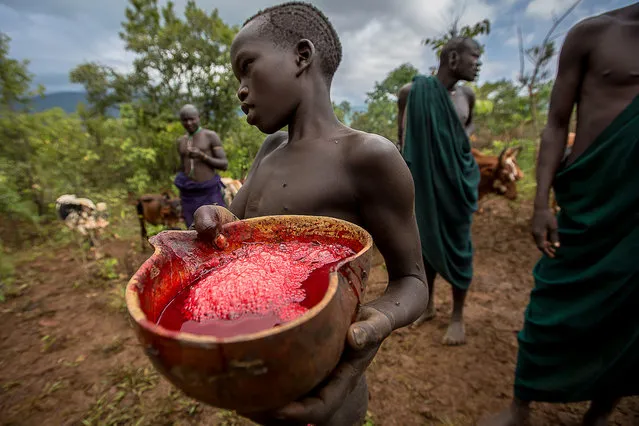
“Suri tribes boys are collecting the blood of a cow in a calabash the vein of the animal was opened with a bow and an arrow. Like most pastoralists the Surma people are drinking fresh blood which is from the cow vein. Only some minutes after the wound at the vein is closed again the animals are back with their herd”. (Photo and caption by Anthony Pappone)