Loading...
Done
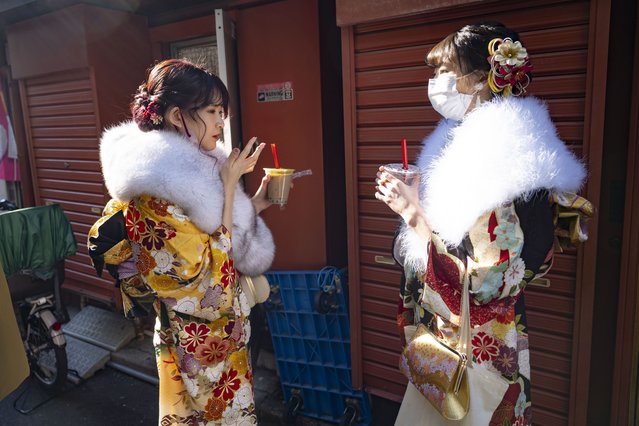
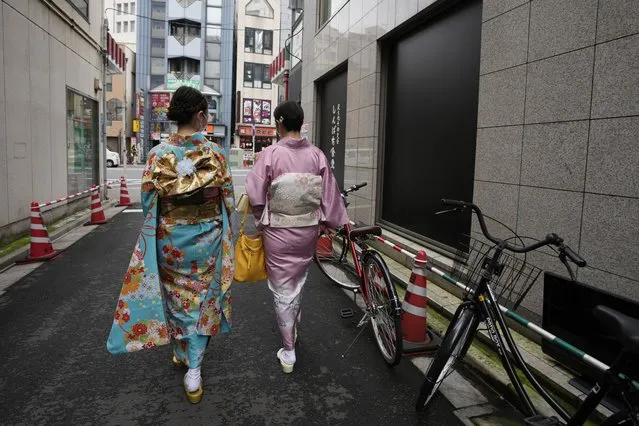
A Japanese woman and her daughter leave Daikichi kimono rental shop Wednesday, June 22, 2022, in Tokyo's Asakusa area famous for sightseeing, before attending their family friend's wedding. Japan is bracing for a return of tourists from abroad, as border controls to curb the spread of coronavirus infections are gradually loosened. Yusuke Otomo, who owns the kimono rental shop, can barely contain his excitement. (Photo by Hiro Komae/AP Photo)

A Japanese woman and her daughter leave Daikichi kimono rental shop Wednesday, June 22, 2022, in Tokyo's Asakusa area famous for sightseeing, before attending their family friend's wedding. Japan is bracing for a return of tourists from abroad, as border controls to curb the spread of coronavirus infections are gradually loosened. Yusuke Otomo, who owns the kimono rental shop, can barely contain his excitement. (Photo by Hiro Komae/AP Photo)
Details
01 Jul 2022 02:29:00
Young women dressed in traditional Japanese clothing celebrate Coming of Age Day at Buddhism temple in Tokyo on January 9, 2023. It is a day to recognize and congratulate individuals who have reached the age of majority (20 years old). On this day, young people who have turned 20 are officially recognized as adults and on the responsibilities and duties of adulthood. Many of those celebrating will dress in formal attire, such as traditional Japanese clothing like kimonos or suits and ties, to attend ceremonies and celebrations. The event is a rite of passage. (Photo by Taidgh Barron/ZUMA Press Wire/Rex Features/Shutterstock)

Young women dressed in traditional Japanese clothing celebrate Coming of Age Day at Buddhism temple in Tokyo on January 9, 2023. It is a day to recognize and congratulate individuals who have reached the age of majority (20 years old). On this day, young people who have turned 20 are officially recognized as adults and on the responsibilities and duties of adulthood. (Photo by Taidgh Barron/ZUMA Press Wire/Rex Features/Shutterstock)
Details
31 Jan 2023 23:51:00
Otaku In Osaka. Cosplay 2012

The eighth annual Nipponbashi Street Festa stamped Osaka March 20, 2012 (Nipponbashi is Osaka’s geek district – much like Akihabara is for Tokyo). Cosplayers turned up in colourful outfits, dressing as characters from their favourite manga, anime, and video games. The street was closed to cars, and otaku flooded the streets, snapping pics, cosplaying, and hanging out.
Details
25 Apr 2012 14:58:00
Caroline Wozniacki of Denmark serves in her match against Kaia Kanepi of Estonia

Caroline Wozniacki of Denmark serves in her match against Kaia Kanepi of Estonia during day four of the Toray Pan Pacific Open at Ariake Colosseum on September 28, 2011 in Tokyo, Japan. (Photo by Koji Watanabe/Getty Images)
Details
22 Nov 2011 14:17:00
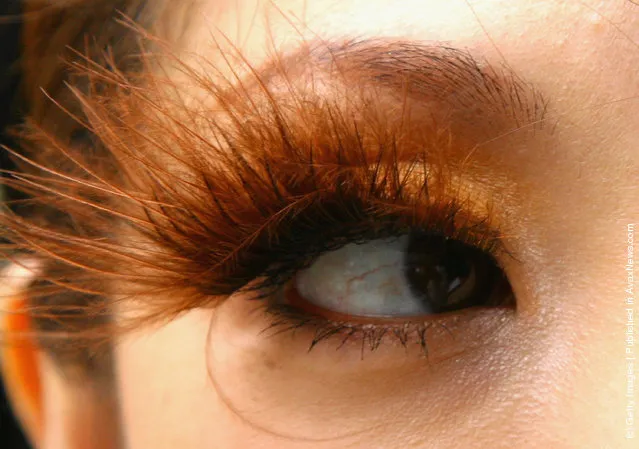
Designer False Eyelashes Remain Popular Japanese Fashion Accessory

An employee wears false eyelashes at the Shu Uemura eyelashes bar in the Omotesando district May 18, 2007 in Tokyo, Japan. 22 different false eyelash designs are available at the eyelashes bar ranging in cost from US$13 to US$43. (Photo by Koichi Kamoshida/Getty Images)
Details
02 Dec 2011 09:07:00
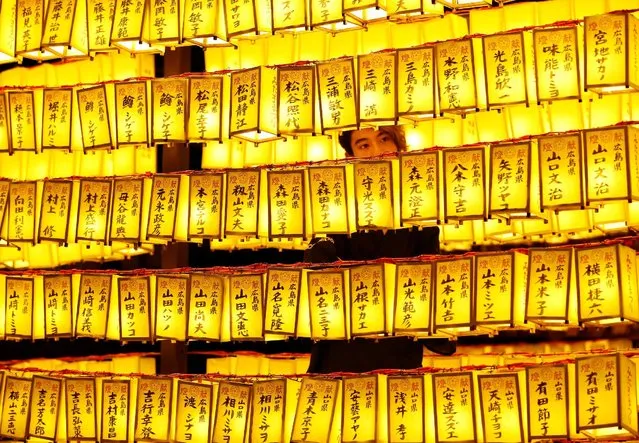
A man stands between thousands of paper lanterns, which were displayed and lit up the precincts of the shrine, where more than 2.4 million war-dead are enshrined, during the Mitama Festival at Yasukuni Shrine in Tokyo, Japan July 13, 2016. “Mitama” is a respectful word that means “the soul of a dead person” in Japanese, and this “Soul Festival” honors just that. The Yasukuni Shrine is dedicated to the honoring of the souls of those who gave their lives to defend Japan, and this festival is an early step towards the Japanese holiday season of Obon, during which Japanese people honor their deceased ancestors. (Photo by Issei Kato/Reuters)

A man stands between thousands of paper lanterns, which were displayed and lit up the precincts of the shrine, where more than 2.4 million war-dead are enshrined, during the Mitama Festival at Yasukuni Shrine in Tokyo, Japan July 13, 2016. “Mitama” is a respectful word that means “the soul of a dead person” in Japanese, and this “Soul Festival” honors just that. (Photo by Issei Kato/Reuters)
Details
14 Jul 2016 09:37:00
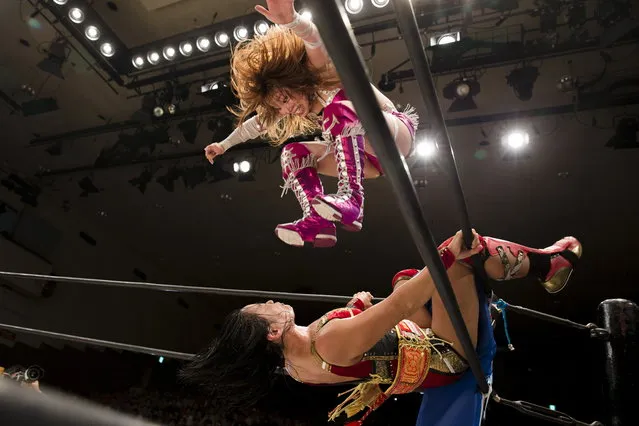
Wrestler Kairi Hojo jumps at her opponent Mieko satomura during their Stardom female professional wrestling show at Korakuen Hall in Tokyo, Japan, July 26, 2015. Professional women's wrestling in Japan means body slams, sweat, and garish costumes. But Japanese rules on hierarchy also come into play, with a culture of deference to veteran fighters. The brutal reality of the ring is masked by a strong fantasy element that feeds its popularity with fans, most of them men. (Photo by Thomas Peter/Reuters)

Wrestler Kairi Hojo jumps at her opponent Mieko satomura during their Stardom female professional wrestling show at Korakuen Hall in Tokyo, Japan, July 26, 2015. Professional women's wrestling in Japan means body slams, sweat, and garish costumes. But Japanese rules on hierarchy also come into play, with a culture of deference to veteran fighters. The brutal reality of the ring is masked by a strong fantasy element that feeds its popularity with fans, most of them men. (Photo by Thomas Peter/Reuters)
Details
14 Dec 2016 07:58:00
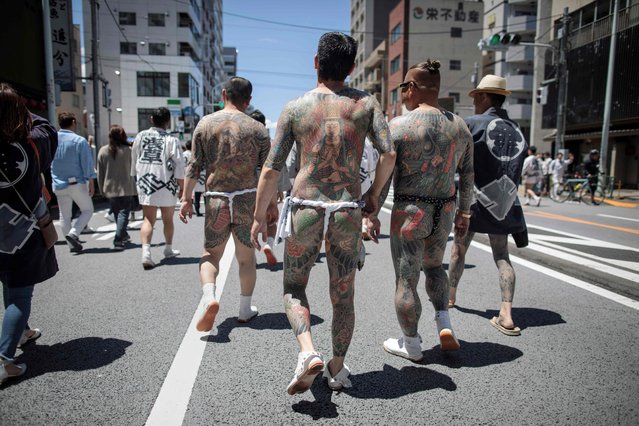
Participants with traditional Japanese tattoos (Irezumi), related to the Yakuza, walk through the Asakusa district during the annual Sanja Matsuri festival in Tokyo on May 20, 2018. Sanja Matsuri festival is a celebration for the three founders of Sensoji Temple in the Asakusa neighbourhood with nearly two million people visiting during the three-day event. (Photo by Behrouz Mehri/AFP Photo)

Participants with traditional Japanese tattoos (Irezumi), related to the Yakuza, walk through the Asakusa district during the annual Sanja Matsuri festival in Tokyo on May 20, 2018. Sanja Matsuri festival is a celebration for the three founders of Sensoji Temple in the Asakusa neighbourhood with nearly two million people visiting during the three-day event. (Photo by Behrouz Mehri/AFP Photo)
Details
17 Jul 2018 00:05:00