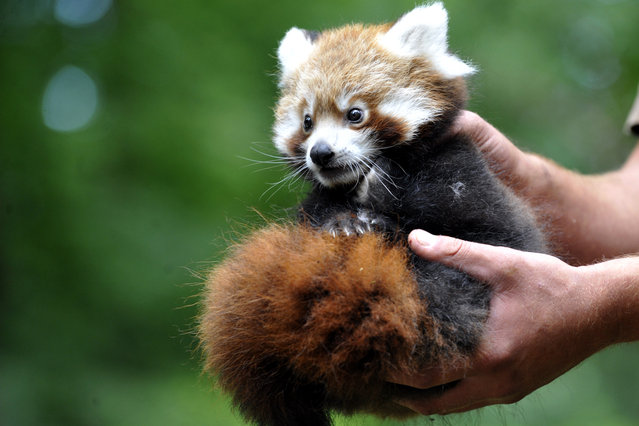
The first red panda cub was born on May 30 in zoo Zlin. Zoologist Roman Vrzal holds a male of red panda. The Red panda is pictured in Zlin, Czech Republic, August 20, 2014. (Photo by Dalibor Gluck/CTK)
A Filipino pet owner carries her dog as she prays before the animal blessing rites at the Our Lady of Remedies Parish Church in Malate district, Manila, Philippines on Sunday, October 5, 2014. Several Filipinos brought their pets to be blessed during the annual event which is also done to celebrate the feast day of St. Francis of Assisi, the patron saint of animals and ecology. (Photo by Aaron Favila/AP Photo)
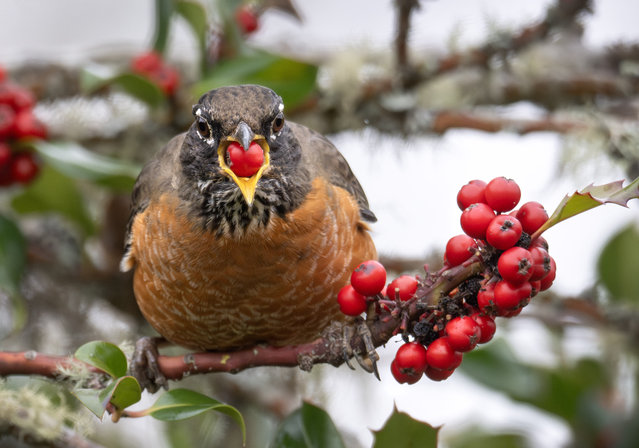
An American robin feeds on holly berries in a thicket near Elkton in southwestern Oregon on November 16, 2024. Many birds can safely consume holly berries, including blackbirds, redwings, and thrushes. There is an old wives tale that if you see a bird eating a berry, it is safe for humans to eat, but this is not true. Birds consume many plants that are poisonous to humans, holly berries included. (Photo by Robin Loznak/ZUMA Press Wire/Rex Features/Shutterstock)
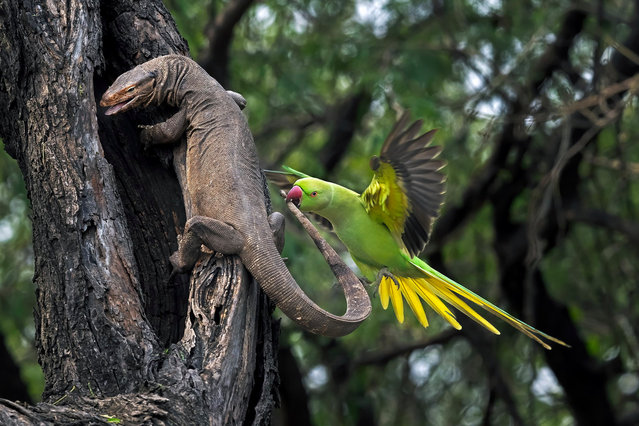
Hira Punjabi, from Maharashtra, India, took this stunning photo of a parakeet attacking a tree-climbing lizard, which has won the SINWP Bird Photographer of the Year 2024, in aid of RSPB. She had to wait by the same tree for four days to get the perfect action shot. (Photo by Hira Punjabi/SINWP via SWNS)
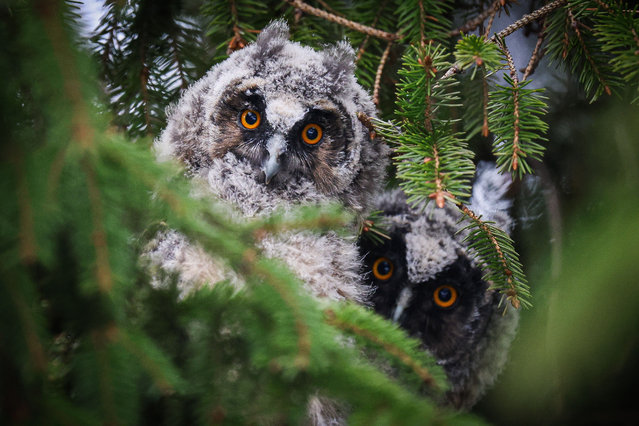
Long-eared owl chicks sit on a spruce branch in a park near St Petersburg, Russia on March 3, 2025. (Photo by Artem Priakhin/SOPA Images/Rex Features/Shutterstock)
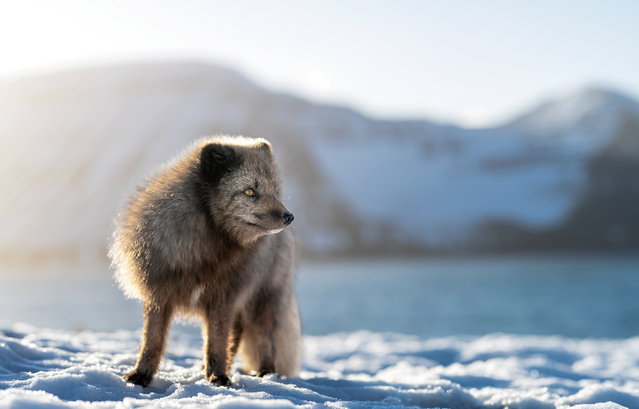
An arctic fox in Iceland spotted on March 19, 2025 by Marc Freebrey, a marketing officer from Gloucestershire. (Photo by Marc Freebrey/South West News Service)
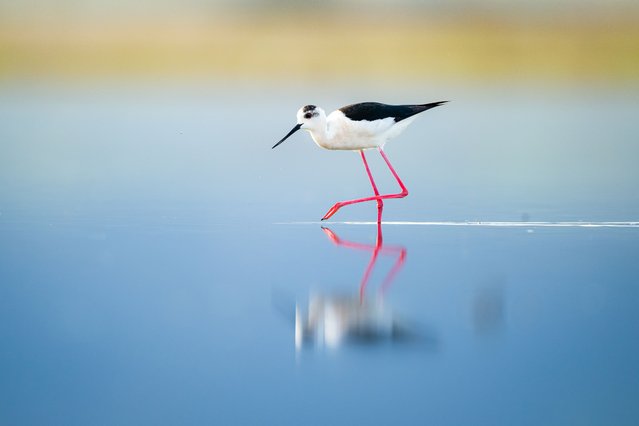
Black Winged Stilt is seen on Kavak Delta, a natural and ecologically important wetland for many migratory birds, in Canakkale, Turkiye on May 13, 2025. (Photo by Alper Tuydes/Anadolu via Getty Images)
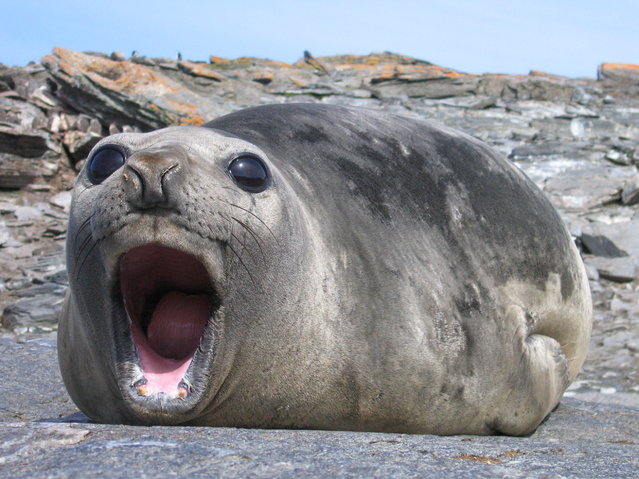
Weddell seal numbers in 2025 have declined sharply on Signy Island, part of the South Orkney Islands in the Southern Ocean, where British Antarctic Survey researchers have tracked seal populations for nearly 50 years to understand the impact of melting sea ice. (Photo by Michael Dunn/The Times)