Loading...
Done
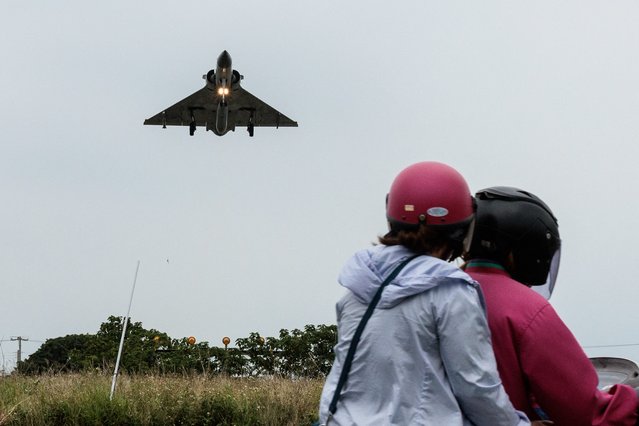
Two people ride a motorcycle as a Taiwanese Air Force Mirage 2000 fighter jet approaches for landing at an air force base in Hsinchu in northern Taiwan on May 23, 2024. China on May 23 encircled Taiwan with naval vessels and military aircraft in war games aimed at punishing the self-ruled island after its new president vowed to defend democracy. (Photo by Yasuyoshi Chiba/AFP Photo)

Two people ride a motorcycle as a Taiwanese Air Force Mirage 2000 fighter jet approaches for landing at an air force base in Hsinchu in northern Taiwan on May 23, 2024. China on May 23 encircled Taiwan with naval vessels and military aircraft in war games aimed at punishing the self-ruled island after its new president vowed to defend democracy. (Photo by Yasuyoshi Chiba/AFP Photo)
Details
25 Jul 2024 04:20:00
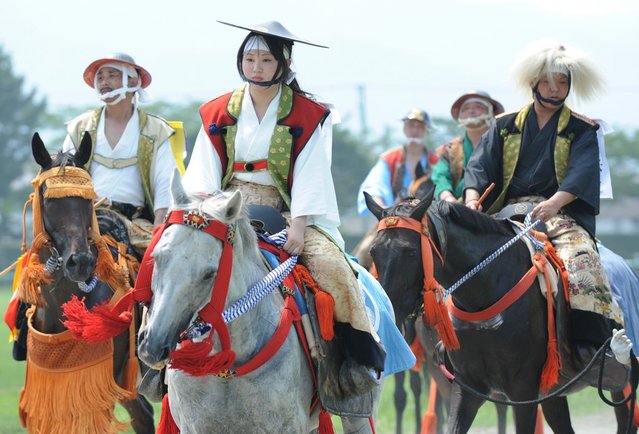
A young woman (C) clad in samurai costume leads other local poeple as she rides her horse during a parade at the annual Soma Nomaoi festival in Minamisoma, Fukushima Prefecture, on July 28, 2012.  The traditional full-scale festival kicked off for the first time after the accident of the Fukushima Dai-ichi Nuclear Power Plant following the massive earthquake and the tsunami on March 11, 2011. (Photo by Toru Yamanaka/AFP Photo)

Soma-Nomaoi is a festival that recreates a battle scene from more than 1,000 years ago. It is annually held for 4 days from July 22 to 25 in Haramachi City, Fukushima Prefecture, in the eastern part of Japan. In this historical event, 600 mounted samurai in traditional Japanese armor, with long swords at their side and ancestral flagstaffs streaming from their backs, ride across open fields. Soma-Nomaoi has been designated an Important Intangible Folk Cultural Property.

Photo: A young woman (C) clad in samurai costume leads other local poeple as she rides her horse during a parade at the annual Soma Nomaoi festival in Minamisoma, Fukushima Prefecture, on July 28, 2012. The traditional full-scale festival kicked off for the first time after the accident of the Fukushima Dai-ichi Nuclear Power Plant following the massive earthquake and the tsunami on March 11, 2011. (Photo by Toru Yamanaka/AFP Photo)
Details
02 Aug 2012 12:59:00
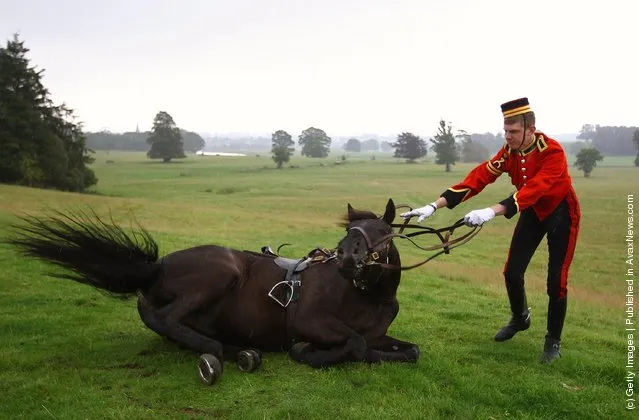
The Household Cavalry Prepare At Floors Castle Ahead Of Massed Pipe Bands Day

Lance Corpral Johnnie Miller of the Household Cavalry rehearses at Floors Castle in preparation for massed Pipe Band day on August 26, 2011 in Kelso, Scotland. The event, being held on August 28, will feature the first Scottish performance of the Household Cavalry's Musical ride in over 10 years. (Photo by Jeff J Mitchell/Getty Images)
Details
27 Aug 2011 14:31:00
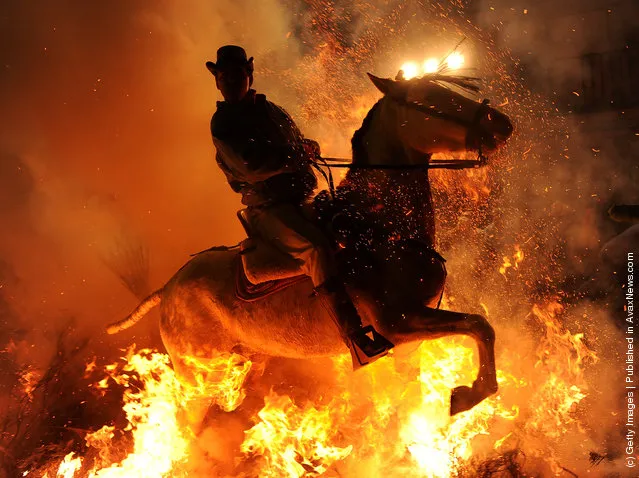
Las Luminarias de San Anton Festival

A man rides a horse through a bonfire on January 16, 2012 in the small village of San Bartolome de Pinares, Spain. In honor of San Anton, the patron saint of animals, horses are riden through the bonfires on the night before the official day of honoring animals in Spain. (Photo by Jasper Juinen/Getty Images)
Details
19 Jan 2012 09:00:00
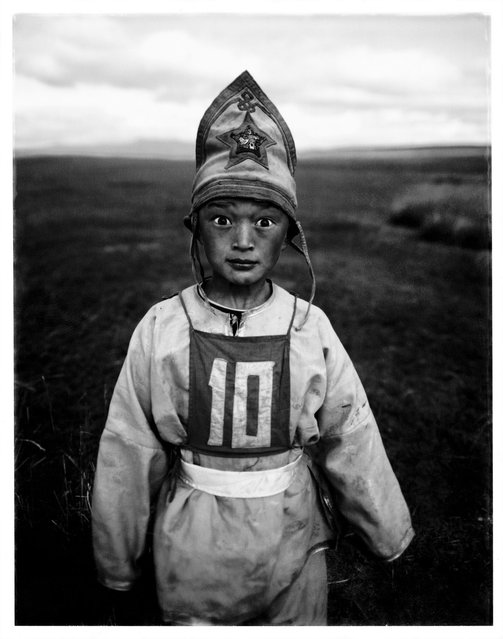
Mongolian Child Jockeys

Horse racing is part of Naadam, a festival organized every July in Mongolia to celebrate the People’s Revolution. Using children as jockeys in such races has a centuries-long tradition. Boys and girls as young as 5 (although the law imposes a minimum age limit of 7) ride in races that can be dangerous, with hundreds of horses running across the steppe at distances of 12 to 28 kilometres at great speeds. (Photo by Tomasz Gudzowaty)
Details
30 Apr 2012 11:02:00
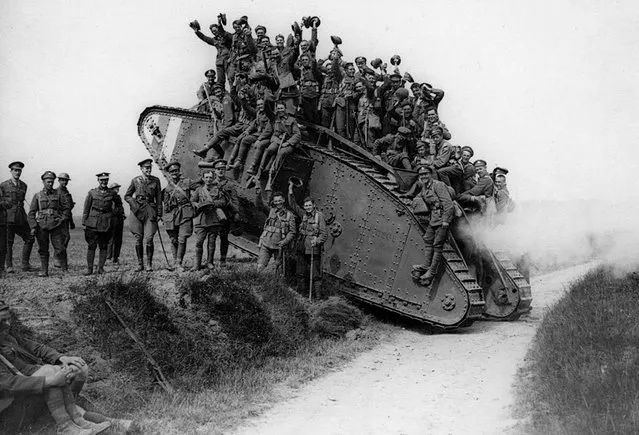
These black-and-white photos are taken from the new book “Armoured Warfare in the First World War 1916 – 1918” by Anthony Tucker-Jones and published by Pen & Sword Military. “Interestingly the British, French and Germans took completely different approaches with varying results”. The British military produced “Little Willie” in Autumn 1915 weighing 18 tonnes, which had a crew of two plus four gunners. “Inspired by a tracked artillery tractor “Little Willie” was referred to as a water tank – hence the name tank – to ensure secrecy”, said Anthony. “This led to the strange looking Mark I with its peculiar rhomboid shape, designed to cross trenches with guns in sponsons on either side. The Germans saw the tank as unchivalrous and were slow to grasp its utility. They favoured the Stormtrooper (specialist soldiers used to infiltrate enemy trenches) and artillery, not the tank”, said Anthony. “However, they didn’t hesitate to make use of captured British tanks. Although the tank helped secure victory and German soldiers dubbed it “Germany’s Downfall” the country was ultimately brought to its knees by the Allies blockade”. Here: British troops hitch a ride on a Mark IV after the massed tank fleet spearheading attack at Cambrai on November 20, 1917. (Photo by Anthony Tucker-Jones/Mediadrumworld.com)

These black-and-white photos are taken from the new book “Armoured Warfare in the First World War 1916 – 1918” by Anthony Tucker-Jones and published by Pen & Sword Military. Here: British troops hitch a ride on a Mark IV after the massed tank fleet spearheading attack at Cambrai on November 20, 1917. (Photo by Anthony Tucker-Jones/Mediadrumworld.com)
Details
23 Feb 2017 00:02:00
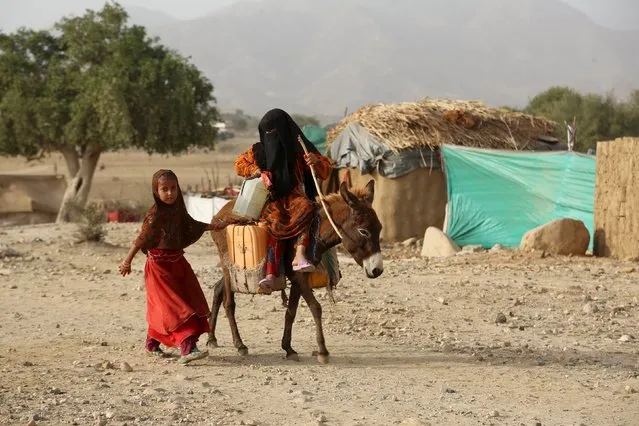
A girl rides a donkey as another walks by at the Shawqaba camp for internally displaced people who were forced to leave their villages by the war in Yemen's northwestern province of Hajjah March 12, 2016. In northwest Yemen, one of the poorest countries in the Middle East, about 400 families uprooted by the war have been stuck in the Shawqaba camp in Hajjah province for the past year. Residents live in poorly built huts that protect them neither from summer heat nor winter cold in a camp that lacks the most basic services. (Photo by Abduljabbar Zeyad/Reuters)

A girl rides a donkey as another walks by at the Shawqaba camp for internally displaced people who were forced to leave their villages by the war in Yemen's northwestern province of Hajjah March 12, 2016. In northwest Yemen, one of the poorest countries in the Middle East, about 400 families uprooted by the war have been stuck in the Shawqaba camp in Hajjah province for the past year. Residents live in poorly built huts that protect them neither from summer heat nor winter cold in a camp that lacks the most basic services. (Photo by Abduljabbar Zeyad/Reuters)
Details
09 Apr 2016 13:16:00
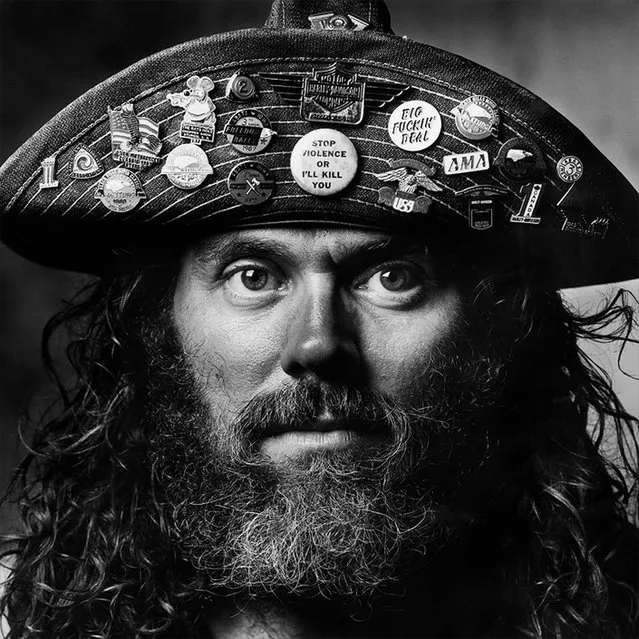
American Bikers By Sandro Miller

Bikers are the knights of the modern times. They ride their steel horses; they drink and brawl and have their own strict code of honor. Some people view them as land-dwelling pirates; however, they are so much more than that. Photographer Sandro Miller is one of the few people who decided to look deeper than their rugged exterior, realizing that it takes more than a Harley Davidson bike and a leather jacket to make a biker. A true biker cannot be chained to a single place. The spirit of the true biker demands change, it seeks adventure, and it thirsts for freedom! (Photo by Sandro Miller)
Details
26 Nov 2014 14:50:00