Loading...
Done
Alex “Torreto” Vellios, a 26-year old barber sports his tattoo of an open razor as he holds a real razor while preparing for his first customer of the day at his Torreto barber shop in Frankfurt, January 6, 2015. (Photo by Kai Pfaffenbach/Reuters)

Alex “Torreto” Vellios, a 26-year old barber sports his tattoo of an open razor as he holds a real razor while preparing for his first customer of the day at his Torreto barber shop in Frankfurt, January 6, 2015. Inspired by a childhood trip to the barbers with his grandfather in Greece, Vellios, a formally trained hairdresser and self-taught barber, fulfilled his dream of opening his own gentleman's barber shop five months ago and has turned it into a successful male grooming and shaving business with customers now waiting up to three to four weeks for an appointment to see him. (Photo by Kai Pfaffenbach/Reuters)
Details
09 Jan 2015 13:00:00
A brown capuchin monkey holds a fruit in the Botanic Garden of Rio de Janeiro, Brazil, on July 5, 2013. (Photo by Pablo Porciuncula/AFP Photo)

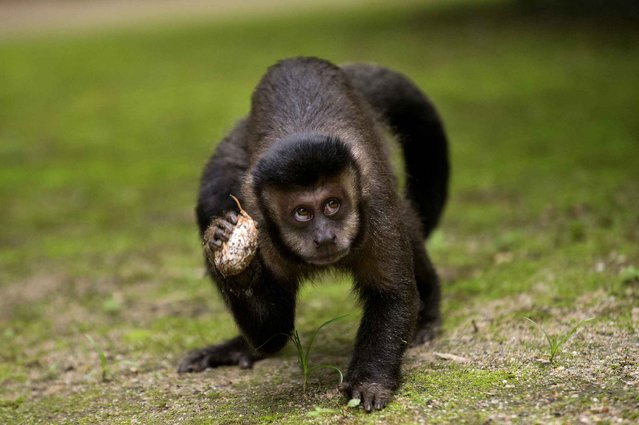
A brown capuchin monkey holds a fruit in the Botanic Garden of Rio de Janeiro, Brazil, on July 5, 2013. (Photo by Pablo Porciuncula/AFP Photo)
Details
06 Jul 2013 11:58:00
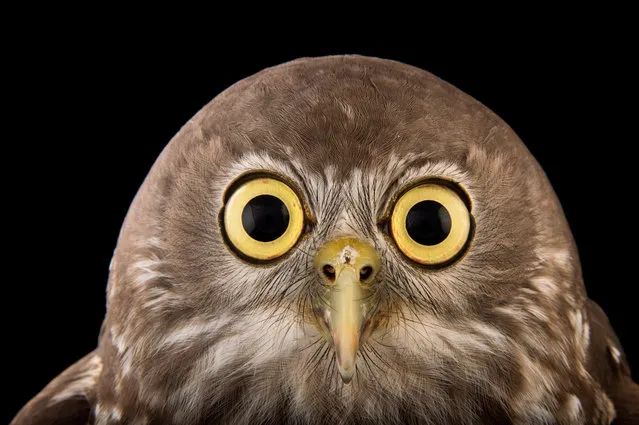
The National Geographic Photo Ark is a travelling exhibition of photographer Joel Sartore’s quest to create a photo archive of biodiversity around the world. So far, Sartore has captured studio portraits of more than 6,000 species – a number that he hopes to double. On 1 July, the ark will open at Melbourne zoo – the first time it has been exhibited in the southern hemisphere. More than 50 portraits will be on display, including many of Australian endangered animals being protected by programs at the zoo itself. These captions have been edited from text supplied by Melbourne zoo. Here: Barking owl. So-named because its call sounds like a barking dog, these birds are native to Australia, Indonesia and Papua New Guinea. In Victoria they are listed as an endangered species, and in 2003 there were estimated to be fewer than 50 breeding pairs. The main threat to the species in Victoria is loss of habitat, especially large trees with hollows in which they can nest and on which many of their prey depend. Apart from a bark, they may utter a chilling scream when they feel threatened. (Photo by Joel Sartore/National Geographic Photo Ark/The Guardian)

The National Geographic Photo Ark is a travelling exhibition of photographer Joel Sartore’s quest to create a photo archive of biodiversity around the world. So far, Sartore has captured studio portraits of more than 6,000 species – a number that he hopes to double. On 1 July, the ark will open at Melbourne zoo – the first time it has been exhibited in the southern hemisphere. More than 50 portraits will be on display, including many of Australian endangered animals being protected by programs at the zoo itself. These captions have been edited from text supplied by Melbourne zoo. Here: Barking owl. (Photo by Joel Sartore/National Geographic Photo Ark/The Guardian)
Details
01 Jul 2017 07:45:00
Guests attend preview event for “Candytopia”, the outrageously interactive candy wonderland, opening in San Francisco on September 6, 2018. (Photo by Kelly Sullivan/Getty Images for Candytopia)

Guests attend preview event for “Candytopia”, the outrageously interactive candy wonderland, opening in San Francisco, USA on September 6, 2018. (Photo by Kelly Sullivan/Getty Images for Candytopia)
Details
07 Sep 2018 05:27:00
Senior Buddhist monk Lobsang Tayang sits outside the Amarbayasgalant Monastery in the Baruunburen district, Selenge province, Mongolia, April 26, 2018. (Photo by Thomas Peter/Reuters)

Senior Buddhist monk Lobsang Tayang sits outside the Amarbayasgalant Monastery in the Baruunburen district, Selenge province, Mongolia, April 26, 2018. (Photo by Thomas Peter/Reuters)
Details
11 Jun 2018 00:05:00
A Flame Skimmer or Firecracker Skimmer dragonfly (Libellula saturata) rests on a small branch in Topanga, California, USA, 18 June 2018. The Flame Skimmer dragonfly is found in the Western United States near ponds and creeks. (Photo by Mike Nelson/EPA/EFE)

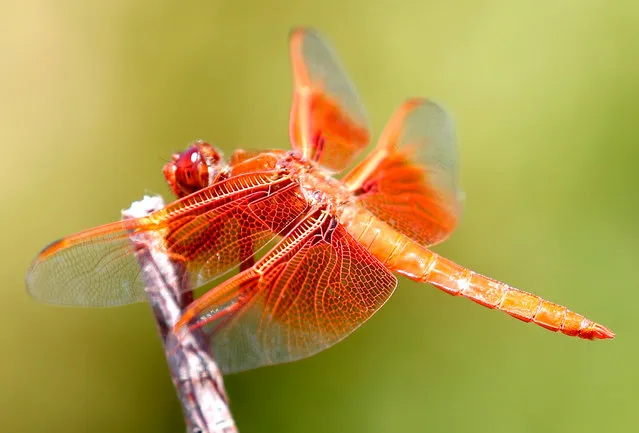
A Flame Skimmer or Firecracker Skimmer dragonfly (Libellula saturata) rests on a small branch in Topanga, California, USA, 18 June 2018. The Flame Skimmer dragonfly is found in the Western United States near ponds and creeks. (Photo by Mike Nelson/EPA/EFE)
Details
24 Jun 2018 00:03:00
A bodybuilder applies tan on another participant during the Mr and Mrs East Africa Natural Body Building Contest at Rupaz Gym in Eldoret, western Kenya, on October 8, 2022. 168 bodybuilders from Rwanda, Uganda, Ethiopia, Tanzania and Kenia participate in this competition in Eldoret, a city known as “The City of Champions” for producing some of the best long distance runners in the world, that has not hosted a bodybuilding event since 2015. (Photo by Patrick Meinhardt/AFP Photo)

A bodybuilder applies tan on another participant during the Mr and Mrs East Africa Natural Body Building Contest at Rupaz Gym in Eldoret, western Kenya, on October 8, 2022. 168 bodybuilders from Rwanda, Uganda, Ethiopia, Tanzania and Kenia participate in this competition in Eldoret, a city known as “The City of Champions” for producing some of the best long distance runners in the world, that has not hosted a bodybuilding event since 2015. (Photo by Patrick Meinhardt/AFP Photo)
Details
25 Oct 2022 04:26:00
A 40-tonne humpback launching out of the water in an incredible breach in New South Wales, Australia on October 2022 in front of a sunset. The humpback whale can grow up to 56 feet long and typically covers 9,900 miles a year as it travels through the oceans of the world. Humpback whales are a species of Baleen whale, meaning they don't have teeth. Instead, they have baleen which helps them to filter feed. Their main source of food is krill or tiny bait fish. (Photo by Jodie Lowe/Media Drum Images)

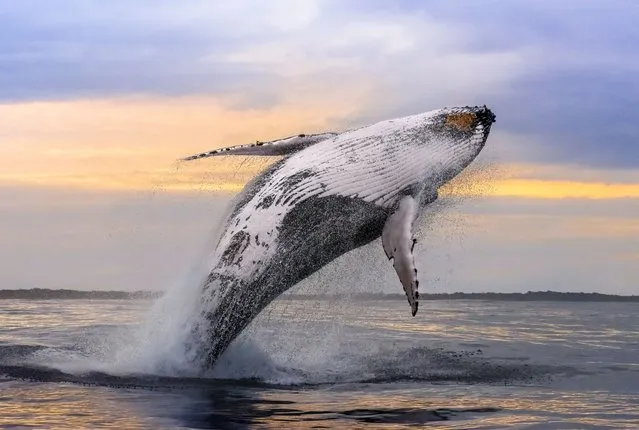
A 40-tonne humpback launching out of the water in an incredible breach in New South Wales, Australia on October 2022 in front of a sunset. The humpback whale can grow up to 56 feet long and typically covers 9,900 miles a year as it travels through the oceans of the world. Humpback whales are a species of Baleen whale, meaning they don't have teeth. Instead, they have baleen which helps them to filter feed. Their main source of food is krill or tiny bait fish. (Photo by Jodie Lowe/Media Drum Images)
Details
30 Oct 2022 04:28:00