Loading...
Done
Kite Aerial By Seeing The World From New Heights

Kite Aerial photography (KAP) is a hobby and a type of photography. A camera is lifted using a kite and is triggered either remotely or automatically to take aerial photographs. The camera rigs can range from the extremely simple, consisting of a trigger mechanism with a disposable camera, to complex apparatus using radio control and digital cameras. On some occasions it can be a good alternative to other forms of aerial photography.
Details
17 Jan 2014 13:22:00
“Zeybeks”. That's Dance, Sunward and Zeybeks. (Photo by Hasan Baglar/2014 Sony World Photography Awards)

“Zeybeks”. That's Dance, Sunward and Zeybeks. (Photo by Hasan Baglar/2014 Sony World Photography Awards)
Details
07 Feb 2014 08:57:00
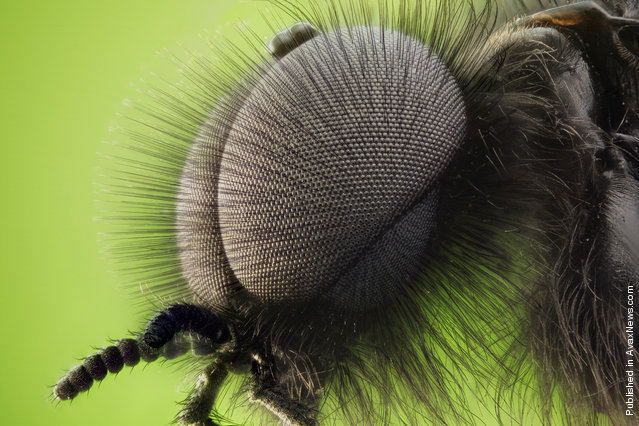
The double compound eyes of a male St. Mark's fly (Bibio marci), submitted by Dr. David Maitland from Feltwell, UK

The double compound eyes of a male St. Mark's fly (Bibio marci), submitted by Dr. David Maitland from Feltwell, UK. (Dr. David Maitland)
Details
07 Apr 2012 13:22:00
Annual celebration of Dinagyang festival of Iloilo, Philippines. (Photo by Raniel Jose Castañeda/Sony World Photography Awards)

Annual celebration of Dinagyang festival of Iloilo, Philippines. (Photo by Raniel Jose Castañeda/Sony World Photography Awards)
Details
21 Sep 2016 09:56:00
An Estonian competitor cheers during the “World Medieval Fighting Championship – the Israeli Challenge” in Rishon Letzion near Tel Aviv January 22, 2015. Israel hosted the tournament on Thursday, which includes 14 competitors from seven different countries – France, Belarus, Denmark, Estonia, Russia, Ukraine and Israel. (Photo by Amir Cohen/Reuters)

An Estonian competitor cheers during the “World Medieval Fighting Championship – the Israeli Challenge” in Rishon Letzion near Tel Aviv January 22, 2015. Israel hosted the tournament on Thursday, which includes 14 competitors from seven different countries – France, Belarus, Denmark, Estonia, Russia, Ukraine and Israel. (Photo by Amir Cohen/Reuters)
Details
24 Jan 2015 14:38:00
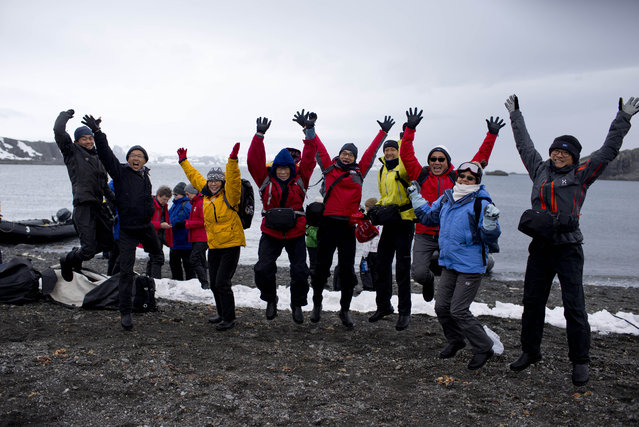
In this February 2, 2015 photo, tourists jump as they pose for a picture, after disembarking from the Ocean Nova cruise ship, on King George Island, Antarctica. This tourist season, which runs November through March, more than 37,000 visitors are expected to walk on the coldest continent on Earth, about 10 percent more than the year before. (Photo by Natacha Pisarenko/AP Photo)

In this February 2, 2015 photo, tourists jump as they pose for a picture, after disembarking from the Ocean Nova cruise ship, on King George Island, Antarctica. This tourist season, which runs November through March, more than 37,000 visitors are expected to walk on the coldest continent on Earth, about 10 percent more than the year before. (Photo by Natacha Pisarenko/AP Photo)
Details
22 Mar 2015 11:31:00
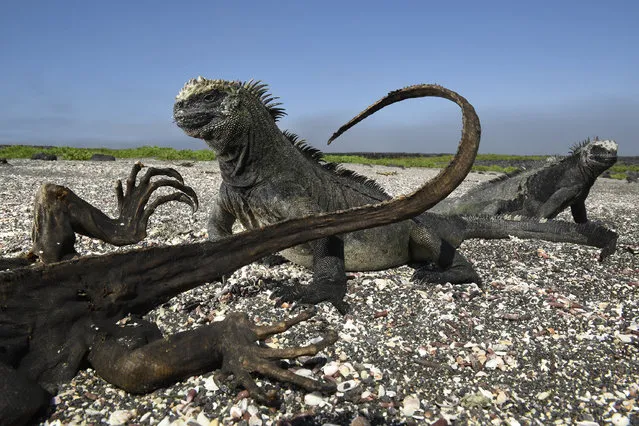
Galapagos – Rocking the Cradle: Four major ocean currents converge along the Galapagos archipelago, creating the conditions for an extraordinary diversity of animal life, April 25, 2016. The islands are home to at least 7,000 flora and fauna species, of which 97 percent of the reptiles, 80 percent of the land birds, 50 percent of the insects and 30 percent of the plants are endemic. The local ecosystem is highly sensitive to the changes in temperature, rainfall and ocean currents that characterize the climatic events known as El Niño and La Niña. These changes cause marked fluctuations in weather and food availability. Many scientists expect the frequency of El Niño and La Niña to increase as a result of climate change, making the Galapagos a possible early-warning location for its effects. (Photo by Thomas P. Peschak for National Geographic/World Press Photo)

Galapagos – Rocking the Cradle: Four major ocean currents converge along the Galapagos archipelago, creating the conditions for an extraordinary diversity of animal life, April 25, 2016. The islands are home to at least 7,000 flora and fauna species, of which 97 percent of the reptiles, 80 percent of the land birds, 50 percent of the insects and 30 percent of the plants are endemic. (Photo by Thomas P. Peschak for National Geographic/World Press Photo)
Details
16 Apr 2018 00:01:00
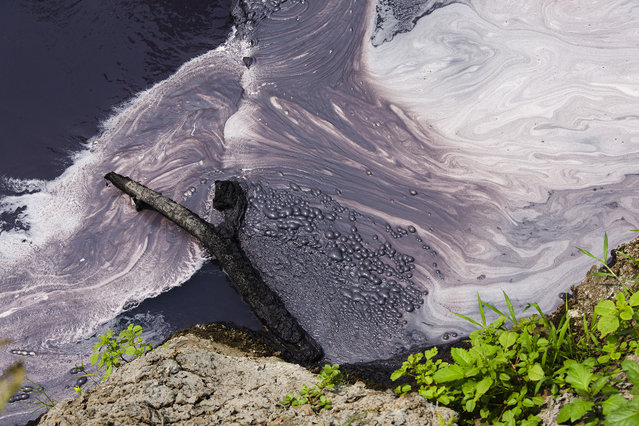
Factory waste including dyes from the many textile factories in the region drain into a tributary of the Citarum river on August 27, 2018 outside Bandung, Java, Indonesia. (Photo by Ed Wray/Getty Images)

Factory waste including dyes from the many textile factories in the region drain into a tributary of the Citarum river on August 27, 2018 outside Bandung, Java, Indonesia. (Photo by Ed Wray/Getty Images)
Details
06 Sep 2018 00:03:00